




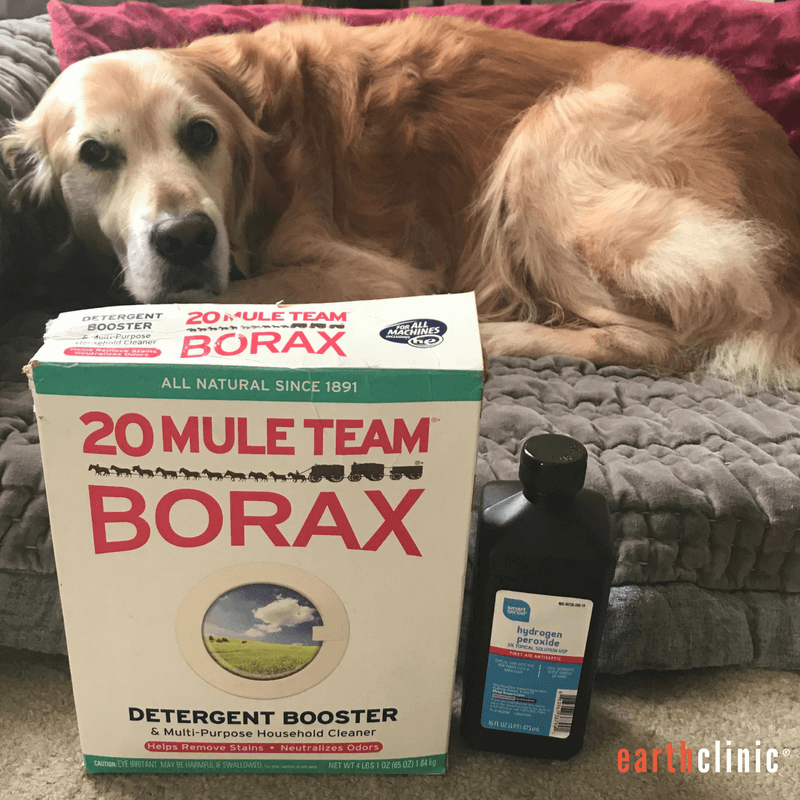
Borax and Peroxide User Reviews
| 5 star (213) | 81% | |
| 4 star (16) | 6% | |
| 3 star (13) | 5% | |
| 1 star (16) | 6% | |
 (4) (4) |
2% |
★★★★★
(Colorado)
12/30/2024
Have you tried ivermectin? It cures mange quite rapidly. I have put it in eggs or donuts for the wild foxes, worked like a charm.
(Mexico)
11/26/2025
Please do not recommend chemicals or pharmaceuticals that are toxic to dogs and humans. It's time to stop promoting ivermectin. The remedy using borax and peroxide is effective. Additionally, it should be noted that this is a topical remedy. It's also important to provide dogs with a rich and nutritious raw diet, a stress-free environment, and plenty of opportunities for play and exercise.
(MI)
01/06/2026
How much do you give? I've been giving 2ml for my 80lb dog.
(TX)
01/26/2026
Both Ivermectin & Fenbendazole are safe for animals & people. Ivermectin first came available for animals ten humans. You are behind the 8 ball. Joe Tippens beat stage 4 cancer by taking Fenbendazole ( I'd advise cancer patients using chemo toxics for treatment loom Joe Tippen's. Thousands have now survived cancer because of FenBen. Both meds are very safe. Many peeps I know & me have been taking it since 2021 for you know what. I NEVER have been ill & still maintain a dose 1 time each month. So does my hubby & most of our family. It's effective & safe & beats the k*i_ s_ot pushed on the world that has caused sudden & permanent absence of souls.
(Pennsylvania)
08/23/2026
I love using ivermectin as a remedy for a variety of health issues for myself and my elderly mother. However, I own a shepherd (with two white legs) and shepherds are known to often have a sensitivity to ivermectin - especially those with white feet. Be careful and look up your dog breed's sensitivity to ivermectin. They can also be tested for the gene that causes the sensitivity.
(Cancun, México)
01/06/2025
★★★★★
I run a shelter and swear by Ted's Remedy! And when one has symptoms, I watch the rest very closely for any symptoms starting. Dogs "mouth" each other alot during play and I have seen them pass it to each other this way. If your new doggos show symptoms, no problem simply start treating them, too. Whether it can spread depends on whether it's demodex or sarcoptic mange, but here at the shelter, I do not care what type they have; I treat immediately. That being said, since you've already started treatment, those mites are on the run, and nothing may get passed along at all. I have been treating rescue#6 for a month now and none of the others started showing any symptoms at all. So I would say keep with the treatments and keep a very close eye on the others, but they will probably be okay.
(Austin texas)
04/28/2025
★★★★★
Scarcopic mange is very contagious to pets and to people it is what we call scabies
If it is scarcopic everyone in ur home will itch have rashes ect .u will know. u can't not know if it's scabies
Demodex mange mites are only passed from dog to dog
all dogs have demodex mites they get them from their mom,
It's usually not a problem until the dog gets stressed, the immune system gets compromised, or they are puppies.
I've been fighting and spent so much money on these little rescue dogs, but I think I've got the remedy now.
Also vets will skin scrape even biopsy but they have to get a mite which is almost impossible an they won't diagnose unless they find one. They are super fast and not trying to get scraped up
Kind of a rip off deal with the vet .
U know they know it's almost impossible to get a mite so they keep calling it fungus, allergy's, infections everything under the sun.
And keep charging you
When they treat for these things it gets better for a while antibiotics help because they have secondary infections due to chewing and scratching. anti inflammatory help because the swelling goes down for a bit but underneath it all
the mites are continuing to live breed and eat your dog.
Ted's mange bomb is the only ONLY THING THAT I HAVE FOUND TO WORK
IT'S CONSUMING IN THAT U HAVE TO STICK TO THE SCHEDULE
JUST BATHE YOUR DOG When U SHOWER EVERY OTHER DAY AND SO ON.
U CAN ALSO USE BORAX IN UR MOP WATER OR MIX WITH WATER TO WIPE DOWN DOG KENNELS ECT.
IT WILL WORK GOOD LUCK
Ps I just learned that yeast on a dog caused by them eating foods that cause yeast make the dog extra yummy to mites so a high protein low carb no junk food diet can help fight them off this means little to no people food and nothing white bread tortilla potato's corn stuff like that avoiding these foods make it dog less appetizing to the mites.
(Colorado)
11/27/2025
Why, Marcela? To be purist? Some mainstream drugs do work well. I live on the edge of wilderness, and two foxes at two different times have come to my door seeking help with mange. Horrible itching, loss of fur in the winter.... So I gave them ivermectin in a donut or a hard boiled egg. It worked. It's a blessing in such a case where topical treatments are not possible.
(South Carolina)
01/19/2026
(Windsor, Ontario)
12/09/2025
Ivermectin is most assuredly 'not' toxic. It is on the W.H.O. List of Essential Medicines and won a Nobel Prize for the inventors. I am surprised that someone from Mexico posted this as your own Government included Ivermectin in their covid kits given to its citizens.
(America)
01/07/2026
Be careful with ivermectin. Some dog breeds cannot take it.
(Cancun, México)
01/08/2026
Hollyhock, it would be really great if you could tell us which breeds are involved here, otherwise you're kinda just sowing fear. Could you please provide a link to a study or video? I'm not disbelieving you, I just wanna research it myself cuz I have never heard that before anywhere.
(America)
01/08/2026
Here you go Katzie,,,,
https://www.akc.org/expert-advice/health/heartworm-medication-side-effects/
(Cancun, México)
01/10/2026
Thank you, Hollyhock! I appreciate being able to find that information. I spend alot of time on the AKC site and am surprised I didn't come across this before.
Link below is a list of breeds/dogs affected by the MDR1 gene. Please do read it. One interesting thing is that 70% of Collies are affected, but almost no Border Collies are affected. It's worth a quick look.
https://waddl.vetmed.wsu.edu/mdr1-in-dogs/
(America)
01/10/2026
It mentions herding dogs, my golden retriever seems to have herding instincts so I will not be using ivermectin on or in her. The vet said she might have some mix in her. 🐕
(South Carolina)
01/19/2026
(OR)
01/19/2026
Boric acid capsules in a bath should help kill the yeast infection. I had a 10 pound doxie and I used 3 capsules in a warm bath a few times until it was gone. Yes, they are the same capsules that are made for women with yeast infection.
Borax and Peroxide User Reviews
★★★★★
Borax and Peroxide User Reviews
★★★★★
I also have used the borax water recipe on all our animals for about 5 years now both dogs and cats and they all are very healthy. Our lab is the only one that has the demodectic mange..He is 9 yrs old.
(TX)
02/12/2023
Unfortunately, when pets get older their immune systems do not function as well as they used to, just like humans. When the immune system is compromised demodex mites can grow out of control. Use Davis Sulfur Benz shampoo to open your dogs pores, then do Ted's Remedy. It will work on you, too!
(Florida)
02/11/2026
My dog was exposed to mold our previous house tested positive for 4 types of mold including black mold. We moved out & a month later that's when this started for my 3 yr old 8 lbs toy poodle. He's tiny but they're eating him alive and he's now pooping them and they're alive when they pop out! I'm worried sick. The vet is NO HELP! I've spent thousands and have gone through 7 vets! Any advice?? And will this be safe for my little fur baby? He's my heart!
(Sarasota Florida)
06/23/2023
Could someone let me know if it is safe to use the borax hydrogen peroxide spray on my dog for black spots and itchiness? Nothing seems to help. I have a miniature, short haired dachshund and he has little black spots starting on his chest. The doctor prescribed a CHG MOUSSE . I would appreciate the recipe for the spray please help.🙏🙏🙏
(OR)
02/11/2026
(Cancun, Mexico)
02/13/2026
Maria, I'm sorry you're stressed but "Ted's Mange Cure" (recipe on this site) works, and I have found here at my dog shelter, that it works very quickly indeed (within 6hrs I always see positive results). Since your dog is small, I would 1/4 the recipe and give it vía sponge bath = same results!
For the ones in the feces, I would give a little Diamotaceous Earth, as on a microscopic level D.E. looks like shards of glass to parasites; no harm has ever been noted in our dogs. In fact, the use of D.E. has saved three dogs' lives over the years here from parasites (ie. they are not alive when they come out), parasites that almost killed them as they were so skinny. After consuming D.E. with the gravy on their food, they gained the weight back within weeks.
Seriously though, with Ted's Mange Cure and some D.E. (or Ivermectin, or Colloidal Silver, or Garlic, or Turpentine, etc) for parasites, "You've Got This". I also want to say that I am betting that just Ted's Mange Cure will work for your fur baby. You go, Mama.
Borax and Peroxide User Reviews
★★★☆☆
(New Orleans)
10/19/2021
Time to take your dog to the vet
(New York)
10/21/2021
Get PetMd shampoo or similar if you are in Canada. I used it for mites that I caught outside. Good for humans and pets. It's unscented and gets deep into skin and hair follicle. You can dissolve borax into it. The Sulphur and benzoyl kill and dry out mites. FYI these mites like oils, it's food to them so do not put conditioner on dog or anything like that. If it's severe you may have to get ivermectin. My mites got severe, and had to dose with ivermectin two does three weeks apart and use shampoo in between. Pet MD - Benzoyl Peroxide Medicated Shampoo for Dogs and Cats - Effective for Skin Conditions, Dandruff, Itch Relief, Acne and Folliculitis Relief of Scaling and Itching from Dermatitis, Skin Infections, and Follicular Plugging to Stop Scratcting and Pain. Medicated Shampoo for Relieving Dry Itchy and Irritated Skin. Peroxide, Micronized Sulfur and Salicylic Acid for Powerful Cleaning and Degreasing. Soap and Paraben Free. Contains Skin Moisturizers and Deodorizers to Effectively Remove Scales and Oils from the Coat, Leaving your Dog or Cat Fresh, Clean and Happy.
(NY)
10/22/2021
Forgot to mention as well as Pet Md shampoo you can get Nustorck Sulphur ointment, it comes in massive tube. You can add more Sulphur to the shampoo, and then use it as a treatment. Now it's Sulphur and pine in an oil base and it's a bit smelly, but it works on all kinds of animal and human skin afflictions.
(NYC)
03/27/2022
Response To MDS Canada
Spray bottle? You didn't follow the instructions. Your pet has to be completely saturated with the borax/peroxide/H2O mixture. Gggeezzz! No wonder it's not working for you.
(Florida)
02/02/2023
This is not the " original " article . The first one from several years back did indeed have a " spray bottle " option . I know it did because I read it, used it. Just FYI before you poke fun at people.
(La ,)
06/13/2024
How much ivermectin would u intake for a 165 lb person and how often I have scabbie and can't seem to get rid and I have the shingles also from my nervous system
(Hawaii)
06/14/2024
Medical Literature:
Ivermectin Dosage: 0.20 - 0.30 mg/kg = 1 dose
Many physicians treat scabies with 2-4 doses of Ivermectin daily, for 1-3 weeks. Then, every other day for a week, and once weekly for the last week. Some people are on weekly doses for months. Others with compromised immune systems or dealing with the more pathogenic/resilient species are on a more rigorous schedule such as 4 doses daily, 3 weeks followed by a maintenance schedule.
Due to many health issues involving significant malabsorption, many physicians prescribe 4X the dose taken daily every 6 hours. This is required to obtain the therapeutic level of Ivermectin or it will not be effective. Some people definitely require subcutaneous injections of ivermectin to achieve therapeutic levels.
My physician prescribed me 12 mg doses of Ivermectin, 4X/day, taken with meals, for 3 weeks. I weighed 138 lbs. I was to repeat this schedule at least one more time after a rest period of 1-2 weeks. Though, during this lull, continue to treat your body and environment.
There are even protocols that involve taking 100 mg doses several times a day for some health conditions! Some people have to take injections of Ivermectin to obtain the therapeutic blood levels - will see this in medical literature especially with regards to treating late stage strongyloides infections.
Ivermectin is better absorbed when taken with a fatty meal.
All treatments involve treating the environment and treating your body 2X/day!
Physician instructions on how to treat the body: use 10% sulfur/3% salicylic medicated soap and make it into a very thick rich lather over the entire body. Leave it on for 10-15 minutes (keeping it moist), rinse and repeat. This is done twice daily for 3 weeks. Minimum, 1 week then, can reduce to daily washes then, every other day then, weekly and finally done.
NOTE: today, some patients have discovered that the Ivermectin given to them by a pharmacy or other site are sugar pills or some other inert substance. Do your due diligence. I have had this experience once with a compounding pharmacy.
These are several reasons why people believe Ivermectin is not effective. It is effective, you are simply not getting the real deal or the therapeutic dose. The other common reasons for persistent scabies is not treating the body nor the environment diligently and the people living with them.
Treatment Protocol, 4-part: if you do not follow the COMPLETE PROTOCOL it becomes "the gift that keeps on giving." Successful treatment protocol involves "strict" adherence to all parts of the protocol - Oral or subcutaneous Medication, Body Treatments, Environmental Treatments, Family Treatment (including animals).
Treating the environment: Start with the most important rooms first (bathroom, bedroom). Spray, treat, everything you could have touched.
Only enter these rooms after you have sprayed or treated yourself so that you do not re-contaminate them. Can wear gloves or spray your hands/arms/etc.. with an enzyme spray or apply 3% Ivermectin cream (best when 10% DMSO is added to the cream). These will kill the surface mites. Then, work out from these rooms to other, treating all rooms and your vehicle (don't forget the seat belt). You can use various enzyme sprays, bleach, natural biocides, essential oil sprays, 91% isopropyl alcohol (carcinogenic) and other solutions which definitely kill the organism.
Wishing all speedy healing!
Making a paste out of baking soda with water and putting it on the affected areas of your body also gets rid of them because they cannot live in the alkaline. Scabies only gets into material things such as curtains, furniture, mattresses, clothes, bedding. They do not get into, hardwood floors, marble floors, doors, walls.
I am a truck driver and when I had to swap into our spare truck, I picked up scabies. That was back in July. Wasn't my first rodeo. The first time I got them was the very end of 1986. The first time you get them, it can take anywhere from 14 days to two months before you're totally broke out. After the first time of getting them, for most will break out in the first 24 hours.
I bought Sulfur candles and fumigated my tractor. If you live in a house, not an apartment building you must remove all your food, medicines, spices everything out of your refrigerator. Unplug your electronics. It doesn't hurt your electronics. And then after you fumigate, you cannot go back in there for at least 24 hours after you light the candle. But it will kill every creepy, crawly thing in there, including the scabies.
(Hawaii)
06/14/2024
Forgot to mention:
LAUNDRY
Must treat the laundry or you will reinfect yourself. Wash on the sanitize cycle, add borax or boric acid, 1 cup. Many also add a miticide that kills scabies in the wash, many products on the market. Dry for a full 1 hour on high. Can also spray your clothes with an enzyme spray or 91% isopropyl if needing to quickly kill mites. Some soak their clothes in a cedar or another miticide solution for 1 hour before washing.
IVERMECTIN CREAM
Some physicians also include as part of the treatment ivermectin cream applied to the infected areas on the skin or on the entire body, daily. Use a cream containing 3% ivermectin and 10% DMSO in versa base. This is obtained at a compounding pharmacy. The cream must remain on your body for a full 12 hours without being washed off. Use for 3 weeks or as long as needed. Best to apply the ivermectin cream after a warm shower and light exfoliation to the skin, thoroughly dry off before applying the cream.
OTHER EFFECTIVE CREAMS
I have known others having 100% success using other natural creams: Andiroba Oil or EmuaidMax. Applied at least 2X/daily and rubbed in VERY well.
Borax and Peroxide User Reviews
★★★★☆
(USA)
02/16/2021
I found this on YouTube from a person in a foreign country somewhere in Asia I think.
Just cover the dog in regular cooking oil - Vegetable oil - This is only temporary and external but the dogs do like to lick it.
What it does is starve the mites of oxygen so they die very rapidly, the person did show images of stray dogs improvement in just a few days that would rival any other treatment & is cheap, can be done anywhere cooking oil is available.
For the itching 2 methods. 100% Unrefined coconut oil, they use this on orangutans for itching as non toxic.
MMS just mix a very small dose, I use 3-6 drops in a quart spray bottle for my own dry itchy allergic to something skin and it takes care of it right away, in fact it`s the best thing I have used so far, it also speeds wound healing & cuts out the sting from minor cuts, scrapes. Ps. DMSO also speeds wound healing I have found this out on my own, so maybe try with any sores, cuts, but it night burn a little so dab with water if this occurs or mix with water then apply.
(Pennsylvania)
11/13/2022
(High point, nc)
10/09/2022
Just to be clear, you cannot catch scabies from a dog with mange. Research it and you will find this accurate. Thank you.
(South Texas)
02/12/2023
Deborah, High Point, NC, You absolutely can catch scabies from a dog, it is called sarcoptic mange in veterinary medicine. I have discovered that although it is claimed that demodex are host specific, my small dog and I shared demodex brevis. It is called an accidental host. They cannot feed or breed on her but they get all over her [driving her crazy, too] and when we go to bed, they crawl back on me. They can stay alive on her for several days. I am immunocompromised from RA and steroid treatments. I can no longer take biologics because they caused me to go into septic shock 3 times. [Rheumatologists forget to mention the fatal infections that pop up when on biologics] I barely survived each time which has given me a wtf? now attitude about the mites. I know for sure that Ted's Remedy works from working in veterinary medicine. I use lime sulfur dip for dogs after I use sulfur benz dog shampoo on myself. I have to treat myself and my environment constantly because the little bastards love immunocompromised people on cortocosteroids. Love to all!
(Nj)
10/28/2023
★★★★★
Sarcoptic mange is highly contagious to pets and People, it is also extremely hard to cure and control. The borax formula is the best solution, but you have do it exactly as it says and don't stop early because they WILL come right back. I would also suggest ivermectin in addition. Most vets refuse to acknowledge this condition because it is almost impossible to diagnose, trust me I've been through this. If anyone thinks it's not contagious you need to research it completely! Demodectic mange is the one that is not contagious, there is a big difference between the two.
(New York)
11/29/2023
Not true. I did get mange from the dog. Ask someone who knows, not "the internet" way too much false info.
(New York)
03/27/2024
Incorrect... Sarcoptic mites include many subtypes and all are zoonotic. You can in fact, not only catch it from your dog, but also give it to your dog, or any other pets you may have...
(Iowa)
07/22/2024
I absolutely caught mange from my dog that had it who I was caring for. I used Ted's mange remedy on myself for several weeks and it eventually got rid of it. I also bathed one time in a tbs of tea tree oil in the full tub. Thought I was on fire! Those mites are horrible. I ran a low grade fever during this time. Between the mange recipe that I sprayed on everyday and that one bath I got rid of them.
(Cancun, Mexico)
12/04/2023
Scott is right - you most certainly can! I did. I was wondering why my eyes would mysteriously water at night, enough to take tissues to bed. I put it down to makeup remover or something. This went on for a few days only. THEN, I noticed my eyes and the area around it looked old, really old!! (just like mange! ). It was shocking to age 20+ years overnight!!! So I did the borax/h.p. treatment on myself and it worked. I must not have washed my hands enough after treating or petting my dogs. Anyways, YES. YOU. CAN. catch mange from a dog! It was one of the weirdest things that ever happened to me.
Borax and Peroxide User Reviews
EC: Yes! We have a page on it!
Borax and Peroxide User Reviews
★★★★★
Borax and Peroxide User Reviews
★★★★★

about six years ago I adooted my Dad's four year old golden retriever, Belle. Dad had cancer and about the last six months of his life began doing things that didnt really make sense. Belle was the light of his life! But in his illness what he thought was spoiling her and giving her the best was resulting in horrible conditions. Her right ear was constantly swollen and inflamed with yeast infections. Her eyes had yellow and green discharge, she was very overweight and her coat was patched from her biting, chewing and licking her skin. He kept taking her to his vet who kept prescribing antibiotics and steroids, but as soon as the round was finished would go back to back with prescriptions. None of it was helping her. After Dad passed I took Belle home with me. I had a 13-year (but looked and acted like a puppy) old mini schnauzer, Samson, who I adored. Within a month of bringing home Bella, Samson quit eating and was getting so thin. Took them both to my vet who informed me that Samson had a large tumor in his front chest that was suffocating him. He also had a pkethora of medicine for Belle and wanted to give her steroids. I was feeding them both Nutro dry kibble and he shamed me and insisted I buy the Vetrinarian Science Diet he sold. ( after that I studied up on how bad that formula is and that the vets get kickbacks for each sale) so, I eventually was able to get him to release both dogs records, went home and started my journey in the internet. My little buddy Samson had to be put to sleep which to this day was the hardest thing ever. I had someone come to my home to do it and the minute shec came through the door and sat on the carpet with us, he sat up in her lap and new. He had the look of relief. I miss him still and that was six years ago. So, Bella. What to do about my poor 'Princepessa'. Ted saved her (and me) First, I put her in a limited ingredient diet, Acana lamb and rice. Dad was deeding her 2 juice injected chicken breasts a say along with whatever else he thought she woukd like....tuna cat food, potatoes, milk bones...etc.
So I cut out all chicken and to minimize sugar (due to her constant yeast infections) no potatoes, limited grain. Treats were and still are either Wet Noses berry buscuits or Mud bay no grain no chicken treats, Trader Joes Salmon jerkey. I would put ACV in ger water, food and use it as a rinse in her bath. I gave her Organic whole milk bulgarian yogurt in the morning. She lost about 25 lbs which was a great start. Was happy as can be but her ears and skin were terrible mess and stinky. I tried topicals, oil of oregano ( that didnt go over well!) Coconut oil, she would hust lick it off and the scratch and chew herself raw. The cone of shame..no go.... Dr. Ted's mange recipe was our saving grace. after work every other evening I began the routine faithfully. Unfortunately it was winter so it was hard for me to let her drip dry for 30 minutes before trying to do a little warm blow dry, but she was so sweet about it. We bonded. I think anxiety from the loss of my Dad, moving to a new home where I was gone all day and loosing her buddy Samson definitely exasperated her nerves and immunities, but I was on a mission! This was a long process, so please be dedicated and patient. Something else I did to help with the chewing whenever I not home...I took an old t-shirt of mine that I wore to sleep one night, put her front legs thru the arms, her head thru the neck, pulled it ove her back and yummy and cut holes for her back legs! This held the shirt over the area she would lick and chew at. After I would fet dressed each morning I would say, 'now let's get Bella's 'pretty dres's on'. She would get so excited. Once in a while I would take a pair if old drawstring sweat pants, cut them into shorts and put those on tucking in the shirt. Slowly but surely she began healing. As her wounds became smaller from the borax baths I would rub some coconut oil into them for anti-bacterial protection and to encourage the healing process. Her smell began to go away. Her right ear was still a BIG challenge. Betadine solution in a cotton pad, then I would spray colloidal silver.
At night I would rub with coconut oil. She new the routine and would lay in her left side as soon as she saw the cotton and coconut oil. All she knew is I was was trying to help her and she was thankful. And I was and am sooo thankful that she trusts me so much! One other thing, you know the all to familiar 'frito feet' smell? Try this, I take a cotton pad, dip it in brown Listerine and rub it in her paws. After a couple times if that...no more frito feet! Repeat as necessary which shouldnt need to be often if your buddy isnt suffering from an underlying larger yeast issue! Cheap and very effective! Belle is a beautiful happy, healthy 10 year old who looks and acts (physically) much younger than that! Everybody in the neighborhood loves her and counts in her smile as they go to work or come home. When they no we're iutsise, they come out to let her....I feel like the Pied Piper! And now...her diet: AM:-1 cup dry kibble (Acana singles, lamb and rice) with three pumps Grizzly Pollock Oil brand Omega 3 Fatty Acids and about a quarter cup water. Swish it around in the bowl and she loves it! PM: 1 cup same dry kibble and one heaping tablespoon of canned pumpkin (not pumpkin pie filler!) Treats remain the same as above with occasional fresh apple or banana and pnut butter. Her coat is like silk! Ted's remedy worked like a miracle after trying so many other things that didnt work.
I highly encourage and endorse using this method for your pet...and remember, patience and commitment! This brought us both so close to one another after our losses. Belle (a.k.a. Princepessa) is my best friend and faithful companion!
(TX)
08/22/2024
Read and re-read your moving story. You and Belle and Samson touched my heart. Thank you for sharing your pain and joy.
Borax and Peroxide User Reviews
★★★★★
Borax and Peroxide User Reviews
★★★★★
Borax and Peroxide User Reviews
★★★★☆
My 2 year old Staffy has had mange for about 3 months now, she is losing hair all over her body in little amounts. I started the Borax Mange Remedy treatment last week, and so far, she's been much calmer, and scratches less. The only thing that I have noticed is that it seems like her skin is very dry, and she's seemingly losing more hair (could it be because of the frequent use of shampoo?) after her baths.
Do I have to shampoo her EVERY time I do the treatment? Let me know! Thank you.
(Tinley Park, Il)
07/17/2018
★★★★★
Yes, shampoo the dog first before the borax bath. Rinse well. Then do the borax, water and hydrogen peroxide 1% mix. Pour over a dog for 10 minutes all over in a bath. I was rinsing mine with small plastic container I had since it was easier in a bathtub. I did that for good 10 minutes - all over. Then leave the solution on the dog, I carry mine outside so he can shake it all over.
Don't worry if his hair coming out ever more and skin is ultra dry - that is normal. Mange is dying off the skin. You will notice that after few baths the skin turns like black or so. That is normal - skin will return into its pink color after you stop with baths in 2-3 months.
1. Very important - clean the floors, house, dogs bed, leash, brushes, anything he has contact with - hot water and borax. That will kill all the mites, larves and anything you have on the floor. (it is not visible with naked eye but it is there). Keep the dog in one clean area - and was the floor with hot water and borax every other day. He have to be in ultra clean place. No riding in a car either - there are mites there (if we was in your card before).
2. Another important part of treatment is giving your dog a water mixed with borax for internal clean. 1 liter of water and 1/8 of teaspoon of borax. Mix it. Give it to him as a water. I gave mine after a walk since he never wanted to drink but when we came back and he was thirsty - either that or no other water. He drink it. You will notice that his energy is back, eats better with time. Don't worry if he puke at first after the water with borax. That is normal. Mine chow-chow did not but I read that some dogs do. The idea here is to kill mites internally since they are digging tunnels deep in a skin and lay new eggs. They mix with dogs blood internally and that is why it is so hard to get rid of them. Adding borax to his water will do the job...you will notice in 1-2 days or so. Energy comes back to the dog, he wants to eat and live. When mites overtake dogs body they drain blood and energy out of him, that is why he is so skinny and weak.
3. Do not use any lotions, oils, anything moist on his skin. Mites - LOVE THAT - don't do it. The idea is that borax will dry off the skin and those nasty parasites with them. It does work for sure.
4. Mine chow chow is mite free for 6 years now. I did good treatment once for 4 months and I kept him in one area, cleaned house with borax (floors, sheets - anything he might have been - (don't use it on the leather, I destroyed my purse by accident when I swiped with borax, I taught that mites might be on it since he smell something there all the time).
5. Follow the steps and mange does not return. 100% truth here - my dog is healthy, red hair grew back, black crust on his skin went way (after so many borax baths)- I only wash him when I see he scratches a bit because I worry that he might pick up a thick or something. I do the borax bath and he stops scratching.
(Fowler, Ca)
07/24/2018
Do I have to shampoo my dog every time I use the Borax & Peroxide treatment?
(Mpls., Mn)
07/26/2018
Borax and Peroxide User Reviews
★★★★★
Borax and Peroxide User Reviews
★★★★★
Bye Bye expensive sprays, shampoos, and ointment. This is all I need to treat my mini French poodle baby. On the very first day of treatment - I noticed a big improvement. I wonder why none of her vets (she had three and no one ever made her condition any better) did not recommend this formula. It's been three weeks and the itching, watery eyes, bad temper - all gone. She is happy!! I am happy too!!
Borax and Peroxide User Reviews
★★★★★
Borax and Peroxide User Reviews
★★★☆☆
I have a 10 week old Border Collie with Demodectic mange on her face. We have been applying the borax hydrogen peroxide mixture every other day this past week and just finished her fourth treatment. After the second treatment it seemed to be getting worse. She started getting face bumps all over her face. They are now swollen and bleeding. I read that it was due to the mites dying and causing an infection under the skin. Is this normal? Should I continue with the same course of action?
Here are the instructions for mixture we have been using. Everything has been completely dissolved before to her body: Add 3 heaping tablespoons borax to a clean bucket. Add 2 cups of hot water. Stir vigorously with your hand to dissolve all the borax granules. Add 2 cups of warm water. Mix again. Add 2 cups of 3% hydrogen peroxide. Mix well.
Thanks for your help.
(Mpls., Mn)
06/12/2018
Hey Nikki,
If you are painting the solution on and letting it dry, it may not be penetrating properly. You might use a soft rag or sponge to sop up the solution and keep wetting it and reapplying it again and again to the areas you are treating for a full 30 minutes. If this were my dog I would consider dipping the entire dog and not just the face.
It sounds as if there are secondary skin infections. You can use an over the counter triple antibiotic ointment for people, or you might also consider colloidal silver as well [can be taken orally as well as applied topically].
Healing will take time. Expect to see results in 2 weeks, not 2 days.
You might also consider adding a Pet tab vitamin or human vitamin C [500mg 2xday with food].
Is your puppy otherwise health and happy and bouncy? If NOT then consider a vet visit, and check for internal parasites. If this were my puppy and the vet wanted to use Ivermectin or any other miticide to combat the mites I would decline that service and hold off to let Ted's remedy work, however I might consider taking/paying for any antibiotics the vet had to offer as they might be more effective for dogs than the human triple antibiotic. JMHO!
(Austin, Tx)
06/13/2018
I bathed her in a homemade gentle shampoo then towel dried her, then soaked her whole body in the borax solution... including her face. I then let her run around outside and dry naturally. Just over the course of the last week (with 4 treatments every other day) her face has gotten whelps all over it. She has lost most of the hair on her face. And now she's scratching like crazy. I ordered some iodine shampoo and some dinovite. Her energy is great. Her sister from the same litter is fine and both of them are the same in activity level.
So when you say to leave it on for 30 mins.... do I resoak her several times? Is it normal for it to get worse? I read that it could be due to the dead mites decaying under the skins surface causing an infection. Should I just stay the course?
Thx
(Mpls., Mn)
06/14/2018
Hey Nikki,
You want the area you are treating to be exposed to the wet, active solution for [ideally] 30 minutes. How you accomplish that is up to you. You could have a wash cloth sopping wet with the solution on her face, and re-wet it frequently while holding it on her face for the 30 minutes - that would be one way. I have a plastic tub and I just made up a huge batch of the solution and put my puppy in the tub so she was immersed up to her neck, and then used a sponge to drizzle the solution on her head. The solution does not irritate the eyes, so if it gets in the eyes it will not hurt. If you have treated every other day, you likely can space it out a bit as it sounds, from the reaction, that you have interrupted the mite life cycle. The decaying mites ITCH - the scratching allows infection to set in - so you might try treating the infected areas with the topical antibiotic or colloidal silver. Lavender essential oil, a few drops mixed into coconut oil or calendula cream may be soothing in addition to the antibiotic cream. If her energy level is normal that is good news; a lethargic puppy means infection is going deeper which might mean a vet visit. Feeding good groceries is essential, and boosting her immune system with vitamin C is a good idea as well. It may be difficult to distract her from the itchy face, but try with things like a good chew or natural bone. I get beef neck bones at the supermarket and bake them at 350 for half an hour or so, so the meat is roasted on the outside but the bone is not cooked on the inside - and that will keep a puppy busy for a few hours.

