Bartholin cysts can be painful, frightening, and difficult to discuss. These cysts form when one of the Bartholin glands near the vaginal opening becomes blocked and fluid builds up. A small cyst may feel like a painless lump, but if it becomes inflamed or infected, it can turn into a very painful Bartholin abscess.
Earth Clinic readers have shared natural remedies for Bartholin cysts for many years, including castor oil, witch hazel, tea tree oil, turmeric and coconut oil, Epsom salt sitz baths, apple cider vinegar, vitamin E, PRID drawing salve, ichthammol ointment, and warm compresses. Reader reports often focus on reducing pain, softening the cyst, and encouraging natural drainage.
This guide explains the most discussed Bartholin cyst home remedies, how Earth Clinic readers use them, what to avoid on delicate tissue, and when medical care is necessary.
Important Medical Warning
A Bartholin cyst that becomes infected can turn into a painful abscess and may require medical drainage, antibiotics, a Word catheter, or marsupialization. Seek medical care promptly if you have fever, chills, rapidly worsening pain, spreading redness, foul-smelling drainage, pregnancy, diabetes, immune suppression, a recurring cyst, or a lump that does not improve.
Do not cut, squeeze, lance, or force a Bartholin cyst to burst at home. The goal of home care is to encourage gentle natural drainage while reducing irritation and infection risk.
At a Glance
- Bartholin cysts form when a Bartholin gland duct becomes blocked.
- Small cysts may be painless; infected cysts can become extremely painful abscesses.
- Earth Clinic readers often discuss castor oil, witch hazel, tea tree oil, turmeric, coconut oil, Epsom salt baths, apple cider vinegar, PRID salve, and vitamin E.
- Castor oil is one of the most frequently reported remedies on Earth Clinic for Bartholin cysts.
- Tea tree oil has many positive reader reports but should be diluted because it can burn delicate skin.
- Phoebe's Method combines witch hazel, diluted tea tree oil, calamine lotion, and internal turmeric.
- PRID and ichthammol salves are used externally by some readers as drawing salves.
- Plain unscented Epsom salt is preferred for sitz baths.
- Apple cider vinegar may help some readers but can sting or burn vulvar tissue.
Earth Clinic Experience:
Earth Clinic readers report many different paths to relief from Bartholin cysts. Some describe fast improvement with castor oil, witch hazel, tea tree oil, turmeric and coconut oil, Epsom salt baths, PRID salve, or apple cider vinegar. Others report irritation from apple cider vinegar, Epsom salt, or undiluted essential oils. The most consistent reader pattern is early action, warmth, gentle topical support, loose clothing, and avoiding squeezing or forcing the cyst open.
What Is a Bartholin Cyst?
The Bartholin glands are small glands located on either side of the vaginal opening. They help produce fluid for lubrication. If the duct from one gland becomes blocked, fluid can build up and form a cyst.
A Bartholin cyst may feel like:
- A soft or firm lump near one side of the vaginal opening
- Swelling in one labia
- Pressure when walking, sitting, or wearing tight clothing
- A painless lump that suddenly becomes painful
- A hot, swollen, tender abscess if infected
Some cysts remain small and resolve on their own. Others become infected and require medical treatment.
When to See a Doctor
Home remedies may be reasonable for a small, early, uncomplicated cyst. However, Bartholin abscesses can become extremely painful and may need medical drainage.
Seek Medical Care If:
- The cyst is very painful or rapidly enlarging.
- You have fever, chills, or feel ill.
- You are pregnant.
- You have diabetes, immune suppression, or poor wound healing.
- The cyst is recurring or keeps returning in the same place.
- There is foul-smelling drainage or spreading redness.
- You are over 40 and have a new Bartholin-area lump.
- The cyst does not improve after several days of home care.
A clinician can confirm whether the lump is a Bartholin cyst, abscess, vaginal cyst, boil, infected hair follicle, or another condition.
How to Encourage a Bartholin Cyst to Drain Naturally
Many women want to know how to help a Bartholin cyst open and drain at home. The goal is not to force it to burst. The goal is to encourage natural drainage while minimizing pain, irritation, and infection risk.
Reader-supported steps often include:
- Warm sitz baths several times daily
- Warm compresses between baths
- Loose cotton underwear
- Avoiding tight pants, thongs, and friction
- Applying a gentle remedy externally, such as castor oil or witch hazel
- Using diluted tea tree oil only if tolerated
- Using drawing salves externally only, never internally
- Keeping the area clean and dry
- Not squeezing, digging, or inserting remedies inside the vagina
Once a Bartholin cyst begins draining, pain often improves quickly, but aftercare matters.
Castor Oil for Bartholin Cyst
Castor oil for Bartholin cyst is one of the most frequently discussed natural remedies for this condition on Earth Clinic. Readers often describe using castor oil directly on the cyst, on gauze, or as a castor oil pack.
Castor oil is thick, soothing, and traditionally used as a drawing-style oil. Readers often choose it because it is gentler than apple cider vinegar or undiluted essential oils.
Reader Highlight: Castor Oil After Other Remedies Failed
One Earth Clinic reader reported that her Bartholin cyst had become large, hard, infected, and close to needing surgery. After trying antibiotics, garlic, tea tree oil, salt sitz baths, apple cider vinegar, turmeric packs, hot flannels, silica, and raspberry leaf with little improvement, she began applying castor oil several times daily. Within three days, the cyst had reduced dramatically, and after a week it was less than pea-sized.
How Readers Use Castor Oil
- Apply a small amount externally to the cyst area.
- Use clean hands or sterile gauze.
- Repeat several times daily, especially after using the bathroom.
- For a pack, place castor oil on gauze or cloth and hold externally against the cyst.
- Some readers combine castor oil with diluted tea tree oil or turmeric.
Castor oil should be used externally only. Do not insert castor oil packs into the vagina.
Witch Hazel for Bartholin Cyst
Witch hazel for Bartholin cyst is another popular Earth Clinic remedy. Witch hazel is a natural astringent often used for hemorrhoids, postpartum discomfort, and irritated skin. Readers use it for pain, swelling, and soothing the area.
Reader Highlight: Rapid Witch Hazel Relief
One reader had a Bartholin cyst for several months that suddenly swelled to walnut size and became painful to sit or walk. She applied a witch hazel pad and reported that within minutes the pain was almost gone. Ten minutes later, she could barely feel where the cyst had been.
How Readers Use Witch Hazel
- Apply witch hazel to a cotton pad or gauze.
- Place it externally against the cyst area.
- Use for short periods and repeat as tolerated.
- Some readers use witch hazel after tea tree oil to soothe irritation.
Choose alcohol-free witch hazel if possible, especially for sensitive skin. Avoid applying witch hazel inside the vagina or to raw, open tissue if it stings.
Tea Tree Oil for Bartholin Cyst
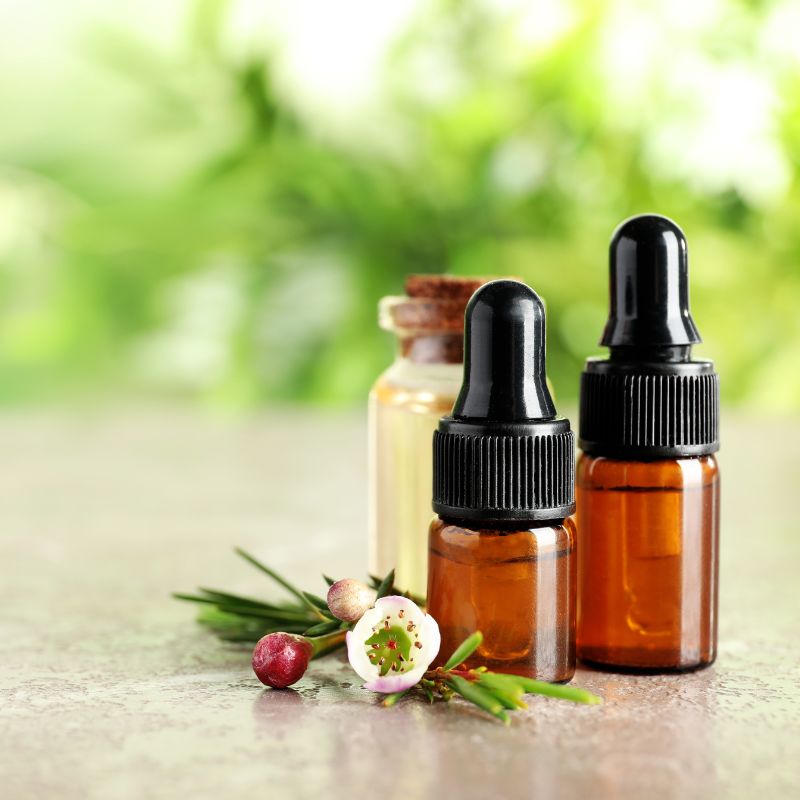
Tea tree oil for Bartholin cyst has one of the largest collections of Earth Clinic reader testimonials. Many readers report that tea tree oil helped reduce pain, soften the cyst, or encourage drainage within 24 to 72 hours.
Tea tree oil is potent and can burn sensitive vulvar tissue if used undiluted. Some readers used it straight and reported success, but others reported itching, burning, or dryness. A diluted approach is safer.
Gentler Tea Tree Oil Dilution
- 1 drop tea tree oil
- 1 teaspoon coconut oil, castor oil, olive oil, or jojoba oil
- Apply externally with gauze or a cotton pad
- Leave on briefly at first to test tolerance
Tea Tree Oil Combinations Readers Report
Tea Tree + Castor Oil
Commonly used on gauze to combine tea tree's potency with castor oil's soothing, drawing quality.
Tea Tree + Coconut Oil
Often used when readers want a simple dilution with a gentle carrier oil.
Tea Tree + Witch Hazel
Some readers use witch hazel afterward to soothe burning or irritation.
Tea Tree + Epsom Salt Baths
Several readers combine topical tea tree oil with warm sitz baths to encourage drainage.
Tea Tree Oil Safety
Do not apply undiluted tea tree oil internally or directly to mucous membranes. Stop immediately if burning, itching, swelling, or worsening pain occurs.
Turmeric and Coconut Oil for Bartholin Cyst
Turmeric and coconut oil is a frequently mentioned Bartholin cyst remedy among readers. Turmeric contains curcumin, a compound studied for anti-inflammatory properties. Coconut oil is used as a carrier to help turmeric form a paste and stay in place.
Reader Pattern: Turmeric + Coconut Oil Paste
One reader reported making a paste of coconut oil and turmeric, soaking a cotton ball in it, and placing it externally against the cyst. She reported that the cyst opened within several hours and was reduced by half the next morning.
Simple Turmeric Coconut Paste
- 1 teaspoon turmeric powder
- Enough coconut oil to make a paste
- Apply externally to gauze or a cotton pad
- Protect underwear and bedding from turmeric stains
Turmeric stains skin, towels, underwear, and sheets yellow-orange. Do not insert turmeric paste into the vagina or pack it into an open draining area.
Internal Turmeric
Some readers report taking turmeric capsules internally until swelling subsides. Medicinal amounts of turmeric may interact with blood thinners, gallbladder conditions, surgery, pregnancy, or medications, so use caution.
Phoebe's Method for Bartholin Cyst
Phoebe's Method, sometimes called Phoebe's Cure, is a popular alternative women's health forum protocol for stubborn Bartholin cysts. It combines several remedies readers already discuss separately: witch hazel, tea tree oil, calamine lotion, and internal turmeric.
The typical forum-style method involves layering ingredients on a clean cotton pad or cosmetic round and holding it externally against the cyst for a short period.
Common Phoebe's Method Ingredients
- Alcohol-free witch hazel on a cotton pad
- 1 to 2 drops of fully diluted tea tree oil
- A thin layer of calamine lotion
- Internal turmeric capsules or turmeric drink, if tolerated
Readers often use this method for 20 to 30 minutes at a time. Because the combination is stronger than a single remedy, it may cause irritation, drying, peeling, or burning on delicate vulvar tissue.
Phoebe's Method Safety
Use this method externally only. Do not insert the pad internally. Remove it immediately if you feel sharp burning, increased pain, swelling, rawness, or skin peeling. Avoid using this method on broken or actively draining tissue.
Epsom Salt Sitz Baths
Epsom salt baths are a classic home treatment for Bartholin cysts. The warmth may soften the tissue and encourage natural drainage, while Epsom salt is traditionally used for swelling and soreness.
What Kind of Epsom Salt for Bartholin Cyst?
Use plain, unscented Epsom salt, also labeled magnesium sulfate. Avoid heavily fragranced bath salts, bubble bath, essential-oil blends, or colored bath products if the area is already irritated.
Reader-Style Sitz Bath
- Fill a clean tub or sitz basin with warm water.
- Add plain Epsom salt.
- Sit for 10 to 15 minutes.
- Pat dry gently.
- Repeat several times daily if tolerated.
Some readers report dramatic drainage after Epsom salt baths or magnesium sulfate paste. Others report increased swelling or irritation. If Epsom salt makes pain, hardness, or swelling worse, stop and seek medical advice.
Apple Cider Vinegar for Bartholin Cyst
Apple cider vinegar for Bartholin cyst has several positive Earth Clinic reports, but it is also one of the more irritating remedies. Some readers report that apple cider vinegar helped shrink or open a cyst. Others report burning, increased pain, or skin irritation.
If used, apple cider vinegar should be treated as a strong topical acid and applied only externally.
Safer ACV Approach
- Dilute apple cider vinegar with water before first use.
- Apply externally with a cotton pad.
- Use briefly and rinse if it stings.
- Do not insert ACV into the vagina.
- Stop if burning, rawness, swelling, or worsening pain occurs.
Apple Cider Vinegar Caution
Apple cider vinegar can burn vulvar tissue. Avoid using it on broken, raw, or open skin, and do not use it internally.
Vitamin E Oil
Vitamin E oil is another Earth Clinic reader remedy for Bartholin cysts. Readers describe applying vitamin E oil from a gelcap or using vitamin E cream externally to soften the area and encourage drainage.
Vitamin E is generally gentler than apple cider vinegar or essential oils, but some people react to topical vitamin E. Patch test first and avoid applying it inside the vagina.
PRID Drawing Salve and Ichthammol
PRID drawing salve and ichthammol ointment are traditional thick drawing salves that some women use for stubborn Bartholin cysts or abscess-like lumps. These salves are often paired with a warm compress or sitz bath.
Readers typically apply a small dab of salve to sterile gauze and place it externally against the lump. The goal is to soften the area and encourage the cyst to come to a head or drain naturally.
- Use externally only on the labia, never inside the vagina.
- Apply a small amount to gauze, not directly into an opening.
- Do not use on freshly draining or raw tissue.
- Stop if burning, rash, peeling, or worsening pain develops.
Because PRID and ichthammol are occlusive and can be messy, they should be used cautiously on vulvar tissue.
Serrapeptase and Internal Enzyme Support
Serrapeptase is a proteolytic enzyme discussed in natural health communities for inflammation, scar tissue, and cyst-like blockages. Some readers use systemic enzymes internally for chronic or recurring Bartholin cysts, especially when the lump feels hard, deep, or slow to drain.
The theory is that enzymes may support the body's normal cleanup processes and inflammatory balance. However, serrapeptase has not been proven to dissolve Bartholin cysts, and it should not replace medical evaluation for a painful or infected cyst.
Serrapeptase Safety
Serrapeptase may increase bleeding risk and may not be appropriate with blood thinners, before surgery, during pregnancy, or with complex medical conditions. Ask a qualified healthcare provider before using systemic enzymes.
Other Reader Remedies
Aloe Vera
Aloe vera may soothe irritated skin around the cyst. Use pure aloe vera gel externally and avoid products with alcohol, fragrance, or harsh preservatives.
Frankincense Oil
Some readers add frankincense essential oil to carrier oils. Like all essential oils, it should be diluted and used externally only.
Magnesium Sulfate Paste
Some readers use magnesium sulfate paste after Epsom salt baths. Apply externally only and stop if it stings or irritates.
Alkaline Diet
Some readers report improvement with dietary changes, especially a diet rich in leafy greens, lemon or lime water, healthy fats, and less processed food. Diet may support overall inflammation balance, but it is not a fast treatment for an acute painful abscess.
Calamine Lotion
Calamine lotion appears in Phoebe's Method and is used as a soothing, drying barrier. Use externally only and avoid open or actively draining tissue.
What to Avoid
Because Bartholin cysts occur near delicate vulvar and vaginal tissue, remedy choice matters.
Avoid These Practices
- Do not cut, lance, puncture, or squeeze the cyst at home.
- Do not insert essential oils, vinegar, turmeric paste, castor oil, PRID, or ichthammol into the vagina.
- Do not use undiluted tea tree oil on mucous membranes.
- Do not keep irritating remedies on if burning or swelling increases.
- Do not use fragranced bath salts or bubble bath on an irritated cyst.
- Do not delay medical care if pain is severe or infection signs appear.
After a Bartholin Cyst Drains
Once a Bartholin cyst drains, pain often improves quickly. However, the area may remain tender, swollen, or irritated for several days.
After drainage:
- Rinse gently with warm water.
- Pat dry; do not rub.
- Wear a clean pad to absorb drainage.
- Change underwear frequently.
- Continue gentle sitz baths if soothing.
- Avoid sex until pain, drainage, and swelling resolve.
- Seek care if drainage smells foul, pain returns, or swelling worsens.
Recurring Bartholin Cysts
Some women experience recurring Bartholin cysts. Recurrent cysts may involve duct blockage, infection, friction, tight clothing, shaving irritation, vaginal microbiome disruption, or incomplete drainage.
Helpful prevention steps may include:
- Avoiding tight underwear and pants
- Changing out of sweaty clothing quickly
- Using gentle unscented soaps externally only
- Avoiding harsh feminine washes and fragrances
- Considering probiotics after antibiotics if appropriate
- Seeking medical evaluation for recurring or persistent lumps
Women over 40 with a new Bartholin-area lump should be evaluated by a clinician to rule out rare but serious causes.
Frequently Asked Questions
What is the best natural remedy for a Bartholin cyst?
Earth Clinic readers most often report castor oil, tea tree oil, witch hazel, turmeric and coconut oil, Epsom salt sitz baths, apple cider vinegar, PRID salve, and vitamin E. The best remedy depends on whether the cyst is early, painful, infected, draining, or irritated.
Does castor oil help a Bartholin cyst?
Many readers report success with castor oil applied externally several times daily or used as a castor oil pack. It is one of the gentler remedies frequently discussed for this condition.
How do you use castor oil for a Bartholin cyst?
Readers typically apply castor oil externally to the cyst area using clean hands, gauze, or a cloth. Some repeat several times daily. Do not insert castor oil into the vagina.
Is witch hazel good for Bartholin cysts?
Some readers report fast pain relief and swelling reduction with witch hazel pads applied externally. Alcohol-free witch hazel may be gentler for sensitive skin.
Can tea tree oil shrink or drain a Bartholin cyst?
Many Earth Clinic readers report that tea tree oil helped a Bartholin cyst drain within one to three days. It should be diluted in a carrier oil because undiluted tea tree oil can burn delicate tissue.
Can I use tea tree oil and witch hazel together?
Some readers use diluted tea tree oil first and witch hazel afterward to soothe the area. Use both externally only and stop if burning or irritation increases.
Does turmeric help Bartholin cysts?
Some readers report success with turmeric capsules or topical turmeric and coconut oil paste. Turmeric may support inflammation balance, but it stains badly and should not be inserted internally.
What is Phoebe's Method for a Bartholin cyst?
Phoebe's Method is a popular alternative forum protocol that layers witch hazel, diluted tea tree oil, and calamine lotion onto a cotton pad held externally against the cyst. It is often paired with internal turmeric. It may irritate delicate tissue, so use caution.
Can I use PRID drawing salve on a Bartholin gland?
Some women use PRID or ichthammol salve externally on gauze to help draw a stubborn cyst to a head. It should not be inserted into the vagina or used on freshly draining, raw, or open tissue.
What kind of Epsom salt should I use for a Bartholin cyst?
Use plain unscented Epsom salt, also called magnesium sulfate. Avoid fragranced, colored, or essential-oil bath products on irritated vulvar tissue.
Can apple cider vinegar help a Bartholin cyst?
Some readers report that apple cider vinegar helped shrink or open a cyst, but it can burn vulvar tissue. Dilute it, use externally only, and stop if it causes pain or irritation.
Does serrapeptase help Bartholin cysts?
Serrapeptase is discussed by some natural health users for recurring cysts and inflammation, but it has not been proven to treat Bartholin cysts. Use caution if you take blood thinners or have surgery planned.
How do you encourage a Bartholin cyst to drain naturally?
Warm sitz baths, warm compresses, loose clothing, gentle external remedies, and avoiding squeezing may encourage natural drainage. Do not cut, puncture, or force the cyst open.
How long does it take for a Bartholin cyst to drain?
Reader timelines vary. Some report drainage within hours after a remedy; others take several days. A painful, worsening, or infected cyst should be evaluated medically.
Can a Bartholin cyst go away on its own?
Yes, small painless Bartholin cysts may resolve without treatment. Painful, infected, large, or recurring cysts may need medical care.
Should I try to burst a Bartholin cyst at home?
No. Trying to burst, lance, or squeeze a Bartholin cyst can worsen infection and pain. Encourage gentle drainage with warmth and seek medical help if severe.
When is a Bartholin cyst an emergency?
Severe pain, fever, chills, rapid swelling, spreading redness, pregnancy, diabetes, immune suppression, or inability to sit or walk comfortably are reasons to seek prompt medical care.
Final Thoughts
Bartholin cysts can be intensely uncomfortable, but many Earth Clinic readers report relief with home remedies such as castor oil, witch hazel, tea tree oil, turmeric and coconut oil, Epsom salt sitz baths, apple cider vinegar, PRID salve, ichthammol, Phoebe's Method, and vitamin E.
These remedies are generally discussed for external use, gentle support, and encouraging natural drainage. A severe, infected, recurring, or worsening cyst should be evaluated by a clinician.
Continue below to read Earth Clinic reader experiences with Bartholin cyst remedies, including castor oil, witch hazel, tea tree oil, turmeric, Epsom salt, apple cider vinegar, PRID, and vitamin E.
References and Further Reading
This article combines Earth Clinic reader experiences, traditional home remedies, and medical safety information about Bartholin cysts and vulvar care.
- Mayo Clinic. Bartholin's cyst: Symptoms and causes.
- Cleveland Clinic. Bartholin Cyst: Causes, Symptoms and Treatment.
- American Academy of Family Physicians. Management of Bartholin duct cyst and gland abscess.
- Carson CF, Hammer KA, Riley TV. Melaleuca alternifolia tea tree oil: a review of antimicrobial and other medicinal properties. Clinical Microbiology Reviews. 2006;19(1):50-62.
- Hewlings SJ, Kalman DS. Curcumin: A Review of Its Effects on Human Health. Foods. 2017;6(10):92.