Frankincense essential oil has been valued for thousands of years for its warm, resinous aroma and its role in spiritual, medicinal, and wellness traditions. Today, many people keep frankincense oil on hand for topical use, massage blends, aromatherapy, skincare, emotional balance, and natural support during discomfort.
Earth Clinic readers have reported using frankincense oil for ganglion cysts, urinary discomfort, skin concerns, inflammation, pain, respiratory support, stress, and sleep. While research continues to explore the compounds found in frankincense and Boswellia resin, reader experiences suggest that this essential oil remains one of the most versatile oils in a natural remedy cabinet.
This updated guide explains what frankincense oil is, how readers use it, how to choose a quality oil, why responsible sourcing matters, and how to use frankincense safely.
At a Glance
- Best Known For: Inflammation support, skincare, relaxation, spiritual use, and massage blends
- Popular Earth Clinic Uses: Ganglion cysts, urinary discomfort, skin concerns, pain, and stress
- Common Application: Diluted topical use, massage, diffusion, and occasional reader-reported internal use
- Aroma: Woody, resinous, earthy, warm, and slightly citrus-like
- Quality Markers: Botanical name, country of origin, GC/MS testing, batch number, and responsible sourcing
- Important Safety Note: Essential oils are highly concentrated and should usually be diluted before applying to skin
Quick Nav
What Is Frankincense Oil?
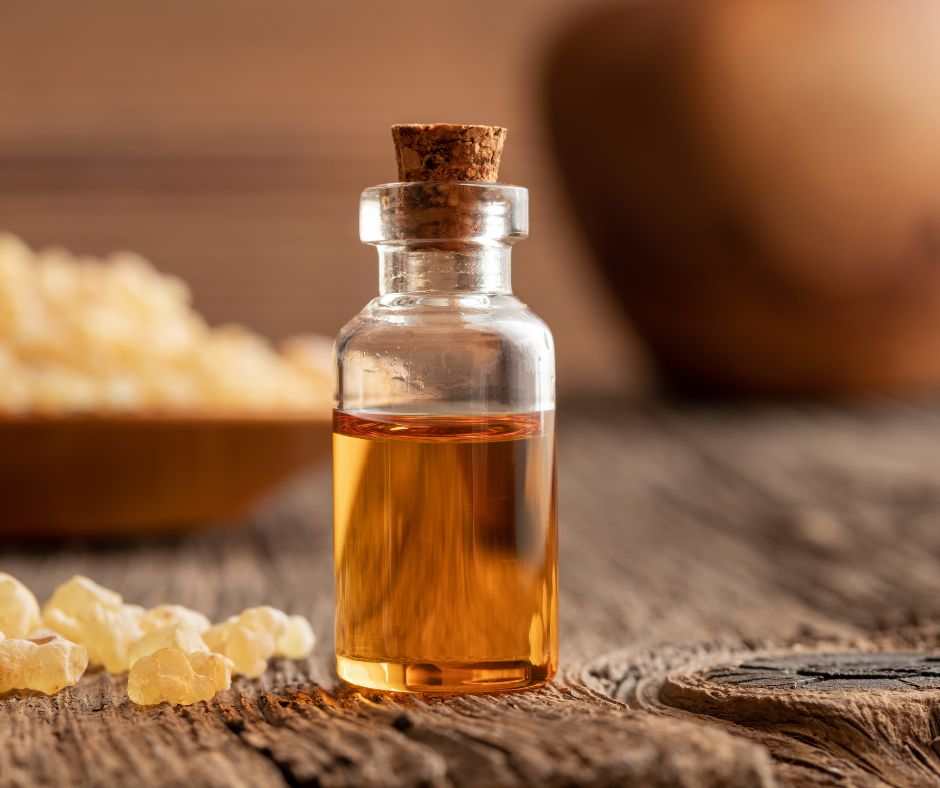
Frankincense oil is an essential oil distilled from the resin of Boswellia trees, which grow in arid regions of Africa, the Arabian Peninsula, and parts of India. The resin is collected by making careful cuts in the tree bark. A milky sap emerges, hardens into resin tears, and can then be steam-distilled to produce essential oil.
Different Boswellia species are used to produce frankincense products, including Boswellia sacra, Boswellia carterii, Boswellia serrata, Boswellia frereana, and Boswellia papyrifera. Each has a slightly different aroma and chemical profile.
Aroma and Composition
Frankincense essential oil typically has a woody, balsamic, earthy, resinous, and slightly citrus-like scent. Its aromatic compounds include monoterpenes and sesquiterpenes such as alpha-pinene, limonene, and other volatile constituents.
Important distinction: Boswellic acids are often discussed in relation to frankincense and Boswellia resin, but they are found primarily in the resin and extracts rather than in meaningful amounts in steam-distilled essential oil. This is one reason frankincense oil and Boswellia supplements should not be treated as identical products.
Frankincense Oil History
Frankincense has been used since ancient times in religious ceremonies, incense, burial rituals, perfumes, medicine, and trade. It was considered precious in ancient Egypt, Arabia, Greece, Rome, India, and throughout the Mediterranean world.
In spiritual traditions, frankincense has long been burned to purify spaces, support prayer, deepen meditation, and create a sense of calm. Its continued use in modern aromatherapy reflects this long-standing association with grounding, reverence, and emotional steadiness.
How to Choose a Quality Frankincense Oil
Frankincense oil quality varies widely. Because essential oils are concentrated and often expensive, it is worth choosing carefully. The best companies provide clear sourcing details and batch-specific testing rather than vague marketing claims.
Quality Checklist
- Botanical name: Look for the Boswellia species, such as Boswellia sacra, Boswellia carterii, Boswellia serrata, or Boswellia frereana.
- Country or region of origin: Reputable suppliers usually disclose where the resin was harvested.
- Extraction method: Frankincense essential oil is usually steam-distilled from resin.
- Batch number: A batch number allows testing and traceability.
- GC/MS report: Gas chromatography-mass spectrometry testing helps verify volatile composition and screen for adulteration.
- No vague purity claims: Terms like “therapeutic grade” are not independently standardized unless backed by transparent testing.
- Responsible sourcing: Prefer brands that discuss harvesting practices, fair trade, farmer relationships, and conservation.
What Is GC/MS Testing?
GC/MS testing stands for gas chromatography-mass spectrometry. In essential oils, it is used to identify and measure volatile aromatic compounds. A GC/MS report can help confirm whether an oil’s chemistry matches the expected profile for that species and whether there are signs of adulteration, dilution, or substitution.
GC/MS testing does not prove that an oil will cure a condition, but it is a useful quality-control tool when purchasing premium essential oils.
Responsible Sourcing and Sustainability
Frankincense comes from wild Boswellia trees, and sustainability has become an important issue. Some frankincense-producing regions face pressure from overharvesting, poor tree regeneration, grazing, land-use changes, insect damage, and high global demand for resin and essential oils.
Responsible sourcing matters because excessive tapping can weaken trees and reduce long-term resin production. Sustainable harvesting practices may include limiting the number and depth of cuts, allowing rest periods, protecting young trees, supporting local harvesters, and improving traceability.
Questions to Ask Before Buying Frankincense Oil
- Does the company disclose the Boswellia species?
- Does it list the country or region of origin?
- Does it provide batch-specific GC/MS testing?
- Does it describe sustainable or responsible harvesting practices?
- Does it support harvesters or local communities fairly?
- Does it avoid vague claims such as “highest grade” without evidence?
Choosing responsibly harvested frankincense helps protect both the trees and the communities that depend on them.
Most Popular Earth Clinic Uses for Frankincense Oil
Earth Clinic reader reports suggest that frankincense oil is most often valued as a practical home remedy rather than simply as a fragrant oil. The strongest reader themes include topical use for cyst-like growths, lower abdominal massage for urinary discomfort, skin applications, and general inflammation or pain support.
Ganglion Cysts
Reader Theme: Topical application and gentle massage over the cyst.
What Readers Report: One reader described a painful three-year ganglion cyst on the foot that appeared to shrink within days and resolve after continued frankincense oil massage.
Urinary Discomfort
Reader Theme: Frankincense oil applied externally over the lower abdomen.
What Readers Report: Several readers describe easing discomfort during UTI-like episodes when frankincense was used along with hydration, cranberry, apple cider vinegar, plantain tea, or other remedies.
Skin Concerns
Reader Theme: Spot application or use in blends for skin changes, irritation, or blemishes.
Important Note: Suspicious or changing skin lesions should be evaluated by a dermatologist rather than treated only at home.
Pain and Inflammation
Reader Theme: Massage blends for sore joints, muscles, and areas of discomfort.
Best Use: Dilute in a carrier oil and massage into affected areas.
Frankincense Oil for Ganglion Cysts
A ganglion cyst is a fluid-filled lump that often appears near joints or tendons, especially on the wrist, hand, ankle, or foot. Many are harmless, but they can become painful, interfere with shoes or movement, or concern people because of their appearance.
One Earth Clinic reader reported having a painful ganglion cyst on the foot for three years. After applying frankincense oil morning and night with gentle massage, the cyst seemed smaller within two days. After about ten days, the reader massaged more firmly, heard a cracking sensation, and reported that the cyst was gone.
There is not enough clinical evidence to say that frankincense oil dissolves ganglion cysts. A more cautious explanation is that topical oil massage, local warmth, and gentle manual movement may support circulation, comfort, and tissue mobility. Some people choose castor oil as the carrier because it is thick, soothing, and traditionally used in compresses.
Reader-Inspired Ganglion Cyst Protocol
- Warm the area. Apply a warm, damp cloth or warm compress over the cyst for 5 to 10 minutes.
- Mix the oil. Combine 1 teaspoon hexane-free castor oil with 2 to 3 drops frankincense essential oil.
- Apply gently. Massage the blend over the cyst using slow circular movements for 2 to 5 minutes.
- Do not force it. Avoid hard pressure, crushing, puncturing, or trying to “pop” the cyst.
- Repeat consistently. Apply once or twice daily if tolerated.
- Monitor closely. Stop if pain, redness, warmth, swelling, numbness, or irritation increases.
Important: Do not forcefully crush, puncture, or attempt to drain a cyst at home. Seek medical evaluation if a lump is growing, painful, red, warm, infected-looking, numb, limiting movement, or uncertain.
Best Carrier Oils for Frankincense by Use
Carrier oils are not interchangeable. The best choice depends on whether you are using frankincense for a cyst, face oil, sore joints, abdominal massage, or dry skin. Dilution also matters: facial and sensitive-area blends should be much weaker than body massage blends.
Ganglion Cysts
Suggested Carrier: Hexane-free castor oil
Dilution: 2 to 3 drops frankincense oil per teaspoon of castor oil
Why It Fits: Castor oil is thick, stays in place well, and is traditionally used for massage and compresses over deeper tissue areas.
Aged, Dry or Scarred Skin
Suggested Carrier: Rosehip seed oil, jojoba oil, argan oil, or squalane
Dilution: 1 drop frankincense oil per tablespoon of carrier oil for facial use
Why It Fits: These lighter oils are commonly used in facial blends and absorb more gracefully than heavy oils.
Pelvic or Urinary Discomfort
Suggested Carrier: Sweet almond oil, jojoba oil, olive oil, or fractionated coconut oil
Dilution: 2 to 4 drops frankincense oil per tablespoon of carrier oil
Why It Fits: These oils spread easily over the lower abdomen and are suitable for gentle massage.
Sore Joints and Arthritis
Suggested Carrier: Olive oil, castor oil, hemp seed oil, sesame oil, or coconut oil
Dilution: 2 to 6 drops frankincense oil per tablespoon of carrier oil, depending on skin tolerance
Why It Fits: These oils work well for body massage and can be paired with warmth or gentle movement.
Frankincense Oil for Urinary Discomfort and UTI Support
Several Earth Clinic readers have reported using frankincense oil externally during urinary discomfort or UTI-like symptoms. The most common method is to massage the oil over the lower abdomen, sometimes along with other remedies such as cranberry juice, apple cider vinegar, plantain tea, garlic, vitamin C, or increased water intake.
One reader described severe lower abdominal pain and chills during a suspected UTI. After massaging frankincense oil into the lower abdomen, the pain reportedly began improving within about 20 minutes, allowing sleep. Another reader reported improvement after applying several drops over the lower abdomen for several days. A third reader described placing two drops on a panty liner overnight during a flare and waking with less discomfort.
Lower Abdominal Massage Method
- Dilute frankincense oil in a carrier oil.
- Massage gently over the lower abdomen.
- Repeat several times daily if tolerated.
- Use alongside hydration and appropriate medical care when needed.
Important UTI Warning: A urinary tract infection can become serious if it spreads to the kidneys. Seek medical care promptly for fever, chills, flank or back pain, blood in the urine, vomiting, pregnancy, recurrent UTIs, severe pain, worsening symptoms, or symptoms that do not improve quickly.
Frankincense oil should be viewed as comfort support, not a substitute for antibiotics or medical care when a true bacterial UTI is present.
Frankincense Oil for Pain, Arthritis and Inflammation
Frankincense is widely used in natural wellness for inflammation-related discomfort. Many people use the essential oil in massage blends for sore joints, stiff hands, knees, neck, back, or muscle tension. Boswellia resin extracts are also used internally for joint support, but these are different from frankincense essential oil.
Frankincense Massage Oil for Sore Joints
- 1 tablespoon carrier oil
- 2 to 4 drops frankincense essential oil
- Optional: 1 drop lavender, copaiba, ginger, or peppermint essential oil
Massage into sore joints or muscles once or twice daily. Use less essential oil for sensitive skin.
Frankincense oil may be especially useful as part of a broader routine that includes gentle movement, stretching, warm compresses, magnesium, anti-inflammatory foods, and adequate rest.
Frankincense Oil for Skin Health
Frankincense oil is commonly used in skincare for dry skin, mature skin, scars, blemishes, uneven tone, and irritated areas. It is often added to face oils, salves, or creams because of its soothing aroma and traditional reputation for skin repair.
Simple Frankincense Face Oil
- 1 tablespoon jojoba, rosehip, argan, or squalane oil
- 1 drop frankincense essential oil
Apply a small amount to damp skin after patch testing. Avoid the eyes.
Skin Growths and Suspicious Lesions
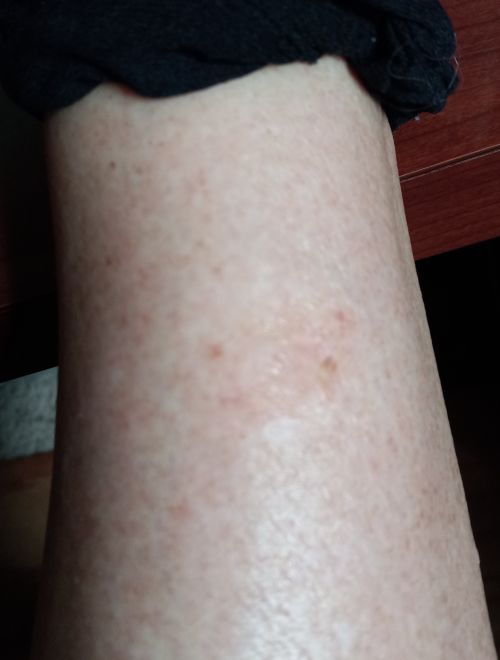
One Earth Clinic reader reported applying frankincense oil and curcumin to a changing skin lesion on the lower leg that later disappeared. However, a changing, darkening, bleeding, irregular, or suspicious spot should always be evaluated by a dermatologist. Skin cancer can be serious, and disappearance of a surface lesion does not guarantee that a dangerous condition has been fully treated.
Do not rely on frankincense oil as a skin cancer treatment. If a spot changes in size, shape, color, border, sensation, or bleeding, seek professional evaluation.
Frankincense Oil for Respiratory Support
Frankincense oil is often used aromatically during congestion, coughs, seasonal discomfort, meditation, and breathing practices. Its calming scent may help create a sense of open breathing and relaxation.
Respiratory Comfort Options
- Diffuser: Add a few drops to a diffuser according to device instructions.
- Steam bowl: Add 1 drop to hot water, keep eyes closed, and inhale gently from a safe distance.
- Chest massage: Dilute in carrier oil and massage onto the chest or upper back.
Caution: Essential oils can irritate airways in some people, especially those with asthma, chemical sensitivity, pets, infants, or small children in the home. Use low amounts and good ventilation.
Frankincense Oil for Stress, Sleep and Emotional Balance
Frankincense has a long association with meditation, prayer, grounding, and emotional steadiness. Its aroma is often described as centering and calming. Many people use it during evening routines, breathwork, journaling, yoga, meditation, or prayer.
Calming Aromatherapy Blend
- 2 drops frankincense
- 2 drops lavender
- 1 drop sweet orange or bergamot
Use in a diffuser according to manufacturer directions, or dilute in a carrier oil for pulse-point use.
For sleep, frankincense may be used in a diffuser before bed, blended into a body oil, or added to a nighttime relaxation ritual.
Frankincense Oil for Women’s Health
Frankincense oil is sometimes used in massage blends for menstrual discomfort, pelvic tension, emotional stress, and relaxation. Its calming aroma may be helpful during PMS, stress-related tension, or times of emotional overwhelm.
Abdominal Comfort Massage
- 1 tablespoon carrier oil
- 2 drops frankincense essential oil
- Optional: 1 drop lavender or clary sage
Massage gently over the lower abdomen. Avoid during pregnancy unless approved by a qualified healthcare provider.
Pregnancy Note: Essential oil use during pregnancy should be conservative and guided by a qualified professional, especially in the first trimester.
Frankincense Oil vs. Boswellia Supplements
Many people use the words frankincense and Boswellia interchangeably, but frankincense essential oil and Boswellia supplements are not the same product.
Frankincense Essential Oil
- Steam-distilled from Boswellia resin
- Used mainly aromatically or topically
- Contains volatile aromatic compounds
- Common for massage, skincare, meditation, and diffuser use
Boswellia Extract
- Usually taken internally as a capsule or tablet
- Often standardized for boswellic acids
- Commonly used for joint and inflammation support
- Should be used according to supplement directions and medical guidance when appropriate
If the goal is joint inflammation support, Boswellia extract may be more relevant than frankincense essential oil. If the goal is topical massage, skincare, or aromatherapy, frankincense oil may be more appropriate.
How to Use Frankincense Oil
Frankincense oil can be used in several ways depending on the goal. Because essential oils are concentrated, most people should dilute them before applying to skin.
Topical Dilution Guide
- Face or sensitive skin: 1 drop essential oil per tablespoon of carrier oil
- General body massage: 2 to 4 drops per tablespoon of carrier oil
- Small spot application: Use cautiously and patch test first
Diffuser Use
Add frankincense oil to a diffuser according to the manufacturer’s directions. Start with fewer drops, especially in small rooms or around sensitive people.
Internal Use
Some Earth Clinic readers report taking a drop of frankincense oil internally. However, internal essential oil use is controversial and should be approached cautiously. Essential oils are highly concentrated, and quality, purity, dose, medication interactions, and individual health conditions matter.
Do not ingest frankincense essential oil unless guided by a qualified practitioner and using a product specifically labeled for internal use.
Safety and Precautions
Frankincense oil is generally considered gentle compared with many essential oils, but it can still cause irritation, allergic reactions, headaches, nausea, respiratory sensitivity, or skin reactions in some people.
Frankincense Oil Safety Checklist
- Dilute before applying to skin.
- Patch test before larger applications.
- Avoid the eyes, inner ears, mucous membranes, and broken skin.
- Use caution during pregnancy and breastfeeding.
- Use caution with infants, children, pets, and people with asthma.
- Do not apply to suspicious skin lesions instead of getting them checked.
- Do not use as a replacement for urgent medical care.
- Stop use if burning, rash, itching, dizziness, nausea, or breathing irritation occurs.
Medication and Health Considerations
Ask a healthcare provider before using frankincense oil internally or extensively if you take blood thinners, have a bleeding disorder, are pregnant, have liver or kidney disease, have severe allergies, or are undergoing cancer treatment.
Frequently Asked Questions
What is frankincense oil good for?
Frankincense oil is commonly used for aromatherapy, stress support, skincare, massage blends, inflammation-related discomfort, respiratory comfort, meditation, and emotional grounding. Earth Clinic readers also report using it for ganglion cysts and urinary discomfort.
Can frankincense oil help a ganglion cyst?
One Earth Clinic reader reported that frankincense oil massage helped a painful ganglion cyst on the foot shrink and resolve. There is not enough clinical evidence to confirm that frankincense dissolves cysts, but a diluted topical massage blend may support comfort. Cysts should be medically evaluated if painful, growing, red, warm, infected-looking, or uncertain.
What is the best carrier oil for frankincense?
For facial skincare, jojoba, rosehip, argan, or squalane are popular choices. For ganglion cyst massage or compresses, castor oil is often preferred. For joint massage, olive, hemp seed, sesame, coconut, or castor oil may be used.
What does GC/MS tested frankincense oil mean?
GC/MS testing analyzes the volatile compounds in an essential oil. It can help confirm botanical identity, compare the oil to expected chemical profiles, and screen for possible adulteration.
Why does sustainable frankincense matter?
Frankincense resin comes from wild Boswellia trees. Overharvesting, poor regeneration, and high global demand can stress tree populations. Responsibly harvested frankincense helps protect trees and supports harvesting communities.
How do you apply frankincense oil?
For most uses, dilute frankincense essential oil in a carrier oil such as jojoba, castor, olive, coconut, or rosehip oil. Apply to the affected area or use in massage. For aromatherapy, use in a diffuser according to device instructions.
Can frankincense oil be applied directly to the skin?
Some people apply it neat, but dilution is safer and better tolerated. Sensitive skin, facial skin, children, and older adults should use diluted frankincense oil.
Is frankincense oil the same as Boswellia?
No. Frankincense oil is steam-distilled from Boswellia resin and is used mainly topically or aromatically. Boswellia supplements are usually internal extracts standardized for boswellic acids and are commonly used for joint and inflammation support.
Can frankincense oil help arthritis?
Frankincense oil may be useful in massage blends for sore joints and stiffness. For internal inflammation support, Boswellia extract is usually more relevant than frankincense essential oil.
Can frankincense oil help UTI symptoms?
Some Earth Clinic readers report easing urinary discomfort by applying frankincense oil externally to the lower abdomen. However, a true UTI can become serious and may require antibiotics. Seek medical care for fever, chills, flank pain, blood in urine, pregnancy, or worsening symptoms.
Can frankincense oil treat skin cancer?
No. Frankincense oil should not be used as a substitute for medical diagnosis or treatment of skin cancer. Suspicious, changing, dark, bleeding, or irregular skin lesions should be evaluated by a dermatologist.
What does frankincense oil smell like?
Frankincense oil has a woody, resinous, earthy, warm, and slightly citrus-like aroma. It is often used for meditation, grounding, and spiritual practices.
Can frankincense oil be used around pets?
Use caution. Pets, especially cats and birds, may be sensitive to essential oils. Diffuse only in well-ventilated areas, use low amounts, and allow pets to leave the room.
Final Thoughts
Frankincense oil is one of the most versatile essential oils in natural wellness. Earth Clinic readers have reported using it for ganglion cysts, urinary discomfort, skin concerns, pain, inflammation, stress, and breathing support. Its warm, grounding scent also makes it a favorite for meditation, prayer, and emotional balance.
For a more modern approach, quality and sourcing matter as much as use. Look for botanical name, country of origin, batch-specific GC/MS testing, and responsible harvesting information. Because essential oils are concentrated, frankincense should be used thoughtfully, with dilution, patch testing, and appropriate medical care when symptoms are serious.
Continue reading below to discover how Earth Clinic readers have used frankincense oil, and please share your own experience with us.