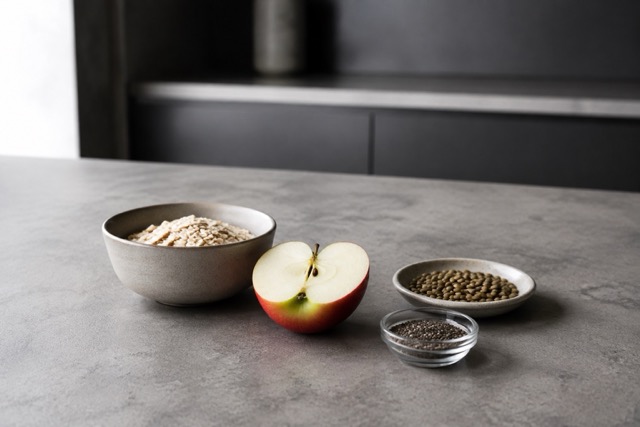
Fiber is often treated as if it were one simple substance: eat more of it, drink more water, and constipation disappears.
The reality is far more interesting.
The fiber that speeds one person’s digestion may slow another person’s. Wheat bran can make a sluggish bowel move, yet leave someone with irritable bowel syndrome painfully bloated. Psyllium can soften a hard stool—and, surprisingly, firm a loose one. A prebiotic fiber may nourish beneficial bacteria, but it can also create enough gas to make a sensitive gut miserable.
The secret is not merely getting “more fiber.” It is choosing the right fiber for the job.
This guide explains soluble and insoluble fiber, fermentable and gel-forming fiber, the best options for constipation and loose stools, when to take fiber, how much to use, whether a prebiotic or probiotic is necessary, and what fiber really does to water, minerals, medications, and electrolytes.
At a Glance
- For hard, dry stools: Increase total fiber gradually, emphasizing soluble fiber, while drinking adequate fluid.
- For loose or poorly formed stools: A gel-forming soluble fiber—especially plain psyllium—is usually more useful than coarse bran.
- For IBS or a sensitive gut: Start low and favor psyllium; highly fermentable fibers such as inulin may cause considerable gas.
- For the microbiome: Eat a variety of plant fibers. A separate prebiotic is optional, not mandatory.
- For medication safety: Take fiber supplements separately from oral medicines unless a pharmacist confirms otherwise.
- For electrolytes: Fiber itself does not normally drain electrolytes. Persistent diarrhea, laxative overuse, dehydration, or excessive water intake can.
What Is Fiber?
Dietary fiber consists largely of plant carbohydrates that human digestive enzymes cannot fully break down in the small intestine. Instead of being absorbed like sugar or starch, fiber continues into the large intestine, where it may hold water, add bulk, form a gel, or become food for intestinal microbes.
The U.S. Food and Drug Administration includes both naturally occurring plant fiber and certain isolated or synthetic nondigestible carbohydrates that have demonstrated a beneficial physiological effect. Those effects may include improved bowel function, lower blood cholesterol, a gentler rise in blood glucose, or greater satiety.
Fiber is not one ingredient. It is a large family of substances with very different physical properties. For digestive purposes, three questions are more useful than simply asking whether a fiber is soluble or insoluble:
- Does it dissolve in water?
- Does it form a stable gel?
- How rapidly is it fermented by gut bacteria?
These properties determine whether a fiber tends to soften stool, firm stool, speed transit, increase gas, feed microbes, or lower cholesterol.
Soluble Fiber: The Water Manager
Soluble fiber disperses in water. Some types become viscous and form a soft gel; others dissolve but remain relatively thin.
Common sources include:
- Psyllium husk
- Oats and oat bran
- Barley
- Beans, lentils, and peas
- Apples and citrus fruit, especially their pectin
- Chia and ground flaxseed
- Carrots, sweet potatoes, and winter squash
- Partially hydrolyzed guar gum
- Inulin and chicory-root fiber
Soluble fiber can slow the movement of food through the upper digestive tract, moderate the absorption of glucose, bind some bile acids, and help lower LDL cholesterol. When it forms a durable gel, it also acts as a stool normalizer: it retains water in a dry stool but absorbs and organizes excess water in a loose stool.
That last point explains why psyllium may help both constipation and diarrhea. It is not simply a laxative. It changes the physical consistency of intestinal contents.
However, not every soluble fiber behaves like psyllium. Inulin dissolves readily but is fermented quickly and does not create the same stool-normalizing gel. It may be excellent microbial food, yet a poor first choice for someone whose immediate problem is urgency, gas, or unpredictable stools.
Insoluble Fiber: The Bulk and Transit Fiber
Insoluble fiber does not dissolve appreciably in water. It adds physical bulk and can stimulate movement through the colon.
Common sources include:
- Wheat bran
- Whole wheat and many whole grains
- Vegetable skins
- Leafy vegetables
- Nuts and seeds
- Cellulose in plant foods
Insoluble fiber can be very helpful for a person with a slow, otherwise healthy bowel. It makes stool larger and may shorten transit time.
But more bulk is not always the answer. Coarse bran may worsen pain, urgency, or bloating in some people with IBS. It may also be unhelpful when constipation is caused by pelvic-floor dysfunction, a narrowing or obstruction, certain medications, very slow colonic transit, or an inability to evacuate stool. Adding more material to a traffic jam does not necessarily clear the road.
The Four Fiber Properties That Matter Most
| Soluble and gel-forming |
Holds water in a stable gel and normalizes stool consistency |
Psyllium; beta-glucan in oats and barley |
Loose stools, constipation, cholesterol support |
| Soluble and highly fermentable |
Feeds microbes rapidly; may produce gas |
Inulin, fructooligosaccharides (FOS), resistant starch |
Microbiome support when tolerated |
| Soluble and gently fermentable |
Feeds microbes with less abrupt gas for many people |
Partially hydrolyzed guar gum, acacia fiber |
Sensitive digestion, gradual microbiome support |
| Insoluble and poorly fermented |
Adds bulk and may speed transit |
Wheat bran, cellulose |
Sluggish stools in people who tolerate it |
Most whole plant foods contain a mixture, which is one reason food-based fiber has broader benefits than relying on a single powder.
Fiber, the Microbiome, and Short-Chain Fatty Acids
Human enzymes cannot digest many fermentable fibers, but intestinal microbes can. As bacteria ferment these fibers, they produce gases and a family of compounds called short-chain fatty acids, or SCFAs. The three best known are acetate, propionate, and butyrate.
- Butyrate is an important fuel for the cells lining the colon. It is involved in maintaining the intestinal barrier and in signaling pathways that help regulate immune and inflammatory activity.
- Propionate is used largely by the liver and participates in metabolic signaling and glucose regulation.
- Acetate is the most abundant SCFA in the circulation and can be used by tissues throughout the body as a substrate and signaling molecule.
SCFA production is one reason microbiome researchers emphasize fiber diversity. Different organisms specialize in different substrates, and one microbe’s fermentation product may become another microbe’s food. However, more fermentation is not always more comfortable. Rapid fermentation can produce gas, pressure, and pain long before any theoretical microbiome benefit becomes meaningful.
Practical takeaway: The goal is not to maximize gas or force the largest possible prebiotic dose. It is to build a varied, tolerable fiber intake that supports microbial activity without making daily digestion worse.
Fiber for Cholesterol, Blood Sugar, and Weight
How Viscous Fiber Can Lower LDL Cholesterol
Gel-forming fibers such as psyllium and beta-glucan increase the viscosity of intestinal contents and can trap some bile acids. The liver must then use more cholesterol to replace the bile acids lost in stool. With consistent intake, this can produce a modest reduction in LDL cholesterol. The effect belongs chiefly to specific viscous fibers; a gram of coarse bran does not necessarily behave like a gram of psyllium or oat beta-glucan.
Blood Sugar, Insulin, and HbA1c
Viscous fiber slows the mixing and movement of food and can reduce the speed at which carbohydrate reaches the small intestine for absorption. This may blunt the rise in glucose after a meal. Over time, higher fiber diets and some fiber supplements may modestly improve fasting glucose, insulin sensitivity, or HbA1c, particularly in people with type 2 diabetes. The response depends on the fiber, dose, diet, and individual; fiber is not a replacement for diabetes treatment.
Satiety, Weight Management, GLP-1, and PYY
Fiber can increase fullness through several overlapping mechanisms. Bulky foods require more chewing and tend to have lower calorie density. Viscous fiber can slow gastric emptying and nutrient absorption. Fermentable fiber may also influence appetite signaling when SCFAs interact with receptors involved in the release of gut hormones such as GLP-1 and peptide YY (PYY).
This is real physiology, but it should be kept in proportion. Eating fiber does not reproduce the potency or duration of prescription GLP-1 receptor agonists. Fiber may modestly support satiety and metabolic health; it is not “natural Ozempic,” and large doses taken purely to suppress appetite can cause bloating, constipation, diarrhea, or inadequate food intake.
How Much Fiber Do You Actually Need?
The standard target is approximately 14 grams per 1,000 calories. Depending on age, sex, and calorie intake, common adult targets fall between 22 and 34 grams per day. The Nutrition Facts Daily Value is 28 grams.
That is a population health target, not a command to force every digestive system to exactly 28 grams overnight.
Someone currently eating 10 grams a day may feel much worse after abruptly jumping to 30 grams. A better approach is to increase intake by approximately 2 to 3 grams per day, hold that level for several days, and increase again only if stools and abdominal comfort remain acceptable.
The best amount is the lowest intake that produces:
- A comfortable, formed stool
- Easy passage without straining
- No persistent urgency
- No excessive gas or abdominal distention
- A bowel pattern that is normal for that individual
Regularity does not require a bowel movement every day. A normal pattern can range from three times a day to three times a week, provided stools are comfortable and there are no warning signs.
The Bristol Stool Scale is a simple way to describe stool consistency. It divides bowel movements into seven types, ranging from very hard and difficult to pass to completely liquid. Tracking your stool type can be more useful than simply counting how often you have a bowel movement, especially when you are adjusting fiber.
| Type 1 |
Separate hard lumps or pellets |
Constipation; stool is moving slowly and has become dry |
| Type 2 |
Sausage-shaped but hard and lumpy |
Constipation or slow transit |
| Type 3 |
Sausage-shaped with cracks on the surface |
Generally considered a healthy, formed stool |
| Type 4 |
Smooth, soft, formed, and easy to pass |
Generally considered an ideal stool consistency |
| Type 5 |
Soft blobs with clearly defined edges |
Faster transit; may be normal occasionally |
| Type 6 |
Fluffy or mushy pieces with ragged edges |
Loose stool or accelerated transit |
| Type 7 |
Watery, with no solid pieces |
Diarrhea |
Practical target: For most people, the goal is a comfortable Bristol Type 3 or 4 stool that passes easily without straining or urgency. If fiber repeatedly pushes your stool toward Type 1 or 2, you may be taking too much, drinking too little, or using the wrong type. If it moves toward Type 6 or 7, look at the fiber type, dose, other supplement ingredients, and possible causes of diarrhea.
The Bristol scale is a useful tracking tool, not a diagnosis. Persistent diarrhea, constipation, blood or black stool, unexplained weight loss, severe pain, or a significant new change in bowel habits warrants medical evaluation.
For a stool that is mushy, ragged, or watery, adding large amounts of wheat bran is usually the wrong experiment. Bran tends to increase bulk and accelerate transit. The more logical choice is a soluble, gel-forming fiber.
Psyllium: The Most Practical First Choice
Psyllium absorbs water and forms a gel that gives loose stool more structure. It may also slow transit enough for the colon to recover more water. Gastrointestinal organizations commonly recommend soluble fiber or psyllium for IBS, and clinicians also use it to improve loose-stool consistency.
A Cautious Stool-Firming Trial
- Begin with approximately ½ teaspoon of plain psyllium husk powder once daily, or the smallest labeled serving, mixed promptly into at least 8 ounces of water.
- Continue for three to four days before judging the result.
- If stools remain loose and there is no uncomfortable bloating, increase to 1 teaspoon once daily.
- If needed, divide the amount between morning and evening rather than taking a large dose at once.
Target: A Bristol Stool Scale type 3 or 4—formed, smooth or lightly cracked, and easy to pass.
Choking and Blockage Warning
Never swallow psyllium, methylcellulose, calcium polycarbophil, chia seeds, or another swelling bulk fiber dry. Mix the product with the full amount of liquid directed on its label and drink it promptly. These products can swell in the throat or gastrointestinal tract and may cause choking or blockage when taken with too little fluid. Anyone with difficulty swallowing, a narrowed esophagus or intestine, suspected obstruction, severe gastroparesis, or a prescribed fluid restriction should obtain medical advice before using a bulk-forming supplement. Seek emergency help for chest pain, vomiting, trouble breathing, or difficulty swallowing after a dose.
Many people find an effective range around 3 to 6 grams of psyllium per day; others need more. Product weights vary greatly—one teaspoon of whole husk is not necessarily equivalent to one teaspoon of finely ground powder—so the gram amount and label directions matter more than the spoon size.
If stool becomes hard, bowel movements become less frequent, or straining begins, reduce the dose.
Do not use fiber to conceal persistent diarrhea. New diarrhea lasting more than a few days, recurring nighttime diarrhea, fever, blood or black stool, weight loss, severe pain, dehydration, recent antibiotic use, or a major change in bowel habits deserves medical evaluation.
- Partially hydrolyzed guar gum (PHGG): A soluble fiber that is generally less thick and often better tolerated than rapidly fermentable inulin. Evidence varies by condition, but it may help normalize stool.
- Apple pectin: A soluble, fermentable fiber that may add body to stool. It is less predictable than psyllium and may cause gas at higher doses.
- Chia seeds: When fully soaked, chia creates a mucilaginous gel. It can be helpful as a food, but is harder to dose precisely than psyllium.
- Ground flaxseed: Offers soluble and insoluble fiber plus fat; it may soften or loosen stools in some people, so it is not always the best choice when diarrhea is the main problem.
The Best Fiber for Constipation
Constipation is not one condition. A person may have hard, dry stool; infrequent stool; incomplete evacuation; slow transit; medication-related constipation; or a pelvic floor that does not relax correctly.
For ordinary hard stool associated with a low-fiber diet, food fiber plus adequate liquid is a sensible first step. Psyllium has the best overall evidence among commonly studied fiber supplements for chronic constipation.
A Gentle Constipation Protocol
- Estimate your present fiber intake rather than guessing.
- Add one fiber-rich food or approximately 2 to 3 grams of fiber at a time.
- If using psyllium, begin with the smallest labeled dose once daily and increase gradually.
- Drink enough fluid that urine is generally pale yellow, unless a clinician has prescribed fluid restriction.
- Give a dose several days to show its effect before increasing it.
- Take advantage of the gastrocolic reflex: sit on the toilet after breakfast or another substantial meal, without prolonged straining.
If fiber makes constipation worse, stop escalating. Severe bloating, pencil-thin stool, vomiting, inability to pass gas, blood, unexplained weight loss, anemia, or a new bowel change should not be treated by repeatedly adding more bulk.
When Is the Best Time to Take Fiber?
For bowel regularity, consistency matters more than the clock. The best time is one you can repeat while allowing enough separation from medications.
Morning
A morning dose is convenient, encourages fluid intake early in the day, and may work with the natural post-breakfast urge to have a bowel movement.
Before Meals
Viscous fiber taken shortly before or with a meal may increase fullness and blunt the post-meal rise in blood sugar. Anyone taking glucose-lowering medication should monitor carefully because improved glucose control can alter medication needs.
With Meals
Food-based fiber belongs with meals. A supplement taken with a meal may also be gentler for some stomachs, although it can interfere with absorption of medicines taken at that meal.
Evening
An evening dose is acceptable if it does not cause reflux, bloating, or nighttime bathroom trips. Do not swallow a thickening fiber immediately before lying down, and never take dry psyllium powder without adequate liquid.
Should Fiber Be Taken All at Once?
Usually not. Dividing supplemental fiber into one or two smaller doses improves tolerance and reduces sudden gas or distention. A large bolus is not necessarily more effective.
How Much Water Should You Drink With Fiber?
Psyllium and other bulk-forming supplements must be taken with the amount of liquid stated on the label—commonly at least 8 ounces per dose—and consumed before the mixture becomes too thick.
Beyond that, there is no universal rule that every gram of fiber requires a fixed number of ounces of water. Fluid needs change with body size, diet, climate, exercise, pregnancy, fever, diarrhea, kidney function, heart function, and medications.
Use common sense and body signals. Dark urine, thirst, dry mouth, headache, dizziness, and declining urine output may indicate inadequate fluid. Constantly forcing large quantities of plain water is not beneficial and, in extreme cases, can dilute blood sodium.
People with heart failure, kidney disease, advanced liver disease, or a prescribed fluid restriction should ask their clinician how to combine fiber with their fluid plan.
Does Fiber Deplete Electrolytes?
Normal amounts of dietary fiber do not directly strip sodium, potassium, or magnesium from the body. Electrolyte problems are more likely to arise from diarrhea, laxative overuse, heavy sweating, dehydration, excessive plain-water intake, reduced food intake, or an underlying medical condition.
The concern becomes real under different circumstances:
- A fiber product causes repeated diarrhea.
- Someone combines fiber with stimulant or saline laxatives.
- Diarrhea leads to substantial fluid and salt loss.
- A person exercises or works in heat, sweats heavily, and replaces losses with only plain water.
- Fiber causes such fullness or nausea that food and fluid intake fall sharply.
- Kidney, adrenal, heart, or endocrine disease already impairs electrolyte regulation.
In these situations, it is the fluid loss, reduced intake, underlying disease, or laxative effect—not fiber quietly “binding all the electrolytes”—that causes the imbalance.
Signs that warrant attention include unusual weakness, confusion, faintness, a racing or irregular heartbeat, severe muscle cramps, very low urine output, or persistent vomiting or diarrhea. These are not signals to simply add more fiber. They may require oral rehydration or medical care, depending on severity and cause.
Does Fiber Block Minerals or Nutrients?
Fiber is sometimes blamed for preventing the absorption of calcium, iron, zinc, or magnesium. This is oversimplified.
In whole grains and legumes, phytate can bind certain minerals. Because high-fiber foods may also contain phytate, the two effects are often confused. FDA-reviewed material notes little evidence that fiber itself, in the absence of phytate, harms mineral status as part of a healthy diet.
Context matters. Someone eating a varied, sufficient diet generally does not need to avoid fiber for fear of mineral depletion. Greater caution is reasonable when a person:
- Takes large, repeated doses of isolated fiber supplements
- Has iron-deficiency anemia or another diagnosed deficiency
- Eats a very restricted diet
- Has a malabsorption disorder
- Takes a mineral supplement therapeutically
In those cases, separating a concentrated fiber supplement from iron, zinc, magnesium, or other therapeutic supplements by roughly two hours is a practical precaution unless a clinician advises differently.
Fiber and Medications: Separation Matters
Because fiber can trap, delay, or alter the absorption of oral medicines, do not automatically swallow a fiber supplement with a medication or a large supplement stack.
Psyllium has specific cautions for certain medicines, and product directions differ. A conservative general practice is to take oral medications at least two hours before or two to four hours after supplemental fiber, then confirm the timing with a pharmacist for the actual drug.
Extra care is appropriate with:
- Thyroid hormone
- Diabetes medications
- Lithium
- Digoxin
- Carbamazepine
- Warfarin and other medicines requiring stable absorption
- Iron and other therapeutic mineral doses
Never alter a prescribed medicine based only on a fiber article. Ask a pharmacist to check the exact product, dose, and schedule.
Do You Need a Prebiotic With Fiber?
No. A separate prebiotic is not required simply because you take fiber.
A prebiotic is a substance selectively used by beneficial host microorganisms in a way that produces a demonstrated health benefit. Most established prebiotics are fibers, but not every fiber qualifies as a prebiotic, and not every prebiotic behaves well in every gut.
Psyllium is chosen mainly for its gel-forming and stool-normalizing properties. Inulin and FOS are chosen mainly for fermentation and microbial effects. Combining them is not automatically better.
If the immediate goal is to firm loose stool, calm urgency, or stabilize IBS, begin with one well-tolerated gel-forming fiber. Adding inulin at the same time may create gas and make it impossible to tell which product is helping.
For long-term microbiome support, the most resilient strategy is usually fiber diversity:
- Oats and barley
- Beans and lentils
- Vegetables of different colors
- Berries, apples, pears, kiwi, and citrus
- Nuts and seeds
- Cooked and cooled potatoes, rice, or legumes for resistant starch, if tolerated
- Onions, garlic, leeks, asparagus, and artichokes for naturally occurring prebiotic compounds
If diet is limited or these foods cause symptoms, a small trial of PHGG, acacia fiber, inulin, or another specific prebiotic may be reasonable. Introduce only one product at a time and begin below the full label serving.
Fiber, FODMAPs, and IBS
FODMAPs are short-chain carbohydrates that are poorly absorbed in the small intestine and rapidly fermented. They can pull water into the bowel and generate gas, producing bloating, pain, urgency, diarrhea, or constipation in susceptible people. Some fibers are also FODMAPs—but the terms are not interchangeable.
Inulin, fructooligosaccharides (FOS), and galactooligosaccharides (GOS) are highly fermentable prebiotic fibers and common triggers during the elimination phase of a low-FODMAP diet. They may appear on labels for fiber bars, protein powders, yogurts, “gut health” drinks, and probiotic-prebiotic blends. Even a product marketed as digestive support may therefore aggravate IBS.
Psyllium is often better tolerated because its main therapeutic value comes from gel formation rather than rapid fermentation. Methylcellulose is minimally fermented, while PHGG may be tolerated by some people with either constipation- or diarrhea-predominant IBS. Individual responses still vary.
If You Are Following a Low-FODMAP Diet
- Check supplement labels for inulin, chicory-root fiber, FOS, GOS, fructans, and added prebiotic blends.
- Change one fiber product at a time so you can identify the cause of symptoms.
- Remember that low-FODMAP is generally a structured elimination and reintroduction process—not a permanently fiber-poor diet.
- Work with a knowledgeable dietitian when the diet becomes highly restrictive, weight is falling, or food variety is shrinking.
Do You Need a Probiotic With Fiber?
Not routinely.
Fiber is a substrate; a probiotic is a live microorganism given in a sufficient amount to provide a specific benefit. Taking both does not guarantee a healthier microbiome. Effects are strain-specific, condition-specific, and dose-specific.
A probiotic may be useful for a particular reason, but it should not be added automatically to every fiber regimen. If you start fiber and a multi-strain probiotic on the same day and become bloated, you will not know which caused it.
Change one variable at a time.
Food Fiber vs. Fiber Supplements
Whole foods should provide most fiber when possible because they deliver vitamins, minerals, polyphenols, water, and many fiber types together.
Supplements still have an important place. They provide a measurable dose and can target a specific problem. Psyllium, for example, can be far more predictable for stool consistency than trying to correct persistent loose stool by eating random high-fiber foods.
A Simple Food-First Day
- Oatmeal with chia or ground flaxseed
- Berries or a pear
- Lentil, bean, or vegetable soup
- A handful of nuts
- A large serving of cooked vegetables
- A whole grain such as barley, brown rice, or quinoa
Increase gradually. A sudden “fiber makeover” combining bran cereal, beans, chia, raw kale, inulin bars, and a large psyllium drink is an excellent recipe for gas—not proof that fiber is bad for you.
How to Choose a Fiber Supplement
Do not choose a fiber supplement based only on the number of grams of fiber on the front of the package. Two products that each provide 5 grams of fiber can behave very differently in the digestive tract.
Instead, turn the package over and look at the actual fiber ingredient.
- Psyllium husk: A good all-purpose choice when the goal is stool normalization. Its gel-forming action can soften hard stool while also adding structure to loose stool.
- Methylcellulose: A minimally fermented bulk-forming fiber that may be useful when constipation is accompanied by sensitivity to gas.
- Wheat dextrin: A soluble, fermentable fiber useful for increasing total fiber intake, but it does not form the same strong gel as psyllium.
- Inulin, chicory-root fiber, or FOS: Highly fermentable prebiotic fibers. These may support beneficial gut bacteria but can produce substantial gas, bloating, or urgency in sensitive people.
- Partially hydrolyzed guar gum (PHGG): A soluble, fermentable fiber that is relatively low in viscosity and may be better tolerated by some sensitive digestive systems.
- Calcium polycarbophil: A non-fermentable, water-absorbing bulk-forming fiber that may help normalize stool without significant bacterial fermentation.
Check the Entire Ingredient List
A product marketed simply as a “fiber powder” may contain much more than fiber. Check for added sugars, artificial sweeteners, sugar alcohols, flavors, inulin, magnesium, stimulant laxatives, or other ingredients that could affect your results.
This is especially important if you are trying to determine why you have gas, cramping, loose stools, or urgency. Sometimes the problem is not the primary fiber at all—it is another ingredient in the product.
For a controlled fiber trial, simpler is usually better. A plain, single-ingredient product makes it much easier to determine how that particular fiber affects you. Introduce one product at a time, start with a small amount, and adjust gradually.
Popular Fiber Supplements Compared
| Psyllium husk |
Soluble, viscous, gel-forming; partly fermentable |
Firming loose stool, softening constipation, cholesterol support |
Thick texture; must be taken with adequate liquid |
| Methylcellulose |
Soluble, bulk-forming, minimally fermented |
Constipation when gas is a concern |
Less evidence for broad metabolic benefits; not strongly prebiotic |
| Calcium polycarbophil |
Synthetic, non-fermentable, water-absorbing bulk-forming fiber |
Constipation or stool normalization when fermentation and gas are concerns |
Must be taken with adequate liquid; choking or blockage risk; can affect medication absorption |
| Wheat dextrin |
Soluble and fermentable, but not strongly gel-forming |
General fiber supplementation |
May cause gas; not equivalent to psyllium for stool firming |
| Inulin/chicory root/FOS |
Highly fermentable prebiotic |
Targeted microbiome support |
Gas, cramping, urgency; often difficult in IBS/FODMAP sensitivity |
| PHGG |
Soluble, fermentable, low viscosity |
Sensitive digestion, constipation or stool normalization |
Still may cause gas; response varies |
| Acacia fiber |
Soluble and fermentable |
Gentle fiber or prebiotic trial |
Slower, subtler effect; variable product evidence |
| Ground flaxseed |
Mixed fiber plus fats and lignans |
Food-based constipation and dietary enrichment |
May loosen stool; must be stored properly after grinding |
| Chia seeds |
Mixed fiber with gel-forming mucilage |
Food-based fullness and stool support |
Can cause bloating; soak well and introduce gradually |
| Wheat bran |
Mostly insoluble, coarse |
Adding bulk and speeding a sluggish bowel |
Can aggravate IBS, pain, urgency, or bloating |
Choose unflavored products with short ingredient lists when possible. Some flavored powders contain sugar, artificial sweeteners, maltodextrin, or sugar alcohols that can worsen gas or diarrhea. Never confuse plain psyllium with a product that combines psyllium and a stimulant laxative.
Children and Older Adults
Fiber for Children
Children are not simply small adults, and an adult scoop of fiber should not be scaled down by guesswork. Fiber needs vary with age and sex; NIDDK lists a broad range of approximately 14 to 31 grams per day for children age one and older. There is no established fiber guideline for infants younger than one year.
Food, fluid, toilet habits, stool withholding, medications, and medical causes all matter in childhood constipation. Parents should ask a pediatric clinician before giving a young child a fiber supplement, laxative, or adult combination product. A child with abdominal swelling, vomiting, blood in stool, severe pain, poor growth, fever, or constipation beginning in early infancy needs medical assessment.
Fiber for Older Adults
Older adults may drink less because thirst signals become less reliable. Dental problems, swallowing difficulty, reduced mobility, neurologic disease, diabetes, and constipating medicines may add to the problem. Adding a swelling fiber supplement without confirming that the person can swallow safely and drink enough fluid can worsen impaction or create a choking hazard.
Increase fiber gradually, review medications, and favor moist fiber-rich foods when chewing or fluid intake is limited. New constipation, fecal leakage, pencil-thin stool, anemia, weight loss, blood, or a major change in bowel habits should not be dismissed as normal aging.
When More Fiber Can Make Things Worse
Fiber is not universally soothing. Reduce or pause added fiber and seek individualized advice when there is:
- Suspected bowel obstruction, intestinal stricture, or narrowing from Crohn’s disease, prior surgery, radiation, a tumor, or another cause
- Difficulty swallowing or a history of food or pills sticking in the throat or chest
- Severe gastroparesis or markedly delayed stomach emptying
- Significant abdominal swelling or pain
- Vomiting or inability to pass gas
- Known or suspected fecal impaction, including watery leakage around an impaction
- An active severe Crohn’s disease or ulcerative colitis flare
- Acute diverticulitis symptoms or a temporary low-fiber plan prescribed during recovery
- A clinician-prescribed low-fiber diet before or after a procedure
- Constipation that worsens as fiber increases
Diverticulosis Is Not the Same as an Acute Diverticulitis Flare
Outside an acute flare, a fiber-rich dietary pattern may help lower the future risk of diverticulitis and is often encouraged for people with uncomplicated diverticulosis. During acute diverticulitis, however, a clinician may temporarily recommend clear liquids or lower-fiber foods depending on symptom severity and tolerance. The long-term prevention plan and the short-term flare plan are therefore not necessarily the same.
People with small intestinal bacterial overgrowth, IBS, or marked FODMAP sensitivity may tolerate psyllium but react badly to inulin, wheat, large servings of legumes, or certain fruits. That reaction does not mean all fiber is harmful; it means fermentability and dose matter.
When Fiber Fails
If a careful two- to four-week trial of an appropriate fiber, adequate fluid, movement, and regular toilet timing does not help—or makes symptoms worse—stop escalating the dose and reconsider the cause. Fiber cannot correct every form of constipation.
Possible reasons include a medication effect, hypothyroidism, diabetes, celiac disease, pelvic-floor dyssynergia, slow-transit constipation, fecal impaction, an anatomic narrowing, or another gastrointestinal disorder. Evaluation may include a medication review, examination, laboratory testing, or assessment of colonic transit and pelvic-floor function. Depending on the cause, treatments such as polyethylene glycol, another medication, pelvic-floor biofeedback, or treatment of an underlying condition may be more appropriate than additional bran or psyllium.
Seek Prompt Medical Care
Get urgent advice for severe or steadily increasing abdominal pain, marked swelling, repeated vomiting, inability to pass stool or gas, fever, black or bloody stool, fainting, confusion, or signs of dehydration. Do not try to push a suspected obstruction or impaction through with repeated doses of bulk fiber.
How to Troubleshoot Fiber Side Effects
Gas and Bloating
Cut the dose in half, remain at that level for several days, and avoid introducing multiple fermentable fibers at once. Consider switching from inulin or bran to psyllium, methylcellulose, or a small amount of PHGG.
Constipation Gets Worse
Confirm adequate fluid, reduce the dose, and consider whether the problem is evacuation rather than stool softness. Do not keep piling on bran if stool is already bulky.
Check labels for magnesium, senna, sugar alcohols, large amounts of inulin, or other laxative ingredients. Reduce rapidly fermentable or strongly motility-promoting products. A small amount of plain psyllium may be more stabilizing.
Cramping or Urgency
Stop the newest product and let symptoms settle. Restart at a much smaller dose only if appropriate. Persistent urgency deserves investigation rather than endless supplement experiments.
The Earth Clinic Fiber Experiment: Find Your Minimum Effective Dose
The safest way to learn what your gut needs is a controlled experiment.
- Record a three-day baseline. Note foods, bowel frequency, urgency, pain, and Bristol stool type.
- Choose one goal. Firmer stool, easier passage, less straining, or greater dietary variety—not all four at once.
- Choose one fiber. Psyllium is often the most versatile starting point for stool consistency.
- Start below the full serving. A sensitive gut does not win prizes for speed.
- Hold the dose for three to seven days. Fermentation symptoms and bowel changes may take time to stabilize.
- Adjust in small steps. Increase only if the stool remains unchanged and the current dose is comfortable.
- Stop at the minimum effective dose. More is not automatically healthier.
Frequently Asked Questions
Yes. The useful dose absorbs excess water and creates a formed stool. Too much—especially with inadequate liquid, slow transit, or an evacuation disorder—may produce an overly bulky or hard stool.
Is psyllium better before or after food?
Either can work for bowel consistency. Take it when you can do so regularly, with sufficient water, and away from medications. Before or with a meal may have additional effects on fullness and post-meal glucose.
How quickly does fiber work?
Some people notice a change within 12 to 24 hours, but several days is a fairer test. Microbiome-related effects take longer than the immediate water-holding effect.
Does fiber “detox” the body?
Fiber supports normal elimination and carries bile acids and some compounds out in stool. That is useful physiology, but it does not make fiber a universal antidote or a substitute for the liver, kidneys, lungs, and appropriate medical treatment.
Can fiber be taken every day?
For most people, yes. Fiber is a normal part of the human diet, and supplements such as psyllium are often used daily. The dose should remain comfortable and should not mask an unexplained change in bowel habits.
Is a bowel movement every day necessary?
No. Ease, consistency, and the absence of warning symptoms matter more than hitting a daily quota.
Should electrolytes be taken with every dose of fiber?
No. Routine fiber use does not require an electrolyte drink. Electrolyte replacement becomes relevant with meaningful diarrhea, vomiting, heavy sweating, dehydration, or a medical condition—not simply because psyllium was taken.
The Bottom Line
The most useful fiber is not the one with the largest number on the label. It is the fiber whose physical behavior matches the problem.
For general health, favor a varied plant-rich diet and work gradually toward an appropriate daily intake. For hard stool, combine slowly increased fiber with adequate fluid. For loose stool, begin with a small, measured amount of gel-forming soluble fiber such as plain psyllium. For a sensitive gut, be cautious with coarse bran and rapidly fermented prebiotics. Separate concentrated fiber supplements from medications, and do not blame fiber itself for electrolyte depletion when diarrhea, laxatives, sweating, illness, or hydration practices are the more likely cause.
Above all, listen to the response of the individual digestive system. Fiber is not a contest. The right type, introduced slowly and used at the minimum effective dose, is far more valuable than forcing a high number that leaves the gut uncomfortable.
Important Medical Disclaimer
This article is for educational purposes only and is not a substitute for medical diagnosis or treatment. Consult a qualified healthcare professional before using fiber supplements if you have difficulty swallowing, severe or unexplained gastrointestinal symptoms, a history of bowel obstruction or intestinal narrowing, kidney or heart disease, a prescribed fluid restriction, diabetes treated with medication, pregnancy, or regular prescription-drug use. Seek prompt care for blood or black stool, severe abdominal pain, vomiting, inability to pass stool or gas, fainting, confusion, dehydration, unexplained weight loss, fever, or a persistent change in bowel habits.
Sources





