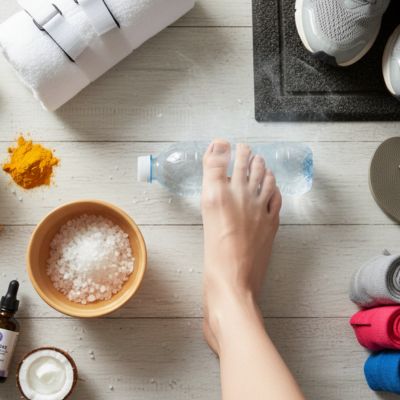
Plantar fasciitis (PF) is the most common cause of heel pain, often described as a searing, stabbing sensation during the first steps in the morning or after prolonged rest.
While conventional treatments often involve injections or NSAIDs, a dedicated at-home regimen combining stretching, mechanical support, and natural anti-inflammatories can resolve symptoms for the majority of sufferers.
Targeted stretches, supportive footwear, and natural remedies remain the foundation of effective plantar fasciitis treatment.
The information on this page is for educational purposes only and is not a substitute for professional medical advice, diagnosis, or treatment. Always consult a qualified health-care provider, such as a podiatrist or orthopedist, for persistent or severe foot pain.
Plantar fasciitis occurs when the plantar fascia—the thick, fibrous ligament that connects your heel bone to your toes and supports your arch—becomes inflamed. The pain is intense because every step places tension on this already irritated tissue.
The condition often results from overuse, increased weight-bearing stress, or poor biomechanics, such as having very flat feet or very high arches. Tightness in the calf muscles and Achilles tendon is a primary culprit, as this tightness effectively pulls on the heel bone, increasing the strain on the fascia below it.
The most effective home remedies for plantar fasciitis target the structural problem from multiple angles:
lengthening tight tissues, calming inflammation, reducing repetitive strain, and—once the sharp pain begins to settle—gradually strengthening the plantar fascia so it can remodel and fully heal.
Stretching is widely considered the single most important home treatment. It should be done multiple times daily, but especially before your first steps in the morning.
Icing reduces the inflammation in the fascia. A simple, yet highly effective, method is ice massage:
If running or long-distance walking caused the flare-up, you must reduce the load. Replace high-impact activities with low-impact alternatives while you heal:
Once morning pain begins to lessen (usually after several weeks of stretching), the plantar fascia often responds well to gentle strengthening. Research shows that controlled loading helps the tissue remodel and become more resilient.
These remedies are crucial because they allow the fascia to rest and shorten the healing time.
This is the hardest habit to break. When you walk barefoot or wear flat, floppy shoes on a hard floor, your arch collapses and repeatedly re-injures the fascia. Keep supportive shoes or sandals next to your bed and put them on before your first step.
Over-the-counter arch supports or semi-rigid inserts can provide extra cushioning and stability.
A night splint holds the foot at a 90-degree angle, providing a continuous, gentle stretch to the calf and fascia while you sleep.
Heel cups (gel or silicone) lift and cushion the heel, reducing impact.
Consistent stretching, support, and gentle strengthening are the strongest patterns among readers who report full recovery.
In addition to mechanical remedies, certain internal and topical applications can soothe the pain and support the healing process.
Epsom salts can help relax tense muscles and increase circulation.
Curcumin is a natural anti-inflammatory compound.
Diluted lavender, peppermint, or eucalyptus oil may offer relief.
Consistency is key. Plantar fasciitis often takes 2 to 8 months to resolve with conservative treatment.
If you have followed a consistent home treatment plan for three to six months without improvement, seek professional evaluation.
Scroll down to read real-world remedies from Earth Clinic readers. Your experience could help someone else find relief.