For thousands of years, castor oil has been used externally to support the skin, hair, joints, and lymphatic system. In 2026, its value is increasingly understood not as a relic of folk medicine, but as a highly effective transdermal therapy—delivering targeted support directly to tissues while bypassing the digestive tract.
The primary fatty acid in castor oil, ricinoleic acid, is widely studied for its anti-inflammatory and circulation-supporting properties. When applied topically, it penetrates deeply into the dermal layers, helping calm irritated tissues and support local blood flow.
In recent years, many Earth Clinic users have focused application over the upper abdomen and solar plexus. This region is closely associated with autonomic regulation, and users frequently report improvements in stress-related digestion, abdominal tension, and sleep quality when packs are used consistently.
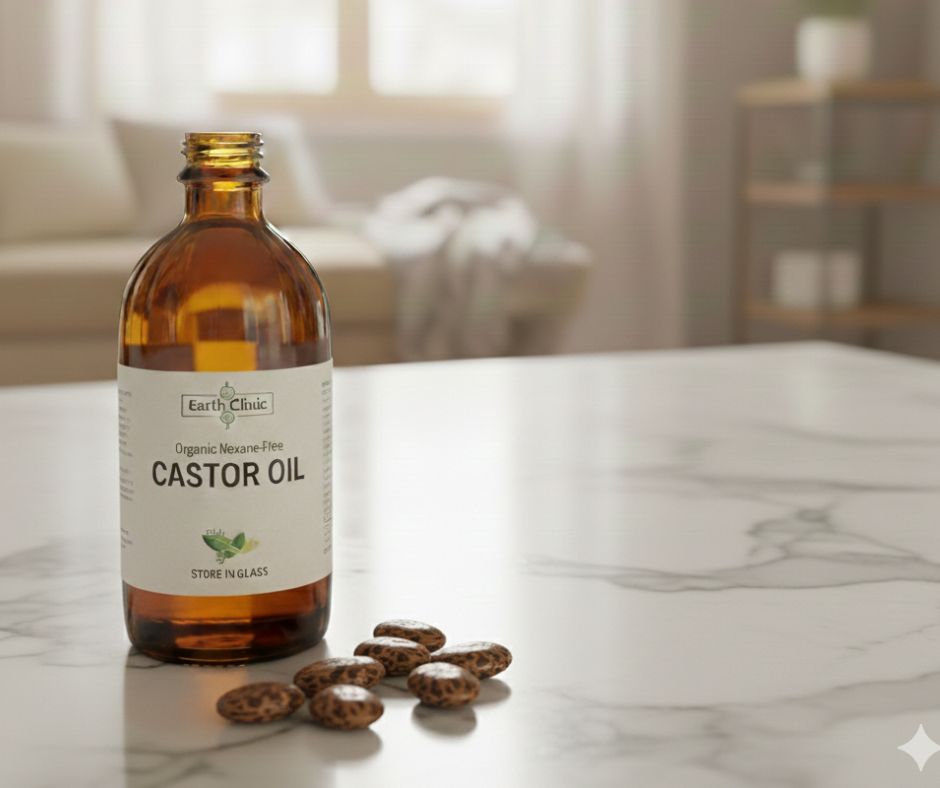
Castor oil is derived from the seeds of the Ricinus communis plant and is valued for its thickness, stability, and exceptional ability to penetrate tissue. Modern safety standards now emphasize that how castor oil is stored matters.
Because castor oil functions as a strong carrier oil, it should be purchased only in glass containers. Storing or dispensing castor oil from plastic may allow unwanted compounds to leach into the oil over time, especially with repeated warming.
The Pechoti method involves applying a few drops of castor oil to the navel before sleep. Rooted in Ayurvedic tradition and widely discussed in wellness communities, the navel is considered a central point for systemic distribution.
Castor oil packs remain the most effective method for deeper support. The combination of oil, pressure, and warmth enhances absorption and encourages lymphatic movement.
| Goal | Placement Area |
|---|---|
| Liver & Digestive Support | Upper right abdomen beneath ribs |
| Neck & Thyroid Comfort | Lower neck with light wrap |
| Pelvic & Reproductive Support | Lower abdomen above pubic bone |
When used at night, castor oil acts as a humectant, drawing moisture into the skin and softening tissue over time.
Some pet owners apply castor oil externally for dogs and cats to support cysts, joint stiffness, or eye comfort. Prevent ingestion, as castor oil is a strong laxative when consumed.
The 2026 rule of thumb: If it's stagnant, castor oil will move it; if it's inflamed, castor oil will calm it.