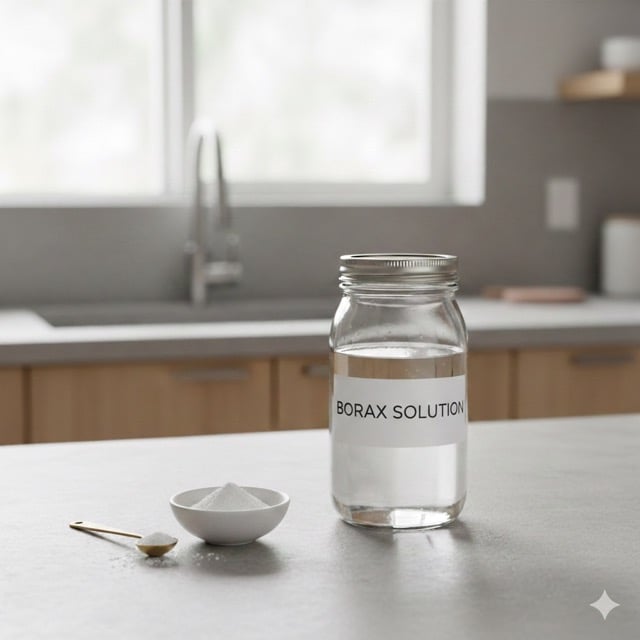
Borax is one of Earth Clinic's most discussed natural remedies for arthritis, joint stiffness, trigger finger, bone spurs, heel spurs, calcification, and reduced mobility. Many readers explore borax because it supplies boron, a trace mineral involved in bone health, mineral balance, calcium metabolism, hormone activity, and inflammatory signaling.
This article focuses specifically on borax for arthritis: why Earth Clinic readers use it, how people commonly take borax for arthritis, what dosage protocols are most often discussed, which co-factors may help, and what safety precautions are important.
Important: Borax is a household mineral product, not an approved dietary supplement or arthritis treatment. The information below is based on Earth Clinic reader experiences, historical community protocols, and boron research. It is provided for educational purposes only and should not replace medical care. ...
Borax is one of Earth Clinic's most discussed natural remedies for arthritis, joint stiffness, trigger finger, bone spurs, heel spurs, calcification, and reduced mobility. Many readers explore borax because it supplies boron, a trace mineral involved in bone health, mineral balance, calcium metabolism, hormone activity, and inflammatory signaling.
This article focuses specifically on borax for arthritis: why Earth Clinic readers use it, how people commonly take borax for arthritis, what dosage protocols are most often discussed, which co-factors may help, and what safety precautions are important.
Important: Borax is a household mineral product, not an approved dietary supplement or arthritis treatment. The information below is based on Earth Clinic reader experiences, historical community protocols, and boron research. It is provided for educational purposes only and should not replace medical care.
For more than two decades, Earth Clinic readers have shared experiences using borax for arthritis, joint stiffness, trigger finger, heel spurs, bone spurs, calcification, hand stiffness, knee discomfort, and mobility concerns. The reports on this page represent one of the largest collections of community feedback on borax and arthritis available online.
After two decades of reader submissions, several consistent patterns emerge from the Earth Clinic borax and arthritis community. These are not clinical findings — they are observations drawn from hundreds of individual reports submitted by readers around the world.
Timelines vary widely. Some readers describe noticing a difference within days. Others report gradual improvement over several weeks. A recurring theme in the posts is that readers who expect overnight results sometimes give up too early. Long-term users often note that the first benefit they noticed was reduced morning stiffness, followed gradually by better mobility and flexibility.
One reader with a 10-year history of daily borax use reported being pain-free throughout that period after a diagnosis of back arthritis. Another described meaningful improvement in hand and leg mobility within six weeks after years of worsening symptoms. A third, dealing with rheumatoid arthritis, stopped noticing benefit only when she ran out of borax for two weeks — at which point stiffness and pain returned — and recovered again after resuming.
Osteoarthritis is the most frequently mentioned condition in reader posts, followed by rheumatoid arthritis, psoriatic arthritis, and ankylosing spondylitis. Trigger finger, heel spurs, and bone spurs also appear often. Several readers describe arriving at borax after years on prescription anti-inflammatory medications or pain injections, citing side effects or diminishing effectiveness as reasons for seeking alternatives.
The most common dosage pattern among experienced long-term users is the traditional Ted protocol: 1/8 teaspoon (women) or 1/4 teaspoon (men) in 1 liter of water, sipped throughout the day, 5 days on and 2 days off. However, a notable pattern in the posts is that many readers start lower than the traditional protocol — sometimes much lower — and increase gradually only after confirming tolerance. Some readers with years of experience have settled at doses below the traditional amount and report sustained results.
One Earth Clinic contributor who has used borax for 15 years to keep arthritis in remission regularly advises new readers to start with the full liter dilution rather than a concentrated cup of coffee-sized dose, noting that the slow sipping approach functions like a timed-release delivery and is better tolerated by people with gastrointestinal sensitivity.
Most experienced readers combine borax with supportive supplements. Magnesium is by far the most commonly mentioned co-factor, cited for its role in mineral balance and muscle comfort. Vitamin D3, vitamin K2, and omega-3 fatty acids also appear frequently. Several readers note that their results improved meaningfully only after they added magnesium alongside borax, and some suggest that boron may increase the body's demand for magnesium.
Many of the most positive long-term reports on this page come from readers who combined borax or boron with magnesium, dietary changes, and consistent hydration. Results from borax alone, without attention to co-factors, appear more mixed in the community posts.
No. The Earth Clinic community is candid about this. A meaningful minority of readers report that borax did not help them or that they could not tolerate it. One Earth Clinic contributor documents a case where a friend's borax protocol was discontinued on medical advice, her arthritis returned severely, and borax no longer worked when she resumed it years later. This account is regularly cited in reader discussions as a reason to think carefully before stopping a working protocol.
Some readers appear to tolerate boron supplements better than borax itself, and several contributors recommend boron capsules as an alternative for those who experience persistent digestive or other reactions to borax.
Readers who search for borax for arthritis are usually looking for something deeper than temporary pain relief. Many are dealing with long-standing stiffness, reduced range of motion, calcification concerns, or joint changes that have developed over years.
Earth Clinic readers most often discuss borax for:
These benefits are based on reader reports and should not be considered proof that borax treats arthritis. However, they help explain why borax remains one of Earth Clinic's most discussed remedies for joint health.
Borax supplies boron, a trace mineral involved in several pathways that may be relevant to joints, bones, tendons, and connective tissue.
Boron is commonly discussed for its relationship to:
Many readers believe arthritis involves more than simple "wear and tear." They often describe it as a combination of mineral imbalance, inflammation, oxidative stress, tendon thickening, and abnormal calcium deposition.
Some readers also propose a fluoride connection — the theory being that fluoride accumulated in joints and bones over decades may contribute to stiffness and calcification, and that boron may help the body process and excrete fluoride. This theory is not medically established, but it appears consistently in Earth Clinic borax discussions and motivates many readers to try the protocol.
Earth Clinic readers most commonly discuss taking borax for arthritis by dissolving a very small amount of borax in a larger amount of water. The goal is dilution. Borax is not typically discussed as a dry powder taken directly.
The two most common approaches are:
Historical Earth Clinic protocols involve dilution. They do not involve swallowing dry borax powder directly. Small measurement errors can create large differences in boron exposure. Readers who have taken borax in capsule form without water dilution report stronger side effects and less favorable tolerability.
There is no officially approved borax dosage for arthritis. Borax is not sold as a dietary supplement, and internal use remains controversial. The protocols below reflect historical Earth Clinic discussion and reader reports, not medical recommendations.
Borax contains approximately 11% to 11.3% elemental boron by weight. This means even small dry powder amounts can represent a larger amount of boron than many people realize before dilution.
Ted from Bangkok popularized the most widely discussed Earth Clinic borax protocol. The traditional version is usually described as:
Many sensitive readers report starting with smaller amounts than the traditional protocol — some as low as 1/16 teaspoon or a "pinch" — and increasing gradually only if tolerated. Earth Clinic contributor Art, who has used borax for 15 years, recommends the full 1-liter sipping approach specifically because it delivers boron slowly rather than as a concentrated dose, which he finds is better tolerated and more effective for sustained joint support.
Some readers also ask whether borax can be taken in coffee instead of water. The consensus in reader discussions is that the full liter of water sipped throughout the day is preferable to a single concentrated cup, particularly for anyone new to borax or with digestive sensitivity.
Walter Last's method is different from Ted's standard liter-of-water protocol. It uses a stock solution, meaning the borax is dissolved into water first, and only a small amount of that prepared liquid concentrate is used.
This is not the same as taking 1 to 2 teaspoons of dry borax. The teaspoon measurement refers to the prepared liquid concentrate. This distinction is important and a frequent source of confusion for new readers.
The Earth Clinic borax and arthritis posts are unusually rich with troubleshooting detail. The following challenges appear repeatedly, along with the approaches readers have described.
This is the most commonly reported problem, especially among new users. The most frequent reader solution is to reduce the amount and slow down: start lower, dilute more, and sip more slowly over a longer period. Several readers note that taking borax with or after food reduces stomach irritation compared to taking it on an empty stomach. Taking borax before bed is specifically flagged by experienced readers as a potential cause of digestive disturbance.
A subset of readers report skin reactions ranging from mild itching to hives. Some attribute these to detox or die-off reactions, particularly if candida or parasites are suspected. Others find that reducing the dose and increasing hydration resolves the issue. For readers who experience persistent or severe skin reactions, switching to boron supplements rather than borax is the most commonly recommended alternative.
Multiple readers describe a clear pattern: borax works, they stop for various reasons, symptoms return, and resuming borax brings relief again. This pattern is cited frequently as personal evidence that borax is the active variable. However, one well-documented Earth Clinic case describes a reader who stopped borax on a doctor's recommendation, experienced a severe return of osteoarthritis, and found that borax no longer worked when she resumed years later. Experienced contributors frequently reference this case when advising readers to think carefully before discontinuing a working protocol.
The variation in reader dosage reports is wide, and newcomers are often uncertain where to start. A practical pattern from the community: start lower than the traditional protocol (1/16 teaspoon or less), confirm tolerance over 1 to 2 weeks, and increase gradually if needed. Older adults and those with smaller body weight are often advised to stay at the lower end of the range. One 83-year-old reader in the posts describes doing well on a combination of 1/16 teaspoon borax, Celtic salt, and baking soda.
Some readers report trying borax for several weeks without noticeable benefit. The most common suggestions from experienced contributors in these cases are: check co-factors (especially magnesium and vitamin D), evaluate hydration, consider whether diet changes might be needed, and rule out whether the borax product being used contains any additives or detergents. Plain sodium borate with no added fragrance, surfactants, or laundry boosters is consistently recommended.
Many Earth Clinic readers connect borax with calcification-related concerns, including trigger finger, heel spurs, bone spurs, calcium deposits, and stiff joints.
The community theory is that boron may help support healthier calcium and magnesium balance. Some readers believe boron helps the body use calcium more appropriately rather than allowing calcium to accumulate in soft tissues, tendons, or joints. Earth Clinic founder Deirdre Layne has written about her own experience with trigger finger and borax, noting that improvement in finger joint stiffness appeared within the first week, while improvement in trigger thumb took approximately three weeks.
This does not mean borax treats trigger finger, bone spurs, or calcification disorders. These are complex conditions that may involve inflammation, tendon thickening, mechanical stress, mineral metabolism, and other factors. However, these topics are among the most common reasons readers explore borax for arthritis and joint stiffness.
Earth Clinic readers often report better tolerance or stronger results when borax or boron is combined with supportive nutrients. These co-factors are commonly discussed because arthritis, stiffness, and calcification concerns often involve more than one pathway.
Some readers prefer to begin with food sources of boron before considering borax or boron supplements. Boron-rich foods include:
Many readers believe modern soil depletion may reduce trace mineral intake, which is one reason boron supplements and borax protocols remain popular in Earth Clinic discussions.
People researching borax for arthritis often wonder whether they should use borax or a standard boron supplement. Both are discussed regularly in the Earth Clinic community.
For readers who want predictable dosing or have experienced digestive sensitivity to borax, boron supplements may be simpler. For readers researching traditional Earth Clinic protocols, borax is often discussed because of its long community history and low cost. Some readers use both: borax for periods of active joint discomfort and boron supplements for ongoing maintenance.
Some readers report temporary symptoms when beginning borax or increasing too quickly. These are sometimes described as "Herxheimer" reactions or detox symptoms, although the exact cause is uncertain. They are most commonly reported in the first one to two weeks and tend to resolve as the body adjusts.
Commonly reported adjustment symptoms include:
Helpful strategies reported by readers include reducing the amount, pausing temporarily, increasing hydration, supporting electrolytes, ensuring adequate magnesium, and restarting more gradually. A number of readers in the posts describe feeling feverish or flu-like in the early days and attribute this to the body mobilizing stored fluoride or clearing other toxins. Whether or not this interpretation is accurate, most readers who persisted through it at a lower dose report that symptoms resolved.
Borax and boric acid are not the same substance. Boric acid is more acidic and is generally used topically rather than internally. Do not substitute boric acid for borax in any Earth Clinic protocol.
Many Earth Clinic readers report using borax for arthritis, stiffness, trigger finger, bone spurs, and mobility concerns. Borax supplies boron, a trace mineral involved in bone and mineral metabolism. However, borax should not be considered a proven arthritis treatment or cure.
The most commonly discussed Earth Clinic protocol is 1/8 teaspoon borax in 1 liter of water for women or smaller adults, and 1/4 teaspoon borax in 1 liter of water for men or larger adults, sipped throughout the day on a 5 days on, 2 days off schedule. Many readers start lower than this — some as little as 1/16 teaspoon — and increase gradually. These are historical community protocols, not official medical recommendations.
Some readers do take borax this way, but experienced contributors generally advise against it as a starting approach. The 1-liter sipping method delivers boron slowly over hours, which is better tolerated and is thought by many readers to be more effective than a single concentrated dose. Readers with gastrointestinal sensitivity in particular are advised to use the full liter dilution.
Reader timelines vary. Some report changes within days, particularly reduced morning stiffness. Others describe gradual improvement over several weeks or months. Several long-term users note that borax works best when combined with supportive co-factors like magnesium and vitamin D. Response may also depend on severity, mineral status, diet, and individual tolerance.
Readers use borax because it contains boron, which is discussed for calcium and magnesium balance, vitamin D activity, hormone metabolism, inflammatory signaling, and connective tissue support. Some readers also believe it helps the body process accumulated fluoride, which they associate with joint stiffness and calcification.
Reader reports most often mention osteoarthritis, rheumatoid arthritis, psoriatic arthritis, ankylosing spondylitis, trigger finger, hand stiffness, knee and hip stiffness, heel spurs, bone spurs, and calcification concerns. These reports are anecdotal and should not replace medical diagnosis or treatment.
No. Boron is a trace mineral. Borax is a sodium borate compound that contains boron. Boron supplements provide measured milligram doses, while borax requires dilution and conversion. The 1/8 teaspoon women's dose of borax delivers approximately 55 mg of boron — far more than a typical 3 mg boron capsule.
No. Borax and boric acid are different compounds with different properties. Boric acid should not be substituted for borax in internal dilution protocols.
Several experienced Earth Clinic contributors recommend boron supplements as an alternative for readers who experience persistent digestive upset, skin reactions, or other intolerances. Boron citrate, boron glycinate, and ionic boron are among the forms most often mentioned. Starting at a lower dose (3 mg per day) and increasing gradually is the approach most commonly suggested.
Reader approaches vary. The traditional Ted protocol includes scheduled days off (5 on, 2 off). Some long-term users have taken borax daily for years with no reported issues, while others prefer cycling. Because borax is not an approved dietary supplement, there is no universally accepted schedule. Conservative use and professional guidance are important, particularly for older adults or anyone with health conditions.
Borax remains one of Earth Clinic's most discussed remedies for arthritis, chronic stiffness, trigger finger, heel spurs, bone spurs, and calcification concerns because it provides a low-cost source of boron. Reader testimonials often focus on mobility, flexibility, grip strength, and stiffness, but results vary widely and not every reader responds.
The Earth Clinic approach is conservative: understand the difference between borax and boric acid, use full dilution, avoid dry powder dosing, consider supportive co-factors such as magnesium and vitamin D, pay close attention to individual tolerance, and start lower than the traditional protocol if you are new or sensitive.
Scroll down to read real-world Earth Clinic testimonials from readers using borax for arthritis, stiffness, trigger finger, bone spurs, and calcification.
Below are Earth Clinic reader reports discussing borax for arthritis, joint stiffness, mobility, trigger finger, calcification, heel spurs, bone spurs, and related concerns.



