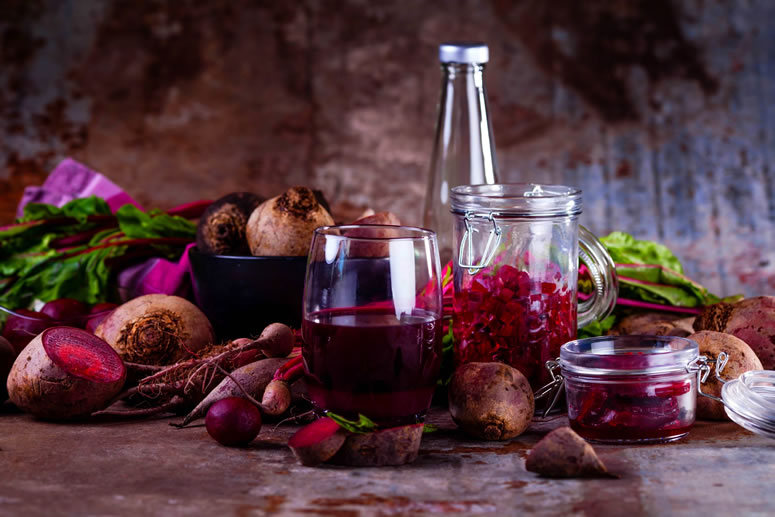
Beets are far more than a trendy “nitric oxide food.” In traditional food-as-medicine systems, the beet is a roots-to-leaves remedy—the root supports circulation and bile flow, while the greens deliver potassium, calcium, and vitamin K for blood pressure and bone health.
In 2026, the most effective way to use beets is as culinary medicine: prepared differently depending on your goal—raw for circulation, cooked for digestion, fermented for the liver and gut.
Beets work best when you use both the root and the greens. The root supplies nitrates and betaine for blood flow and bile support; the greens supply potassium, calcium, and vitamin K for blood pressure regulation and bone health. It’s a true “two-for-one” cardiovascular strategy.
Most people discard beet greens—yet nutritionally, they can outperform the root. Beet greens are rich in potassium (blood pressure balance), vitamin K (bone and vascular health), calcium, magnesium, and chlorophyll. In Earth Clinic tradition, lightly sautéing beet greens with olive oil and garlic is a simple, repeatable remedy for blood pressure support when paired with the nitrate-rich root.
How you prepare beets changes what your body gets from them. Use preparation as a tool:
Beet kvass is fermented beet juice—a traditional tonic prized in Eastern European folk medicine and widely discussed in Earth Clinic circles. Kvass is lower in sugar than raw juice and introduces beneficial probiotics and organic acids that support liver detox pathways and gut health. Many readers describe kvass as a gentle “blood tonic” that improves digestion, energy, and bile flow without the sugar spike of fresh juice.
Simple use: 2–4 oz of beet kvass once or twice daily before meals to stimulate digestion and bile flow.
One of the most cited Earth Clinic synergies for anemia and low ferritin is combining beets with blackstrap molasses. Beets provide vitamin C and supportive phytonutrients, while blackstrap molasses is iron-dense. Together, they improve iron absorption and utilization more effectively than either alone.
Community method: Grated raw beets or beet juice mixed with 1 tablespoon blackstrap molasses daily for several weeks, alongside iron-rich foods.
One of the most under-appreciated benefits of beets is their ability to support bile thinness. Sluggish, thick bile contributes to poor fat digestion and gallbladder congestion. The betaine in beets supports liver fat processing, while beet fiber and pigments encourage the gallbladder to release old bile and replace it with fresh, free-flowing bile.
Earth Clinic morning reset: A simple salad of grated raw beets, carrots, and a squeeze of lemon juice is a traditional “gallbladder flush” used to kickstart bile flow and morning digestion.
The Mini-Beet Protocol (developed by Robert von Sarbacher) combines beets with asparagus, apples, carrots, and cinnamon. Its core purpose is to thin bile and support liver–gallbladder flow, which Earth Clinic readers associate with improvements in fungal overgrowth, heavy metal burden, fluoride exposure, cellulite, and sluggish detox patterns.
| Goal | Best Preparation | Why? |
|---|---|---|
| Rapid BP Drop | Raw beet juice | Maximum nitrate concentration for nitric oxide. |
| Liver / Gallbladder | Beet kvass | Probiotics + bile-thinning organic acids. |
| Chronic Inflammation | Roasted beets | Softens fiber; preserves betalains. |
| Anemia / Energy | Beets + blackstrap molasses | Vitamin C in beets boosts iron absorption. |
Educational purposes only. If you have kidney disease, a history of kidney stones, low blood pressure, are pregnant, or are undergoing medical treatment, consult a qualified clinician before using large or concentrated amounts of beets or fermented beet products.
Have you used beets, beet greens, or beet kvass for your health? We’d love to hear from you.