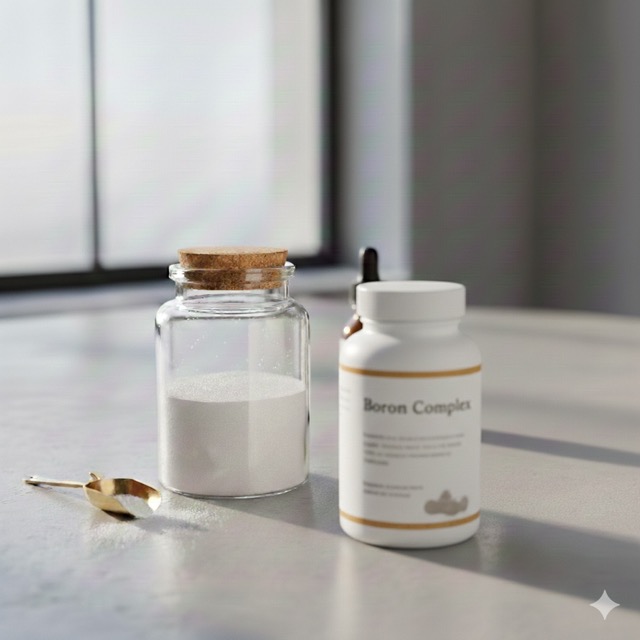
Boron and borax are often discussed together for bone health, joint comfort, arthritis, trigger finger, bone spurs, and calcification concerns. However, they are not the same substance.
Boron is a naturally occurring trace mineral found in foods and dietary supplements. Borax, also known as sodium borate, is a naturally occurring mineral compound that contains boron. Because borax contains approximately 11.3% elemental boron, it has long been discussed on Earth Clinic as one possible source of boron.
Understanding the difference between boron and borax can help readers make more informed decisions when researching natural approaches to bone health, calcium metabolism, connective tissue support, joint stiffness, and long-term mineral balance. ...
Boron and borax are often discussed together for bone health, joint comfort, arthritis, trigger finger, bone spurs, and calcification concerns. However, they are not the same substance.
Boron is a naturally occurring trace mineral found in foods and dietary supplements. Borax, also known as sodium borate, is a naturally occurring mineral compound that contains boron. Because borax contains approximately 11.3% elemental boron, it has long been discussed on Earth Clinic as one possible source of boron.
Understanding the difference between boron and borax can help readers make more informed decisions when researching natural approaches to bone health, calcium metabolism, connective tissue support, joint stiffness, and long-term mineral balance.
The simplest way to understand the difference between boron and borax is this: boron is the mineral, while borax is a mineral compound that contains boron.
Boron is an element and trace mineral involved in several biological processes. Borax, also called sodium borate or sodium tetraborate, is a compound made of sodium, boron, oxygen, and water molecules.
People often use the terms interchangeably because borax contains boron. However, they are chemically different, and the distinction matters when discussing supplements, mineral intake, safety, and traditional Earth Clinic protocols.
No. Borax is not the same as boron. Boron is a trace mineral. Borax is a naturally occurring mineral compound that contains boron.
A helpful comparison is magnesium versus magnesium citrate. Magnesium is the mineral itself, while magnesium citrate is a compound that delivers magnesium in a specific form. In a similar way, borax contains boron, but borax and boron are not identical substances.
This distinction is especially important for readers researching boron supplements, borax protocols, boric acid, or natural approaches to joint and bone support.
Yes. Borax contains approximately 11.3% elemental boron by weight.
This is why borax has historically appeared in Earth Clinic discussions about boron. Readers interested in boron's possible role in calcium metabolism, magnesium utilization, vitamin D activity, and joint comfort often come across borax because it is a concentrated and inexpensive source of boron.
However, because borax is not the same as a standardized dietary supplement, it should be approached with more caution. Readers interested in preparation methods should review Ted's original borax page and the related safety discussion rather than guessing amounts.
Read Ted's Borax Recipe and Guidelines →
The practical difference between boron and borax comes down to form, use, cost, dosing precision, and safety considerations.
Boron: A trace mineral found in foods and sold in supplement form. Boron supplements are usually labeled in milligrams, making them easier to dose precisely.
Borax: A sodium borate mineral compound that contains boron. Borax is not usually sold as a dietary supplement, but it has been discussed for many years on Earth Clinic as a traditional boron source.
Typical use profile: Boron supplements are commonly used for general nutritional support, bone health, and mineral balance. Borax is more often discussed by Earth Clinic readers in connection with long-standing joint stiffness, arthritis concerns, trigger finger, bone spurs, and calcification topics.
Cost: Boron supplements can become expensive when higher amounts are used long-term. Borax is often viewed by readers as a much lower-cost boron source.
Boron is a trace mineral found naturally in plant foods, including prunes, raisins, avocados, almonds, beans, lentils, apples, pears, and leafy greens. Although the body needs only small amounts, boron appears to influence several important systems related to mineral metabolism and connective tissue health.
Boron is commonly discussed for its role in:
Commercial boron supplements are typically sold as boron citrate, boron glycinate, calcium fructoborate, boron aspartate, or "triple boron." Many formulas provide between 3 mg and 10 mg of boron per serving.
Borax is a naturally occurring mineral salt formed from evaporated lake deposits. It is also known as sodium borate, sodium tetraborate, or disodium tetraborate.
Although many people know borax as a household product, it has also been discussed in traditional mineral use and on Earth Clinic as a boron-containing compound. Ted's borax protocol introduced many Earth Clinic readers to the idea that boron may have broader relevance for joint stiffness, arthritis concerns, calcium deposits, and connective tissue issues.
Because borax contains boron, many readers view it primarily as an economical boron source. Still, borax should not be confused with standardized boron supplements, and readers should avoid improvising with amounts or forms.
Borax and boric acid are not the same thing. This is one of the most important safety distinctions in any boron-related discussion.
Information about borax should not automatically be applied to boric acid, and vice versa. Readers should always verify which compound is being discussed before considering any boron-related remedy or protocol. Do not substitute boric acid for borax in any Earth Clinic protocol.
Boron has attracted interest because of its relationship to calcium, magnesium, vitamin D, inflammatory signaling, and connective tissue function — all systems relevant to bones, joints, tendons, and cartilage.
Joint problems such as arthritis, trigger finger, tendon thickening, bone spurs, and calcification concerns are usually complex and not simply a matter of taking one mineral. However, many Earth Clinic readers have explored boron and borax because of boron's possible role in maintaining mineral balance and supporting normal joint function.
Some readers also connect borax to fluoride metabolism, theorizing that boron may help the body process accumulated fluoride — which they associate with joint stiffness and calcification over time. This theory is not medically established but appears consistently in Earth Clinic discussions and motivates many readers to explore borax specifically rather than standard boron supplements.
In Earth Clinic's community reports, boron and borax are most often discussed in relation to:
Many people who search for boron or borax are not only interested in stronger bones — they are researching unwanted calcium buildup in soft tissues, tendons, or joints.
Boron is of interest because it appears to interact with calcium, magnesium, and vitamin D metabolism. Readers often wonder whether boron may help the body handle calcium more appropriately, especially when calcium appears to be collecting in the wrong places.
While these topics are widely discussed in reader reports, more formal research is needed. Boron and borax should not be presented as cures for calcification disorders. They are best understood as part of a broader conversation about mineral balance and long-term joint wellness.
After more than two decades of community submissions, several consistent patterns have emerged in how Earth Clinic readers compare boron supplements and borax.
Readers who are new to boron, cautious about household products, or looking for a simple daily supplement tend to start with commercial boron capsules. The appeal is straightforward dosing: a 3 mg or 6 mg capsule leaves little room for error. Several readers in the Earth Clinic community report using boron supplements for general bone health and mineral support with positive results, particularly when combined with magnesium and vitamin D3.
Readers who switch to borax — or start there — tend to be those researching Ted's protocols specifically, those dealing with more significant joint stiffness or calcification concerns, or those who tried standard boron supplements and felt the results were too mild. Cost is also a recurring theme: several long-term Earth Clinic contributors note that borax delivers far more boron per dollar than capsule supplements, making it more practical for sustained use.
A frequently cited observation in reader posts is that the response to borax feels qualitatively different from boron supplements — more noticeable, faster, or more pronounced for joint-related concerns. Whether this reflects a difference in the compound itself, the higher boron dose typically involved, or another factor is not clear. These are personal observations, not clinical findings.
Yes, and this is a common pattern in the Earth Clinic community. Several contributors describe using borax during active periods of joint discomfort and switching to a lower-dose boron supplement for ongoing maintenance. Others use boron supplements when traveling or when borax is not convenient. A subset of readers who cannot tolerate borax — due to digestive sensitivity or skin reactions — find that boron supplements are better tolerated and produce adequate results at the right dose.
The most consistent advice from long-term Earth Clinic borax contributors is to start with whichever form feels more manageable — supplements for those who want simplicity, borax for those willing to follow the dilution protocol carefully — and to pay equal attention to co-factors. Magnesium in particular is mentioned repeatedly as something that can make or break results with either form of boron. Several contributors note that boron or borax without adequate magnesium produced disappointing results, while adding magnesium changed the outcome significantly.
For more than two decades, Earth Clinic readers have shared experiences involving boron and borax. Many reports focus on arthritis, trigger finger, joint stiffness, bone spurs, calcification, tendon tightness, and mobility concerns. While these reports are anecdotal and should not be considered medical evidence, they represent one of the largest collections of real-world community boron experience available online.
Neither boron nor borax is automatically better. The right choice depends on a person's goal, comfort level, health history, and need for dosing precision.
For many readers, boron supplements are a more straightforward starting point. Borax discussions are more relevant to those specifically researching Ted's protocols or long-term Earth Clinic community reports on joint health.
Most commercial boron supplements provide between 3 mg and 10 mg of elemental boron per serving. This makes them easy to compare and dose precisely.
By comparison, the traditional Ted's borax women's dose (1/8 teaspoon in 1 liter of water) delivers approximately 55 mg of boron — considerably more than a standard supplement capsule. This difference in boron exposure is one reason some readers feel a more pronounced response from borax and why careful dilution and gradual introduction matter.
This article explains the difference between boron and borax — not the borax dosing protocol. Readers interested in Ted's traditional borax method should review the original borax page, where preparation details and reader experiences are discussed fully.
Read Ted's Borax Recipe and Guidelines →
The main reasons Earth Clinic readers discuss borax over standard supplements come down to cost, potency, and protocol tradition.
Boron supplements are convenient and easy to dose, but they can become expensive when used regularly over long periods. Borax, by contrast, delivers boron at a fraction of the cost per gram. For readers planning to follow a sustained protocol — particularly those managing chronic joint concerns — this is a practical consideration.
Some readers also report that standard low-dose boron supplements produced minimal noticeable effect on chronic stiffness, while borax appeared to produce a stronger response. Whether this reflects the higher boron dose, the sodium borate form itself, or something else is not established. These are personal observations shared in community posts, not clinical evidence.
For readers who want precise dosing and supplement-grade labeling, boron capsules remain the simpler choice. For readers researching Earth Clinic's traditional borax discussions, Ted's original page remains the better resource for preparation details, precautions, and community feedback.
Boron is an essential trace mineral, but more is not always better. Excessive intake can cause digestive upset, nausea, skin reactions, headache, fatigue, or other signs of intolerance.
Borax requires additional caution because it is not typically sold as a dietary supplement and is harder to dose precisely. The gap between a standard boron supplement dose (3–10 mg) and the boron delivered by traditional borax protocols (up to 55 mg or more) is significant. Readers should not assume that more boron will produce better results — mineral balance is complex, and excessive intake can be harmful.
People who are pregnant, breastfeeding, taking medications, managing kidney disease, dealing with hormone-sensitive conditions, or living with complex health concerns should consult a qualified healthcare professional before using concentrated boron or borax protocols.
No. Boron is a trace mineral. Borax is a naturally occurring sodium borate compound that contains boron. They are related but chemically distinct.
Boron is the mineral itself. Borax is a compound made of sodium, boron, oxygen, and water molecules. Borax contains boron, but it is not identical to boron. The practical differences include form, cost, dosing precision, and safety considerations.
Yes. Borax contains approximately 11.3% elemental boron by weight. The traditional Ted's women's dose delivers approximately 55 mg of boron — far more than a standard 3–10 mg boron supplement capsule.
No. Borax and boric acid are different compounds. Boric acid is more acidic and is generally used topically rather than internally. Do not substitute boric acid for borax in any Earth Clinic protocol.
Neither is automatically better. Boron supplements offer simple, precise dosing and are a good starting point for most readers. Borax is more often discussed for long-standing joint stiffness, arthritis protocols, and calcification concerns, and is considerably less expensive for sustained use.
Boron is involved in calcium metabolism, magnesium utilization, vitamin D activity, and inflammatory signaling — all of which may influence bones, joints, and connective tissue. However, boron should not be considered a treatment for arthritis or joint disease.
Earth Clinic readers have discussed borax for arthritis since Ted from Bangkok introduced his borax protocol on the site more than two decades ago. Many reader reports mention improvements in stiffness, trigger finger, bone spurs, and mobility. These are anecdotal community experiences, not medical evidence.
Boron supplements are generally easier to dose precisely because the amount of boron is stated in milligrams. Borax is harder to dose and involves larger amounts of boron per serving, requiring careful preparation and dilution. Anyone with kidney concerns, pregnancy, medications, or complex health conditions should consult a qualified healthcare professional before using either.
Many Earth Clinic readers do use both at different times — borax during active joint concerns and boron supplements for maintenance or travel. If switching, be aware of the significant difference in boron dose between the two forms and adjust accordingly.
Boron and borax are closely related, but they are not the same thing. Boron is the trace mineral. Borax is a sodium borate compound that contains boron — and delivers it at a much higher dose per serving than most supplement capsules.
For general nutritional support, boron supplements offer simplicity and precise dosing. For readers researching Earth Clinic's long-standing discussions about arthritis, trigger finger, bone spurs, joint stiffness, and calcification, borax appears frequently because of its concentrated boron content, low cost, and decades of community protocol history.
The most important point is to understand the distinction clearly. Boron, borax, and boric acid are not interchangeable. Each has a different chemical form, dose profile, and safety context — and that difference matters before starting any protocol.
Continue below to read real-world Earth Clinic experiences with boron and borax for joint stiffness, arthritis concerns, trigger finger, bone spurs, and calcification.



