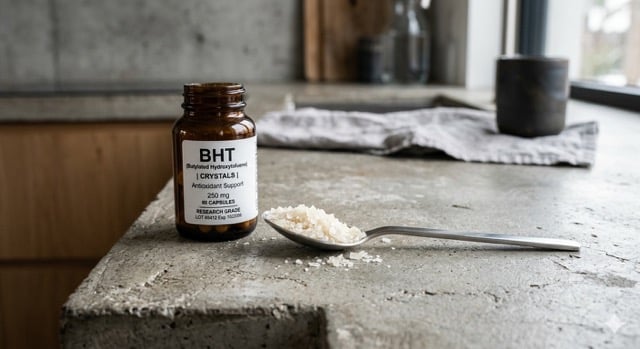
BHT (butylated hydroxytoluene) is a synthetic antioxidant used to prevent oxidation in fats, oils, and certain food and cosmetic products. Researchers have also investigated its effects on lipid-enveloped viruses, oxidative stress, and biological aging.
Earth Clinic readers have shared experiences with BHT for herpes outbreaks, hepatitis C, seasonal viral symptoms, and longevity. Some report substantial improvements, while others raise questions about dosage, absorption, and safety. This guide explores those experiences alongside the available research, distinguishing laboratory findings from established benefits in humans.
Earth Clinic's BHT collection includes longstanding discussions about antiviral effects, aging, liver health, and supplement administration. The following summaries highlight prominent reader submissions from the most-loved reviews.
Read More



