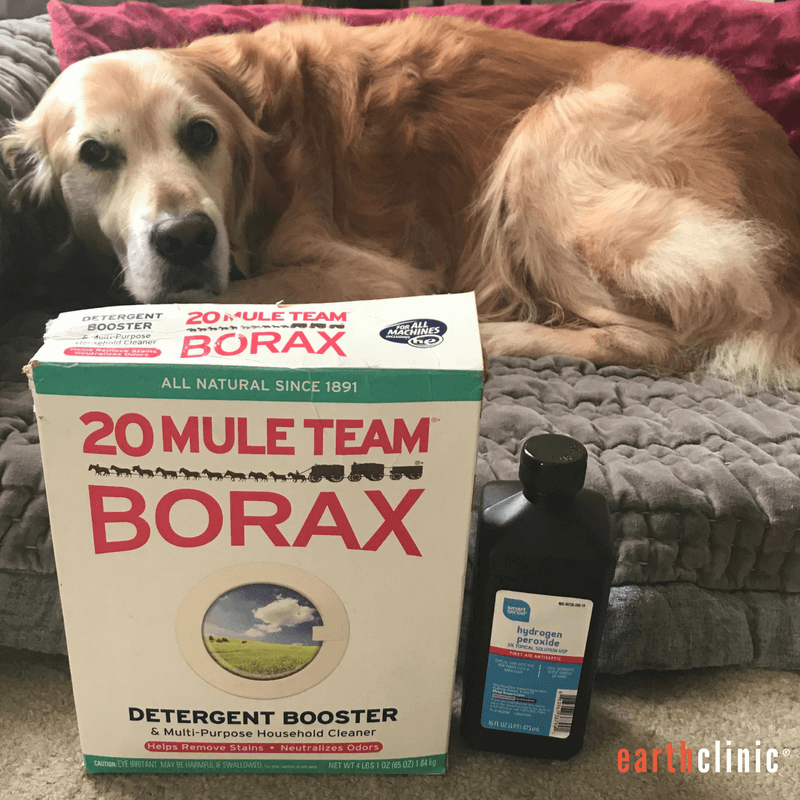
Since 2002, Ted's Borax and Hydrogen Peroxide remedy has been Earth Clinic's most trusted natural treatment for mange in dogs — and with over 229 reader reviews and an 81% five-star rating, it remains one of the most documented natural pet health protocols on the internet. Thousands of dog owners have used this simple, low-cost solution to resolve both demodectic and sarcoptic mange without harsh pesticides or prescription medications.
This page covers the complete Ted's mange protocol: exact mixing ratios, application method, treatment schedule, what to expect, how to support treatment internally, and — critically — what 20+ years of Earth Clinic reader experience reveals about why it works, when it struggles, and how to get the best results.
Important: Mange can resemble other skin conditions. If your dog's symptoms are severe, rapidly worsening, or accompanied by significant open wounds or signs of systemic illness, consult a veterinarian. The information below is based on Earth Clinic reader experiences and Ted's original protocols, provided for educational purposes only.
Ted's borax and hydrogen peroxide remedy for dog mange has been one of Earth Clinic's most consistently discussed and highly rated pet health protocols since 2002. With over 229 reader reviews and an 81% five-star rating, it represents one of the most thoroughly documented natural mange treatments available online. The reader base includes rescue shelter operators, breeders, and individual pet owners who have applied this protocol to dogs ranging from puppies to elderly dogs with chronic mange.
After two decades of reader submissions, several strong patterns emerge from Earth Clinic's dog mange reader base.
The most consistent message across Earth Clinic's five-star mange reviews is that Ted's remedy works when applied consistently and on schedule. The most consistent message in the lower-rated reviews is that readers stopped too early, applied too infrequently, or didn't saturate the coat fully. Several readers describe the remedy as "consuming" in terms of discipline but overwhelmingly effective when maintained.
One of the most compelling bodies of evidence for Ted's remedy comes from Earth Clinic readers who run rescue shelters. Katzie from Cancun describes running a shelter and swearing by Ted's remedy, treating mange cases immediately regardless of type and successfully preventing spread to other shelter dogs. The shelter context is significant — these are environments where mange would spread rapidly if the treatment weren't effective, and the protocol has been applied successfully to multiple dogs simultaneously.
A recurring theme in reader posts is confusion and alarm at the pink or reddish skin that often appears after the first treatment. Experienced Earth Clinic contributors consistently identify this as a die-off reaction — mites releasing toxins as they die — rather than a sign the treatment is causing harm. The reader base consensus is clear: do not stop treatment during the pink skin phase unless the dog is in genuine distress. Stopping at this point is one of the most commonly cited reasons for needing to restart the protocol from scratch.
A striking pattern in Earth Clinic reader posts is the difficulty of getting a definitive mange diagnosis from a veterinarian. Stacy from Austin describes the challenge vividly: mange mites move fast and are nearly impossible to capture in a skin scrape, so vets frequently diagnose allergies, fungal infections, or bacterial infections instead — and charge for treatments that provide temporary relief without addressing the underlying mites. Several readers describe years of expensive, ineffective veterinary treatment before finding Ted's remedy. This pattern explains why Earth Clinic's mange reader base is so large and engaged — it represents readers who had nowhere else to turn.
Stacy also makes an important observation reinforced by other contributors: a high-carbohydrate diet promotes yeast overgrowth on the skin, and yeast-heavy skin appears more hospitable to mange mites. Feeding a dog a diet high in grains, starches, and processed food may actively worsen mange by providing a more attractive environment for mites. Her recommendation — high protein, low carbohydrate, no processed food, and avoiding white bread, tortillas, potatoes, and corn — aligns with Earth Clinic's canine yeast discussions and suggests the yeast and mange problems share the same dietary root cause.
Readers consistently report that sarcoptic mange responds faster — sometimes dramatically so within one to two treatments — while demodectic mange requires weeks of consistent treatment and stronger internal support. This aligns with the biology: sarcoptic mites live on the skin surface and are more accessible to topical treatment, while demodectic mites live deep in hair follicles and require the solution to penetrate further. Readers with demodectic mange are advised by experienced contributors to commit to the full treatment schedule and not to assess results too early.
Ted's borax and hydrogen peroxide remedy works through two distinct physical mechanisms rather than chemical toxicity — which is why mites cannot develop resistance to it the way they can to pharmaceutical pesticides.
Borax (mineral dehydration): Borax creates a highly alkaline mineral environment on the skin and in the hair follicles. Mange mites cannot survive in this environment — the borax crystals physically dehydrate them. The mineral residue that remains on the coat after drying continues to exert this effect between treatments, which is why not rinsing the solution off is essential to the protocol.
Hydrogen peroxide (oxygen release): The hydrogen peroxide releases oxygen that penetrates the mites' waxy protective coating, destroying it and leaving them vulnerable. Sunlight enhances this oxygen activity, which is why air-drying in sunlight is recommended where possible.
Together, these mechanisms create an environment that is physically hostile to mites at every stage of their lifecycle — adults, eggs, and larvae. No adaptation is possible because the mechanisms are physical rather than chemical.
Demodectic mange is caused by Demodex mites, which all dogs carry in small numbers from birth — passed from mother to puppy in the first days of life. In healthy dogs with strong immune systems, Demodex populations stay in check. Mange develops when the immune system is compromised by stress, illness, poor nutrition, or other factors, allowing mite populations to explode.
Sarcoptic mange is caused by Sarcoptes scabiei mites that burrow into the skin. Unlike Demodex, sarcoptic mange is highly contagious — between dogs and from dogs to humans (where it is known as scabies).
All dogs have Demodex mites — they receive them from their mothers. It's usually not a problem until the dog gets stressed, the immune system gets compromised, or they are puppies. Vets will skin scrape and even biopsy but they have to capture a mite, which is almost impossible since mites move fast. Many vets end up diagnosing fungus, allergies, or infections instead — and charge for treatments that provide temporary relief without addressing the underlying mites.
Hard water tip: If borax does not fully dissolve, use distilled water for the hot portion. Hard water minerals can interfere with borax dissolving completely.
Scale up as needed for large dogs — maintain the same proportions.
The solution must remain on the skin and coat as it dries. Rinsing removes the borax mineral residue that continues working between treatments. This is the single most important application rule in the protocol.
Many dogs develop pink or reddish skin after the first treatment. This is commonly described by Earth Clinic readers as a die-off (Herxheimer) reaction — as mites die, they release toxins that cause temporary skin inflammation.
Do not stop treatment during the pink skin phase unless the dog is in significant distress. Stopping at this stage is one of the most common reasons readers have to restart from scratch.
Most readers report visible reduction in scratching and improved comfort within the first week of consistent treatment. Hair regrowth begins in recovering patches, typically starting at the edges of bald areas.
Progressive improvement in coat coverage and skin condition. For demodectic mange, this phase requires patience — mites in deeper follicles take longer to clear. Readers who maintain the full schedule through this phase report the strongest long-term outcomes.
For sarcoptic mange, significant improvement is often seen in week 1. For demodectic mange, commit to the full schedule through week 6 before assessing results. Continue weekly maintenance treatments even after visible improvement — stopping too early before mites are fully cleared is the most common cause of relapse.
Ted consistently emphasized that mange — particularly demodectic mange — is not just a surface problem. It reflects an underlying immune system weakness and mineral imbalance. Topical treatment addresses the mites; internal support addresses why the immune system allowed mite populations to overgrow in the first place.
Ted linked mange to mineral imbalance and recommended magnesium support as part of the internal protocol. Add a small pinch of magnesium chloride or Epsom salt to the dog's water daily.
Add 1/4 teaspoon of baking soda per liter of drinking water, using a 5-days-on, 2-days-off schedule. This helps shift the dog's internal terrain away from the acidic conditions that favor mite overgrowth.
The diet-yeast-mange connection is discussed in detail in the reader reports section above. The practical takeaway: if your dog has recurring mange, dietary change may be as important as the topical protocol.
Several Earth Clinic readers describe significantly faster mange resolution after switching to a grain-free, high-protein diet alongside Ted's topical treatment. If your dog has recurring mange, diet change may be as important as the topical protocol.
For sarcoptic mange especially, environmental control is essential — sarcoptic mites can survive off the host for several days and reinfect a treated dog.
Mange often flares during spring and fall shedding seasons, when immune function can be temporarily compromised and skin follicles are more open. Earth Clinic readers with dogs prone to mange describe preventative maintenance as an effective long-term strategy.
This approach transforms the remedy from a crisis response into a maintenance protocol, which several long-term Earth Clinic contributors describe as the most effective way to manage mange-prone dogs.
Ted's mange remedy is a solution of borax (sodium borate) dissolved in water and mixed with 3% hydrogen peroxide, applied to the dog's entire coat without rinsing. Originally shared by Ted from Bangkok on Earth Clinic in 2002, it has since accumulated over 229 reader reviews with an 81% five-star rating, making it one of the most documented natural mange treatments available.
Dissolve 3 heaping tablespoons of borax in 2 cups of very hot water until completely clear. Add 2 cups of room-temperature water and 2 cups of 3% hydrogen peroxide. Apply to the dog's entire coat, saturating down to the skin. Do not rinse — allow to air dry completely.
For sarcoptic mange, many readers report significant improvement within 1–2 treatments. For demodectic mange, the full 4–6 week schedule is typically needed. In both cases, the pink skin die-off reaction in the first 24–48 hours is normal and should not cause you to stop treatment.
The borax mineral residue that remains on the coat as it dries continues killing mites between treatments. Rinsing removes this residue and significantly reduces the remedy's effectiveness. Not rinsing is the most important rule of the application protocol.
The remedy has been used by thousands of readers over 20+ years with a strong safety record at the recommended concentrations. Key precautions: use only 3% hydrogen peroxide, use plain borax (not boric acid), prevent licking during the drying phase, and do not apply to severely broken or open skin.
Demodectic mange is caused by Demodex mites that all dogs carry — it develops when the immune system is weakened, allowing mite populations to overgrow. It causes hair loss and skin thickening with less intense itching, and is not contagious between adult dogs. Sarcoptic mange is caused by burrowing Sarcoptes mites, causes intense itching, and is highly contagious to other dogs and humans.
Sarcoptic mange can temporarily spread to humans, where it is known as scabies. If humans in the household are also itching with a rash, sarcoptic mange is more likely. Demodectic mange does not spread to humans.
The most common reasons for poor results are inconsistent application, not saturating the coat fully, rinsing the solution off, or stopping during the die-off phase. Review the protocol, ensure full saturation, maintain the schedule strictly, and add internal support (magnesium, diet change). If symptoms are severe or worsening after several weeks, consult a veterinarian.
Many readers have used the remedy on puppies, but extra caution is warranted for very young puppies (under 8 weeks). Consult a veterinarian for puppies with severe mange, especially those that are very young or weak.
Ted's borax and hydrogen peroxide remedy has earned its reputation through two decades and hundreds of reader reports for a simple reason: it works when applied consistently. The keys to success are full coat saturation, not rinsing, maintaining the treatment schedule even through the die-off phase, and supporting the treatment internally through diet improvement and mineral support. Dogs with demodectic mange in particular benefit from addressing the immune and dietary factors that allowed mite overgrowth in the first place.
With an 81% five-star rating from 229 reviews, this is one of the most validated natural pet health protocols on Earth Clinic.
Scroll down to read hundreds of Earth Clinic reader reports on Ted's borax and hydrogen peroxide remedy for dog mange.
Below are Earth Clinic reader reports on Ted's borax and hydrogen peroxide treatment for dog mange, including demodectic mange, sarcoptic mange, application tips, and long-term results.