Alzheimer's Disease (AD) And A Potential Remedy
This year I wrote on EC about a friend who had dementia which was resolved with a combination of supplements and I would like to discuss why I chose the regimen that he used regularly until more recently, when he told me he had stopped some of the supplements because he felt he no longer had any memory/cognitive problems at all after 8 months of regular use of the regimen. People around him started to notice improvement around 6 months.
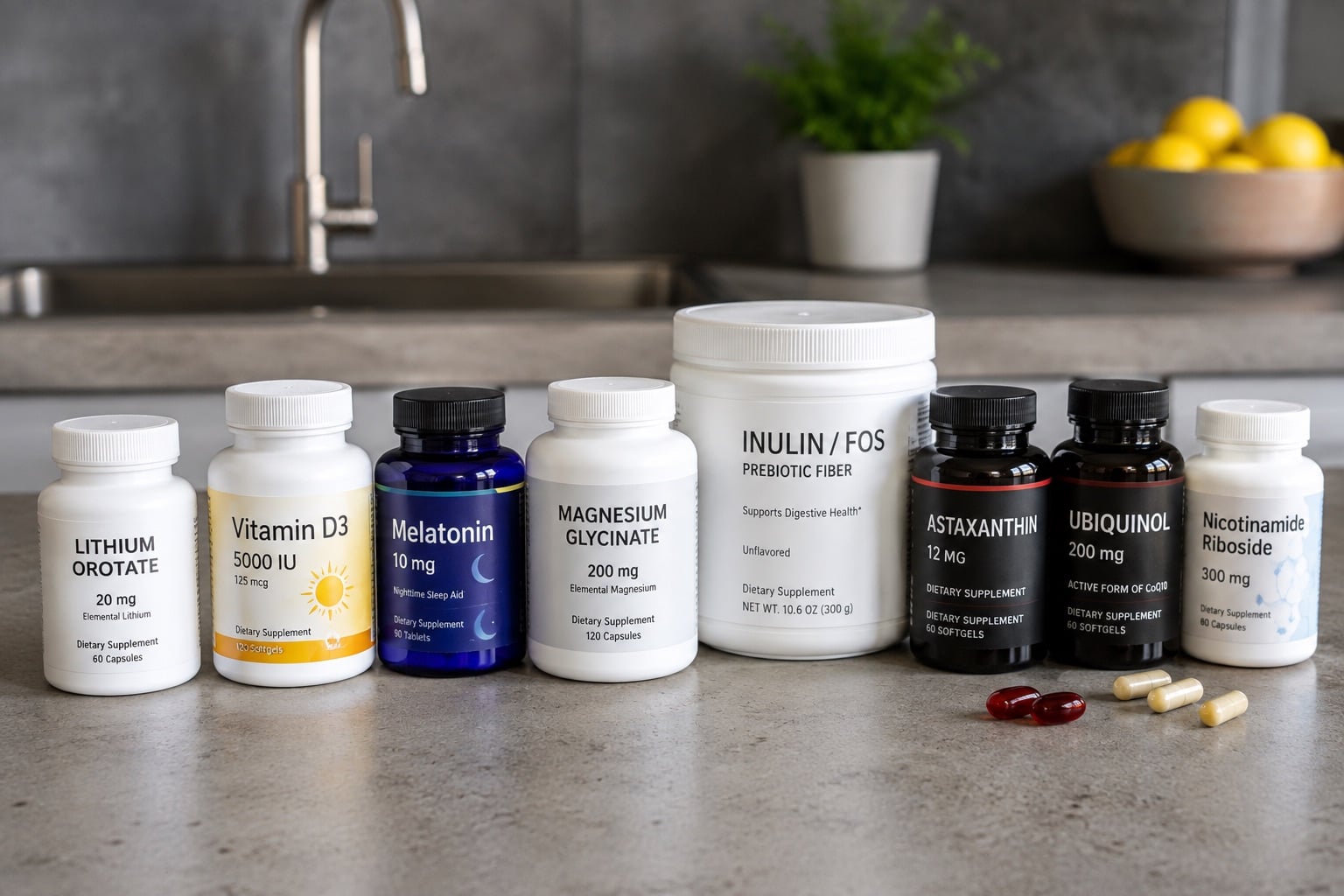
The regimen consists of these 9 components:
1. Lithium Orotate - 20 mg/day of elemental lithium as Lithium Orotate in two divided doses of 10 mg with breakfast and 10 mg with dinner.
2. Vitamin D - 5000 to 10,000 IU per day to get a 25 OH D level of 45 to 65 ng/ml.
3. Melatonin - At 10 - 50 mg per night based on human studies.
4. Magnesium Glycinate - At the RDA for elemental magnesium.
5. Inulin / FOS - Starting at 2.5 grams per day and working up slowly to 10 grams per day. This allows the gastrointestinal system to adjust gradually as taking too much inulin / FOS too soon can cause significant gas and discomfort.
6. Astaxanthin - Taken at 24 mg/day in two divided doses of 12 mg at breakfast and 12 mg at dinner.
7. Ubiquinol - This is the active form of CoQ10 and can be taken at a dose of 200 mg day up to 600 mg day based on human studies.
8. Nicotinamide Riboside (NR) - Taken at 300 to 600 mg/day in two divided doses of 150 mg to 300 mg at breakfast and 100 to 300 mg at lunch. He did not take the NR any later than lunch as it can interfere with sleep if taken later in the day.
9. Exercise - Daily to every other day.
I call this regimen, the Positive Health Loop (PHL). Now I will explain why the PHL probably worked for my friend's dementia.
Alzheimer's disease develops when many of the body's natural protective systems gradually weaken with age. These changes include declining cellular energy, increasing inflammation, excessive oxidative stress, reduced brain repair, impaired waste removal, and loss of healthy gut-brain communication.
The Positive Health Loop (PHL) is designed to strengthen many of these same protective systems at the same time. Through exercise, melatonin, vitamin D, magnesium, gut-supporting fiber (inulin / FOS), astaxanthin, ubiquinol, NMN (or NR), and low-dose lithium (20 mg elemental lithium as lithium orotate), the PHL aims to support healthier mitochondria, improve cellular energy production, reduce inflammation and oxidative damage, enhance the brain's natural repair and cleanup processes, support healthy synapses, and promote beneficial gut-brain signaling. Rather than targeting a single aspect of Alzheimer's disease, the PHL seeks to improve many of the underlying biological processes that become impaired during aging, making it a broad systems-based approach to supporting long-term brain health.
One reason this approach is attractive is that Alzheimer's disease does not appear to result from a single cause. Instead, researchers now view it as a disorder involving many interconnected problems that gradually reinforce one another over time. As these problems accumulate, the brain becomes less able to repair itself, nerve cells lose function, and memory and thinking progressively decline. Addressing several of these processes simultaneously may therefore offer greater potential than focusing on only one.
The components of the PHL were selected because each has evidence of supporting one or more of these protective systems, and many of them also work together. For example, regular exercise stimulates the brain's natural repair mechanisms, melatonin and astaxanthin help defend against oxidative damage, vitamin D and magnesium support normal cellular function, prebiotic fiber promotes beneficial gut bacteria that communicate with the brain, ubiquinol and NMN help maintain cellular energy production, and low-dose lithium has shown encouraging evidence in laboratory and human studies for supporting neuronal resilience and slowing some of the biological changes associated with Alzheimer's disease. Together, these complementary actions may produce benefits that are greater than any single component alone.
An important feature of the PHL is that it works by supporting the body's normal protective and repair systems rather than forcing major biological changes. The goal is to gently reinforce processes that naturally help keep brain cells healthy throughout life, allowing them to function more effectively despite the stresses of aging. By encouraging many small improvements across multiple biological systems, the combined effect may be greater than the sum of its individual components. This systems-based approach reflects the growing understanding that maintaining overall brain resilience may be one of the most effective ways to slow the progression of complex age-related diseases such as Alzheimer's disease.
While no combination of supplements or lifestyle measures has been proven to prevent or cure Alzheimer's disease, the PHL is intended to support the body's own resilience by strengthening systems that commonly decline with age. Because it focuses on improving overall cellular health rather than treating a single target, the PHL has the potential to complement conventional medical care while also supporting healthy aging more broadly. As research continues, this type of multi-target strategy is receiving increasing attention as a promising direction for reducing the impact of age-related neurodegenerative diseases.
Given the specific systems of the body that the PHL seems to target, it may also be well suited to Parkinson's disease. It is important to remember that the PHL works slowly and gradually as it attempts to reinforce body systems that have declined over decades. In the instance of my friend, it took 6 to 8 months for the benefits to start to show.
The PHL seems well suited to multiple age-related health issues. I have been on this regimen minus the lithium orotate, because lithium is noted for exacerbating psoriasis, for just over 5 months now and I can see 8 specific, significant and beneficial effects as a result of using the PHL regularly for just over 5 months and I am admittedly surprised by these positive results, but I will write about those very soon in my next post about the PHL.
Art
Question for Art Solbrig about his PHL protocol? Please ask him here.