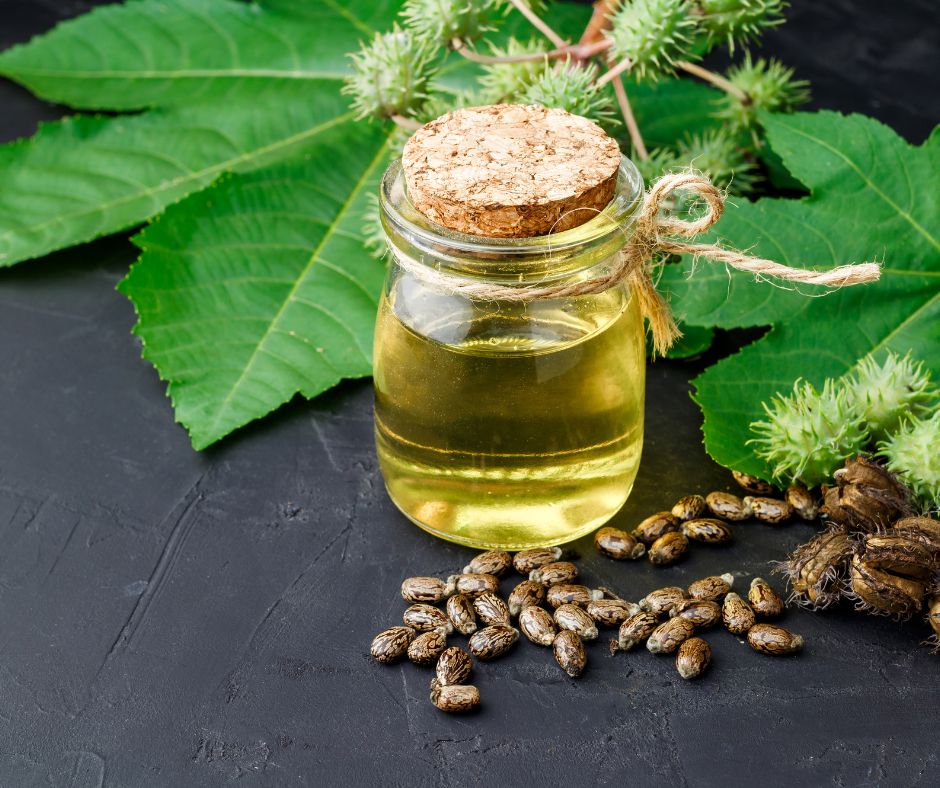
Castor oil is Earth Clinic's most discussed natural remedy for lichen sclerosus (LS) — and reader experience spans nearly a decade of detailed reader reports, from first-time diagnosis to long-term management to cases readers describe as complete resolution. For a condition where the standard medical answer is lifelong steroid cream use, the Earth Clinic reader base's accumulated experience with castor oil represents something genuinely valuable: real-world, long-term feedback from people who tried the conventional approach, found it inadequate or unsustainable, and looked for something else.
This page covers what lichen sclerosus is, how Earth Clinic readers use castor oil for it, the specific protocols readers have developed (including the castor oil, lavender, and lemongrass formula that appears across dozens of posts), what readers report about results, important safety notes about essential oil dilution, and honest accounts of cases where it helped and cases where it didn't.
Important: Lichen sclerosus is a chronic skin condition that should be diagnosed and monitored by a healthcare provider. It can progress and, in rare cases, is associated with increased risk of squamous cell carcinoma. Natural remedies may help manage symptoms but should not replace appropriate medical evaluation. The information below is based on Earth Clinic reader experiences and is provided for educational purposes only. ...
Castor oil is Earth Clinic's most discussed natural remedy for lichen sclerosus (LS) — and reader experience spans nearly a decade of detailed reader reports, from first-time diagnosis to long-term management to cases readers describe as complete resolution. For a condition where the standard medical answer is lifelong steroid cream use, the Earth Clinic reader base's accumulated experience with castor oil represents something genuinely valuable: real-world, long-term feedback from people who tried the conventional approach, found it inadequate or unsustainable, and looked for something else.
This page covers what lichen sclerosus is, how Earth Clinic readers use castor oil for it, the specific protocols readers have developed (including the castor oil, lavender, and lemongrass formula that appears across dozens of posts), what readers report about results, important safety notes about essential oil dilution, and honest accounts of cases where it helped and cases where it didn't.
Important: Lichen sclerosus is a chronic skin condition that should be diagnosed and monitored by a healthcare provider. It can progress and, in rare cases, is associated with increased risk of squamous cell carcinoma. Natural remedies may help manage symptoms but should not replace appropriate medical evaluation. The information below is based on Earth Clinic reader experiences and is provided for educational purposes only.
Earth Clinic's lichen sclerosus reader base is one of the most emotionally engaged on the site — because LS is a condition where conventional medicine offers management (lifelong steroid creams) but not cure, and where many readers feel dismissed or inadequately helped by the healthcare system. The reader base's castor oil posts are unusually detailed, often including years of history, multiple failed remedies, and careful observation of what finally worked. AJ's Editor's Choice post alone has 65 helpful votes — among the highest on any Earth Clinic remedy page.
Lichen sclerosus is a chronic inflammatory skin condition that most commonly affects the genital and anal areas, though it can occur elsewhere on the body (reader Judem from Illinois describes it appearing under her breast; reader Fotoeguyaca has it on the forearm). It causes white, thin, or patchy skin, itching, burning, pain, and in more advanced cases, skin tearing, scarring, and structural changes.
It affects women far more commonly than men, though men can develop it. It can occur at any age but is most common in postmenopausal women and young girls. The cause is not fully understood — autoimmune factors, hormonal influences, genetic predisposition, and local trauma have all been proposed. Rita from Wisconsin mentions a history of gymnastics, horseback riding, farming, and a significant episiotomy as possible contributing factors.
The standard medical treatment is high-potency topical corticosteroids (most commonly clobetasol propionate), which control symptoms but do not cure the condition and require ongoing use — often described to patients as a lifelong commitment. Long-term steroid use causes skin thinning, which is why many readers in Earth Clinic's reader base have sought alternatives.
Earth Clinic's lichen sclerosus reader base has produced some of the most detailed and emotionally significant remedy reports on the site. Several clear patterns emerge.
Understanding what brings readers to Earth Clinic's LS page matters. Most arrive after years of steroid cream use, having been told they will need it for the rest of their lives. Lolo from Boston describes her gynecologist insisting on clobetasol twice a week for the rest of her life — and after more than a year of compliance, still having flare-ups. AJ from Charlotte describes 21 years of LS management with steroid creams before finding castor oil. Sue from Montreal, a naturopath who describes herself as eating "super healthy" with a very healthy lifestyle, tried cortisone creams, a specialized LS product, an antifungal cream, and 5+ months of strict Candida diet — all without adequate relief — before castor oil provided improvement within one day. This context explains the emotional intensity of the posts: these are people who have tried the conventional path and need something that actually works.
A consistent pattern across Earth Clinic's castor oil and LS posts is a two-phase response. First phase: immediate or same-day reduction in itching and burning, often described as the best itch relief readers have found. Karen from Goldbar, Washington: "the itching goes away immediately." Cheryl from Tennessee: "apply in the morning when I am itchy and it is gone all day long." S. from Kansas City describes "incredible relief from pain and itching" and skin looking "much better only after 2 days."
Second phase: changes in the white patches and skin texture take longer — weeks to months of consistent use. AJ describes skin beginning to turn pink again after a week. Ramona from New York describes being completely symptom-free with no white patches after two-plus years of castor oil use. Twww from the UK developed a protocol to address the white patches more directly, described below.
AJ from Charlotte, diagnosed with LS at 27 and now 48, has 65 helpful votes on her post. After 21 years of steroid cream dependence and 9 months of worsening symptoms without clobetasol, she describes researching and arriving at organic castor oil with lavender and lemongrass. After one week: instant relief of itching and burning, healed tears, skin beginning to turn pink again, and pain-free sex without tearing or burning afterward. Her formula — 4 tablespoons castor oil with 2 drops lavender and 1 drop lemongrass — is the most replicated protocol in reader posts reflect this. Joyce Mor from Boston gave the remedy formula to her 19-year-old niece and reports: after 4–5 days applying liberally throughout the day, "everything is back to normal, her skin is back to normal, no more itching, bleeding and pain."
A pattern that distinguishes the most successful Earth Clinic LS accounts from less successful ones is consistency. Readers who report the best results apply the castor oil formula twice daily — morning and night — as an established routine rather than applying only when symptomatic. Several readers also raise the question of preventative use between flares; the reader base's emerging consensus is to continue regular application even when symptom-free to maintain the improvement.
Not all readers experience the same results. Sue from Canada reports castor oil "has not worked very well" — still itching and experiencing pain with heat after regular use. Susan from Connecticut has used the castor oil, lavender, and lemongrass combination daily for months with limited benefit and continues using clobetasol sparingly alongside it. These honest reports are part of what makes Earth Clinic's reader base valuable — it is not a uniformly positive testimonial collection but a candid record of varied experiences.
Mix thoroughly. Apply to affected area morning and night.
AJ notes: "Castor oil is very thick and odorless so it stays with my skin well throughout the day while I am at work or in bed asleep at night." Results within one week included instant itch and burning relief, healed tears, and skin beginning to return to pink.
Important dilution note: Lemongrass essential oil is potent and can burn delicate genital tissue at higher concentrations. The 1 drop per 4 tablespoons ratio is the safe starting point. Do not increase lemongrass beyond this without caution.
The castor oil, lavender, and lemongrass combination appears independently across multiple reader posts from different years and locations — suggesting it has been discovered repeatedly by readers researching natural LS remedies rather than simply copied from a single source. This convergence increases its credibility.
| Reader | Castor Oil | Lavender | Lemongrass | Other |
|---|---|---|---|---|
| AJ | 4 tbsp | 2 drops | 1 drop | — |
| Sandra (Arizona) | 3 tbsp | 2–3 drops | 2–3 drops | — |
| Lin (Ontario) | 3 tbsp | 2–3 drops | 1 drop | Tampon soak (3 hrs) |
| Mama to Many | 1 tbsp | 3 drops | 1 drop | Smallest safe batch |
Note: Sandra's formula uses more lemongrass than AJ's. Earth Clinic and contributors consistently flag lemongrass as the ingredient that can burn delicate tissue — stay closer to AJ's 1-drop ratio, especially for initial use.
Castor oil's potential benefits for lichen sclerosus come from several properties of its primary fatty acid component, ricinoleic acid, as well as its physical characteristics:
Lin from Ontario describes soaking a tampon in the castor oil formula and inserting it for 3 hours — describing this as working "better than anything" for internal LS involvement. She uses this in addition to external application.
Note: This method delivers castor oil to vaginal tissue. Use only plain, organic, unscented tampons. Ensure the castor oil formula does not contain essential oils at concentrations that could irritate vaginal mucosa — consider using plain castor oil without essential oils for internal application. Discontinue if any burning or increased irritation occurs.
Twww from the UK developed a more aggressive approach specifically targeting the white patches that characterize LS, after finding that castor oil alone reduced itching but wasn't eliminating the white areas:
Twww describes this as "completely curing" a patch the size of a 5p piece on the labia minora. Several subsequent readers have asked for clarification on this protocol in the comments. This is an aggressive approach and should be approached cautiously.
The most important safety issue in Earth Clinic's castor oil LS reader base is the potential for lemongrass essential oil to burn delicate genital tissue if not sufficiently diluted.
Lavender essential oil is considerably gentler than lemongrass and is well-tolerated at slightly higher dilutions on genital tissue, though care is still warranted. Frankincense is also generally gentle and anti-inflammatory, and has been reported to enhance results when added to the base formula.
The relationship between castor oil and steroid cream use is nuanced in Earth Clinic's reader base, and it is worth understanding the different approaches readers take:
Steroid creams are the standard of care for lichen sclerosus for a reason — they effectively control inflammation and have been shown to reduce the risk of scarring and structural changes. Earth Clinic's reader base does not recommend abandoning steroid treatment without consulting a healthcare provider. Many readers use castor oil to reduce — not eliminate — their steroid cream dependence, which is a reasonable and informed approach.
Earth Clinic's reader base includes candid accounts from readers for whom castor oil provided insufficient relief:
Sue from Canada and Susan from Connecticut both describe using the formula consistently for months without satisfactory relief. Ag from San Marcos, Texas, reports that after one week, castor oil has softened rough patches and soothed irritation but LS hasn't disappeared — though it is also not getting worse. These honest reports are part of what makes Earth Clinic's reader base valuable — it is not a uniformly positive testimonial collection but a candid record of varied experiences.
The pattern in less successful cases suggests several possibilities: severity of the LS at the time of starting, whether the essential oil dilution was correct, consistency of application, and individual variation in how the condition responds to topical treatment. Some readers appear to have forms or severities of LS that require additional interventions.
Several readers describe lifestyle adjustments that have helped manage LS alongside topical treatment:
Many Earth Clinic readers report significant benefit from castor oil for lichen sclerosus, particularly for itching, burning, and pain relief. AJ's Editor's Choice post describes skin returning to pink and tears healing after one week, after 21 years of steroid cream dependence. Ramona describes being symptom-free for over two years. Results vary — some readers find it insufficient alone, particularly for more established or severe cases.
The most replicated Earth Clinic formula is: 3–4 tablespoons organic castor oil + 2–3 drops lavender essential oil + 1 drop lemongrass essential oil. Apply morning and night to affected areas. Do not increase lemongrass beyond 1 drop per tablespoon — it can burn delicate tissue at higher concentrations.
Itch relief is commonly reported within hours of the first application. Improvement in white patches and skin texture takes longer — readers describe meaningful changes over weeks to months of consistent twice-daily use. AJ reports skin beginning to turn pink after one week — and long-term users describe complete resolution over years of consistent use.
Some readers do use castor oil as their primary treatment with good results. However, steroid creams like clobetasol reduce inflammation that can cause scarring and structural changes — risks that go beyond symptom management. Discuss any changes to your steroid treatment with your healthcare provider. Many readers use castor oil to reduce steroid frequency rather than eliminate it entirely.
Use no more than 1 drop lemongrass essential oil per tablespoon of castor oil — this is the reader base's established safe ratio for delicate genital tissue. Start at this level and do not increase without careful assessment of tolerance. If burning occurs, discontinue lemongrass and use plain castor oil with lavender only until irritation resolves.
Ongoing twice-daily use appears helpful for preventing flares even when symptom-free. The emerging consensus is to continue regular application as a preventative measure rather than stopping when symptoms resolve.
Organic, cold-pressed, hexane-free castor oil is consistently recommended. The hexane-free designation is important — hexane is a solvent sometimes used in castor oil processing that should not be applied to sensitive tissue. Earth Clinic contributor Charity specifically notes that hexane-free castor oil has better penetration properties.
Castor oil for lichen sclerosus represents one of Earth Clinic's most substantive reader base-developed remedy protocols — born from the frustration of readers told they must use steroid creams indefinitely, and refined over years of detailed, named reader reports. The core formula (castor oil + lavender + lemongrass, twice daily) provides immediate itch relief for most readers and shows meaningful skin improvement over weeks to months for many. It is not a replacement for medical monitoring of a condition with real complications, but as a daily management tool that reduces steroid dependence and improves quality of life, the Earth Clinic reader base's accumulated experience is genuinely compelling.
Scroll down to read Earth Clinic reader experiences with castor oil for lichen sclerosus, including long-term follow-up reports and protocol variations.
Below are Earth Clinic reader reports on using castor oil, lavender, and lemongrass for lichen sclerosus relief, including protocol details, timelines, and long-term outcomes.



