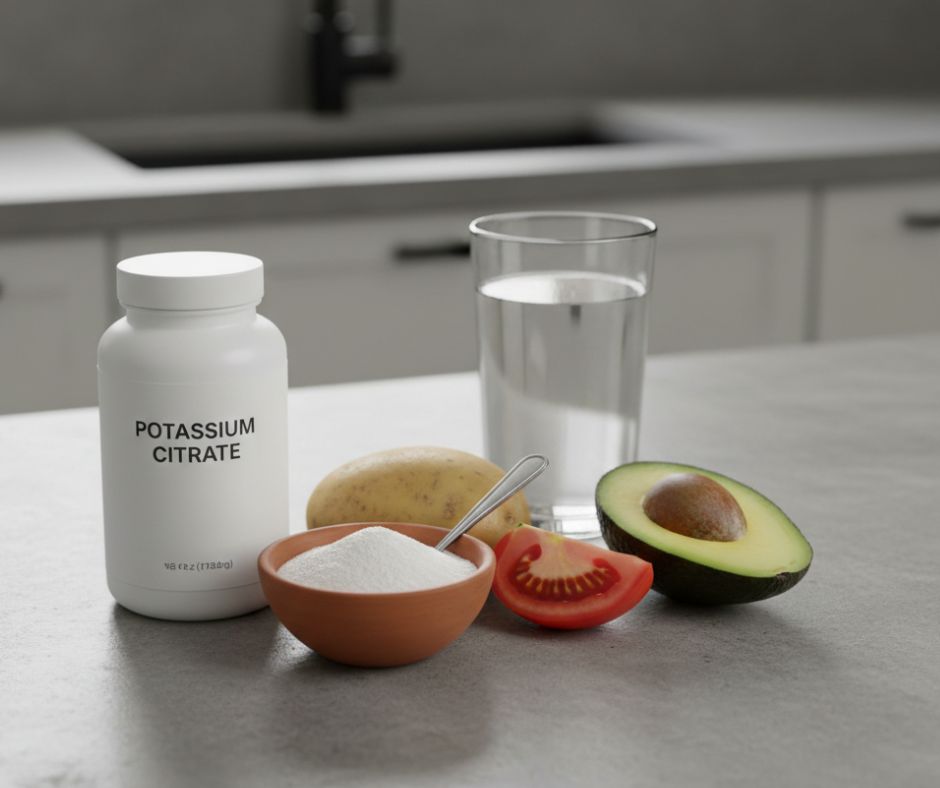
Potassium is one of the most important minerals in the body—yet many people don’t consistently reach recommended intake levels. Potassium helps regulate fluid balance, supports normal blood pressure, powers nerve signaling, and allows muscle contraction (including the heart).
Most people don’t have a “potassium supplement” problem—they have a food pattern problem. Potassium is easiest to get from everyday foods (especially plants), not pills.
If your diet is high in sodium (packaged foods, restaurant meals, salty snacks), your effective potassium “need” may be higher than the baseline Adequate Intake to maintain balance.
Potassium doesn’t just “lower” blood pressure—it works with sodium at the cellular level through the sodium–potassium pump, a mechanism that moves sodium out of cells and potassium into cells. This pump helps control cell hydration, nerve firing, muscle contraction, and blood vessel tone.
High sodium intake tips the seesaw toward fluid retention and higher blood pressure. Increasing potassium helps counterbalance sodium by supporting the cellular pumps that move sodium out. If your diet is sodium-heavy, your potassium target may need to be higher to restore balance.
Higher potassium intake paired with lower sodium intake supports healthier blood pressure patterns.
Potassium is required for normal muscle contraction and nerve transmission, including heart rhythm.
Low potassium intake can increase urinary calcium loss, which may raise kidney stone risk.
Potassium-rich diets centered on fruits and vegetables are associated with better bone health patterns.
Low potassium intake has been associated with impaired glucose handling in some studies.
Potassium is highly water-soluble. When you boil potatoes or spinach and pour the water down the drain, you can lose a large portion of the potassium content.
Most over-the-counter potassium supplements provide small amounts—typically no more than 99 mg.
High-concentration potassium pills have been associated with small-bowel irritation and lesions when a tablet dissolves against the intestinal wall. This safety concern is why over-the-counter potassium is capped at low doses.
2026 bio-hack context: If supplements are used, diluted forms such as potassium citrate or bicarbonate powders mixed in a large glass of water are often preferred to reduce localized irritation.
Potassium from food is generally safe for people with healthy kidneys. High potassium levels can occur in people with kidney disease or those taking medications that affect potassium balance.
Potassium-based salt substitutes can raise potassium too high for some people. Consult a clinician if you have kidney disease or take medications that affect potassium.
For most people, potassium is best obtained from food patterns rich in vegetables, beans, fruit, and dairy or alternatives.
Add one daily anchor food: potatoes/squash, beans/lentils, yogurt, beet greens, avocado, or coconut water.
Educational use only. If you have kidney disease, heart failure, diabetes, adrenal issues, or take medications that affect potassium, consult your clinician before using potassium supplements or salt substitutes.