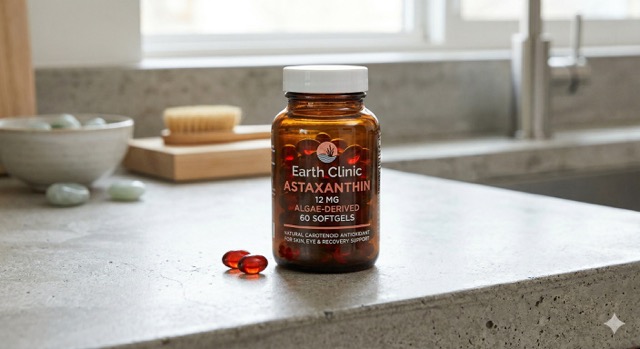
Astaxanthin is one of the most talked-about carotenoids in natural health for good reason. Best known for giving salmon, krill, shrimp, and microalgae their reddish color, astaxanthin has attracted attention for its strong antioxidant activity and its potential to support the skin, eyes, muscles, brain, heart, and overall healthy aging.
Unlike many supplement trends that rise and fall quickly, astaxanthin has stayed on the radar because it is both practical and versatile. People often take it for sun-exposed skin, dry or tired eyes, post-exercise recovery, and general inflammation support. It is fat-soluble, so it is usually taken with food, especially a meal containing some healthy fat, to improve absorption.
Most supplemental astaxanthin is derived from the microalga Haematococcus pluvialis. That matters because this algae-derived form is the one most often used in commercial supplements and in many clinical studies. Natural astaxanthin is different from synthetic astaxanthin used in some feed applications, and most people shopping for supplements specifically look for the natural algae-derived type.
In a nutshell: Astaxanthin is a red carotenoid antioxidant found naturally in microalgae and marine life. Its strongest practical uses are in skin support, eye comfort, oxidative stress balance, and exercise recovery, while research on broader areas such as brain and cardiovascular support remains promising but less established.
Astaxanthin is not just another antioxidant. One reason it gets so much attention is its unusual structure. Unlike antioxidants that work mainly in watery areas or mainly in fatty areas, astaxanthin has a polar-nonpolar-polar structure that allows it to sit across the full thickness of the cell membrane.
In simple terms, part of the molecule anchors near the outer surface of the membrane, the middle fits into the fatty interior, and the other end reaches toward the inside. This “bridge” position helps explain why astaxanthin is often described as a cell membrane antioxidant. It may help protect both the lipid-rich membrane layer and the more watery environments around it at the same time.
That does not mean it replaces vitamin C, vitamin E, or other antioxidants. It means it works from a different vantage point. This membrane-spanning position is one of the main reasons astaxanthin is considered unique among carotenoids.
Earth Clinic note: Astaxanthin is best thought of as a membrane protector, not a magic pill. It may help buffer oxidative stress, but it still works best alongside sleep, hydration, nutrient-dense food, and sensible sun habits.
Food sources of astaxanthin include salmon, trout, shrimp, crab, lobster, and krill. However, the amount in food varies, which is why many people use supplements when they want a steadier intake.
Common supplement amounts are 4 mg, 6 mg, or 12 mg daily. For routine wellness support, many people start at the lower end. For eye strain, skin support, or exercise recovery, 6 to 12 mg is commonly discussed, although individual tolerance and product quality matter.
Skin health is one of the most popular reasons people try astaxanthin. Human studies and clinical reviews suggest it may help with skin moisture, elasticity, fine lines, and the visible effects of UV exposure. This does not mean it works like sunscreen. Instead, it appears to support the skin from within by helping reduce oxidative stress and inflammatory damage associated with everyday environmental exposure.
People interested in healthy aging often combine astaxanthin with collagen-supportive habits such as adequate protein, vitamin C, mineral-rich foods, and sun-smart behavior. Some users report that after several weeks of use, their skin feels less dry and looks calmer or more resilient.
Astaxanthin may be especially appealing to people with a lot of outdoor exposure, those concerned about photoaging, and those who notice that their skin becomes reactive or dull during periods of stress.
Possible skin-related benefits include:
Eye comfort is another major area of interest. Astaxanthin is widely used for tired eyes, screen fatigue, visual stress, and dry eye support. Some studies suggest it may help reduce symptoms tied to prolonged visual display terminal use, including tired or strained eyes and difficulty with visual accommodation.
This is one reason astaxanthin shows up in eye formulas with lutein and zeaxanthin. While those pigments are often emphasized for macular and retinal support, astaxanthin is frequently included for its antioxidant and anti-inflammatory role.
People who sit at a computer for hours, drive a lot, or notice burning or fatigue at the end of the day often explore it for this reason. Some dry eye studies have also reported benefits, although dry eye is complex and can be caused by hormones, medications, meibomian gland dysfunction, autoimmune issues, indoor air, poor blinking, or chronic inflammation.
Important: If you have persistent dry eye, eye pain, light sensitivity, sudden vision changes, or worsening redness, do not rely on supplements alone. Those symptoms deserve professional evaluation.
Exercise recovery is another common reason people take astaxanthin. The research is mixed on direct performance enhancement, but there is more consistent interest in recovery, oxidative stress, and exercise-related inflammation.
Some human studies suggest astaxanthin may help blunt certain markers of exercise stress and support recovery after demanding physical activity. That can be useful for people who train regularly, do endurance exercise, or feel unusually beaten up after workouts.
For everyday users, this may translate into feeling less wrecked after hard exercise, recovering more smoothly, or supporting training consistency over time. It is not a substitute for sleep, protein, electrolytes, or sensible training loads, but it may be a helpful add-on.
Because astaxanthin is tied so closely to oxidative stress and inflammation balance, it has become a popular healthy aging supplement. The anti-aging conversation around astaxanthin can be overhyped, but there is a reasonable basis for why people include it in long-term wellness protocols.
Aging is strongly influenced by cumulative stress on tissues, mitochondria, cellular membranes, and inflammatory pathways. Astaxanthin is being studied for how it may support resilience in these systems. That does not mean it stops aging, but it may help support healthier aging patterns, especially when paired with exercise, sunlight moderation, good sleep, and nutrient-dense food.
Brain health is one of the newer frontiers in astaxanthin interest. Researchers are exploring whether astaxanthin may help support the nervous system because oxidative stress and inflammation are involved in cognitive aging and neurological wear-and-tear. Early findings are promising, but this remains a developing area rather than a fully established one.
Some people use astaxanthin for brain fog support, especially when they also use omega-3 fats, magnesium, or anti-inflammatory dietary strategies. That said, anyone with serious neurological symptoms should not self-treat based on supplement marketing.
Heart and metabolic wellness is another area of interest. The proposed mechanisms include helping reduce oxidative damage to lipids, supporting endothelial function, and balancing inflammatory pathways. This sounds exciting, but it is wise to keep expectations realistic. The most reliable human evidence still centers more strongly on skin, eye comfort, and exercise-related stress than on dramatic heart or metabolic outcomes.
Still, for people building a broad anti-inflammatory foundation, astaxanthin may fit alongside fish oil, exercise, blood sugar management, and an unprocessed diet.
One of the less-discussed aspects of astaxanthin is its possible effect on 5-alpha reductase, the enzyme that converts testosterone into DHT (dihydrotestosterone). This is the same general pathway targeted by certain prescription hair-loss and prostate medications.
The key word here is possible. Laboratory and combination-formula research suggest astaxanthin may have mild 5-alpha reductase-inhibiting activity, but this is not as firmly established in everyday supplement use as the skin, eye, and recovery benefits. Still, it is worth mentioning because it may help explain why some people become interested in astaxanthin for prostate support or androgen-related concerns.
On the positive side, a mild DHT-lowering effect could theoretically be useful for some men concerned about prostate health or androgenic hair loss. On the caution side, very sensitive individuals may prefer to monitor how they feel, especially if they are already using hormone-active supplements or medications.
Hormone caution: Astaxanthin is not a hormone drug, and the evidence here is still limited. But if you are highly sensitive to shifts in libido, DHT, testosterone balance, or prostate-related supplements, start low and pay attention to how you respond.
Astaxanthin is not usually a same-day supplement. Some people notice subtle effects within a few days, especially if eye strain or exercise recovery is the main issue, but many reported benefits build gradually over several weeks.
A fair trial is often 4 to 8 weeks. Skin-related benefits may take longer than eye comfort or recovery effects. People who take too little, skip doses, or take it on an empty stomach may not notice much.
Because astaxanthin is fat-soluble, many people take it with breakfast or lunch that includes some fat. Examples include eggs, yogurt, avocado, olive oil, nuts, seeds, or fish.
Some users split the dose, but many take it once daily. Product quality matters, and many people prefer brands that clearly state the source and amount of natural astaxanthin per softgel or capsule.
Astaxanthin is generally considered well tolerated, but mild digestive upset can occur. Because it is a strongly pigmented red carotenoid, some people may also notice harmless color changes if they take larger amounts over time.
What can happen:
These effects can be surprising but are generally harmless. The stool color change is especially worth mentioning because some people understandably worry about bleeding when they first see it. If you are using a deeply pigmented carotenoid supplement, color changes may be the simplest explanation.
That said, do not assume every red stool is a supplement effect. If the change is persistent, accompanied by pain, weakness, dizziness, black stool, or other concerning symptoms, get it checked promptly.
Most healthy adults tolerate astaxanthin well, but some people should use extra care.
Be more cautious if you take:
Why this matters:
Blood pressure: Astaxanthin may have a mild blood-pressure-lowering effect in some people. If you are already on medication for hypertension, the combination could occasionally push pressure too low.
Blood thinners: Astaxanthin has shown mild anti-platelet or antithrombotic activity in some research models. That does not automatically make it dangerous, but people using warfarin, aspirin, clopidogrel, or related agents should be more careful.
Blood sugar: Astaxanthin may modestly support insulin sensitivity or glucose control in some contexts. That can be a plus, but if you use diabetes medication, it is smart to monitor for unexpectedly low blood sugar.
Hormonal sensitivity: Anyone using finasteride-like strategies, prostate formulas, or other hormone-influencing supplements may prefer to introduce astaxanthin cautiously and track how they feel.
Safety note: If you are pregnant, breastfeeding, preparing for surgery, taking prescription medications, or managing a chronic condition, check with your healthcare professional before starting astaxanthin.
Astaxanthin may be worth exploring if you:
Some products contain astaxanthin alone, while others combine it with lutein, zeaxanthin, omega-3s, tocotrienols, saffron, collagen ingredients, or other antioxidants. Combination formulas may make sense when the goal is a specific category such as eye or skin support, but they can also make it harder to tell what is helping.
If you are new to astaxanthin, a simple stand-alone product is often the easiest way to evaluate it.
Astaxanthin has earned its reputation as one of the more interesting carotenoids in the supplement world. It is not magic, but it does have a credible role in wellness routines centered on skin resilience, eye comfort, oxidative stress balance, and physical recovery.
What makes it especially interesting is not just that it is a strong antioxidant, but where it works: right across the cell membrane. That membrane-level bridge role helps explain why so many people see it as different from more familiar antioxidants.
The key is keeping expectations realistic, choosing a quality product, taking it consistently, and giving it enough time to work. And, as with any pigmented carotenoid, it helps to know in advance that harmless red-orange stool or a faint skin tint can happen, so you are not caught off guard.
If you have used astaxanthin, let us know what you noticed. Did you try it for skin, eyes, exercise recovery, inflammation, hair, prostate support, or something else entirely?
Earth Clinic readers often notice things that do not show up clearly on a label. Some may find astaxanthin most helpful for eye fatigue or outdoor skin support, while others may notice exercise recovery, subtle hormonal effects, color changes in stool, or no effect at all. Individual response can depend on dose, absorption, diet, supplement quality, and what other health issues are going on at the same time.