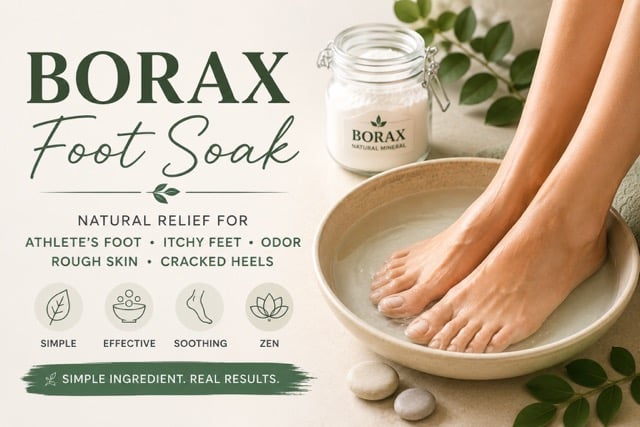
A borax foot soak is a simple home remedy discussed on Earth Clinic for itchy feet, athlete’s foot, foot odor, rough skin, and cracked heels. Borax, often sold as 20 Mule Team Borax, is an alkaline mineral compound traditionally used in laundry and household cleaning, but some readers have also used it externally in foot baths and foot hygiene routines.
The strongest Earth Clinic experiences for borax foot soaks involve athlete’s foot, foot fungus concerns, itching, rough feet, cracked heels, and shoe odor. This article explains how readers have used borax for foot soaks, how to make a basic borax foot bath, when apple cider vinegar is added, and what precautions to keep in mind.
A borax foot soak is a warm foot bath made by dissolving borax powder in water. Some people use borax alone, while others combine it with apple cider vinegar for foot fungus, athlete’s foot, itching, or odor.
Borax is alkaline, which may help explain why some people find it useful for sweaty, itchy, or odor-prone feet. However, it can also be drying, especially when used too often or in a strong concentration.
For this reason, a borax foot soak is best approached as an occasional foot-care remedy rather than a daily long-term routine. Start mildly, observe how the skin responds, and stop if irritation develops.
Earth Clinic posts suggest that people are drawn to borax foot soaks when ordinary lotions, scrubs, files, powders, or over-the-counter creams do not fully solve the problem. The most common themes are fungus, itching, odor, and rough skin.
Some readers use borax externally for athlete’s foot itching and recurring foot fungus symptoms.
Itchy soles, toes, and feet are one of the main reasons readers try a borax foot bath.
Readers with dry, rough, or thickened skin have reported noticeably softer feet after soaking.
Cracked heels are sometimes discussed alongside long-term foot fungus concerns and dry, thick skin.
Borax is also used by some readers for shoe odor and foot hygiene when odor may be linked with moisture or fungus.
One reader reported soaking shoes in borax-saturated water and letting them dry to discourage recurring foot fungus.
This simple recipe is a good starting point for those who want to try a borax foot soak without making the solution too strong.
Directions: Dissolve the borax in warm water. Soak feet for 10 to 20 minutes. Dry thoroughly, especially between the toes. Follow with moisturizer if the skin is dry or rough.
Use warm water rather than very hot water, especially if you have sensitive skin, poor circulation, diabetes, neuropathy, or reduced sensation in the feet.
One Earth Clinic reader used a stronger foot bath with borax and apple cider vinegar for a long-standing fungal foot problem and severely cracked heels. This combination may appeal to those already familiar with apple cider vinegar foot soaks.
Directions: Dissolve the borax in warm water, add apple cider vinegar, and soak for 10 to 15 minutes. Dry feet completely afterward.
This is a stronger soak than the basic recipe. If your skin is sensitive, cracked, inflamed, or easily irritated, begin with the gentler borax-only version or avoid soaking until the skin has healed.
The most dramatic Earth Clinic report involved a man with a long history of athlete’s foot. After trying many store-bought products without lasting results, he wet his feet, rubbed borax over them, and reported that the itching stopped immediately. Weeks later, the symptoms had not returned.
This is an anecdotal experience, not a clinical study. Still, it helps explain why borax remains a popular remedy among readers looking for simple, low-cost foot fungus support.
For athlete’s foot, drying the feet thoroughly is just as important as the soak itself. Fungus thrives in warm, moist areas, especially between the toes and inside shoes.
Itchy feet are one of the clearest benefits described in the Earth Clinic posts. One reader with insulin resistance and rough, itchy feet reported that borax worked wonderfully and that her feet stopped itching after use.
Itchy feet can have many causes, including athlete’s foot, dry skin, eczema, irritation from shoes or socks, contact dermatitis, neuropathy, or circulation issues. If itching is severe, recurrent, spreading, or accompanied by redness, swelling, sores, or drainage, it should be evaluated medically.
Rough feet and cracked heels are common reasons people look for a borax foot soak. One reader with insulin resistance reported chronically rough feet and found that borax left them surprisingly soft after showering.
Another reader described long-standing foot fungus along with severely cracked heels. She used borax and apple cider vinegar in a morning foot soak and planned to continue reporting results.
Cracked heels may come from dry skin, thick calluses, prolonged standing, open-backed shoes, fungal infection, diabetes, thyroid issues, or circulation problems. If cracks are deep, bleeding, painful, or slow to heal, avoid strong soaks and seek appropriate care.
Borax is often used in laundry because it helps with odors. For feet, readers may be interested in borax when odor seems linked with sweat, shoes, or possible fungal overgrowth.
A borax foot soak may help freshen the feet, but shoes and socks also need attention. If the same damp shoes are worn repeatedly, odor and fungus can return even after the feet improve.
One Earth Clinic reader reported soaking shoes in borax-saturated water and letting them dry to help prevent recurring foot fungus.
Use caution with leather, suede, delicate fabrics, glued soles, or shoes that may be damaged by water. Test old or washable shoes first.
Some people searching for borax foot soaks are also dealing with toenail fungus. A foot soak may improve the hygiene of the surrounding skin, but toenails are much harder to treat than surface skin because the nail plate is thick and slow-growing.
If toenails are thick, yellow, crumbly, lifting, painful, or worsening, a healthcare professional or podiatrist can confirm whether fungus is actually present. Other conditions can mimic toenail fungus, including trauma, psoriasis, eczema, and circulation problems.
Do not rely on borax alone for severe, spreading, painful, or long-standing nail disease.
Because borax is alkaline and can be drying, moisturizing afterward is important, especially for rough feet and cracked heels. Jessica’s Earth Clinic post specifically noted that once the feet become soft, a good moisturizer is the next step.
Use shea butter, coconut oil, olive oil, castor oil, or a thick natural foot cream after drying the feet.
Apply moisturizer, then wear cotton socks for several hours or overnight if the skin is intact and not infected.
Avoid heavy oils between the toes if athlete’s foot is present. That area should stay clean and dry.
One Earth Clinic reader reported noticing a strong taste in the mouth during a borax and apple cider vinegar foot soak and wondered whether the soak might be related to detoxification. She described the sensation as occurring around the same time during each soak.
This is an individual observation and should not be taken as proof that borax foot soaks remove heavy metals or fluoride. The most practical, well-supported use of a borax foot soak on Earth Clinic is for foot hygiene, itching, athlete’s foot, odor, and rough skin.
Borax foot soaks are used externally. Because borax is alkaline, it may irritate sensitive skin or worsen dryness if the solution is too strong or used too often.
People with diabetes, neuropathy, poor circulation, immune suppression, or slow-healing wounds should be especially cautious with foot soaks. Even minor foot irritation can become more serious in these situations.
If your first borax foot soak does not go as expected, adjust the strength, frequency, and aftercare.
Likely cause: the soak is too strong or too frequent.
Try this: reduce the borax, soak less often, and moisturize after drying.
Likely cause: irritated skin, cracks, or sensitivity to the solution.
Try this: stop the soak, rinse with plain water, and do not repeat until skin is calm.
Likely cause: irritation, allergy, eczema, or an infection that needs different care.
Try this: discontinue borax and consider medical evaluation if symptoms persist.
Likely cause: damp shoes, untreated socks, sweating, or reinfection.
Try this: dry shoes fully, rotate footwear, wash socks well, and keep feet dry.
Earth Clinic’s borax foot soak reports are limited but useful because they describe specific, practical uses.
Jessica from Forest, Virginia reported rough, itchy feet and suspected systemic candida issues. After using borax, she said her feet were very soft and had not been itching. She also soaked shoes in borax-saturated water and let them dry to help prevent foot fungus.
Dianna from Austin, Texas reported that her boyfriend had a long-term athlete’s foot problem that did not resolve with store-bought products. He wet his feet, rubbed borax over them, and said the itching stopped immediately. Weeks later, he reported that the problem had not returned.
JS from Asheville, North Carolina used 3 heaping tablespoons of 20 Mule Team Borax with 1 cup of apple cider vinegar in hot water for a long-standing fungal foot problem and cracked heels. She soaked for 10 to 15 minutes each morning.
A gentle starting amount is 2 to 3 tablespoons borax in about 1 gallon of warm water. Some Earth Clinic readers have used stronger amounts, but it is best to begin mildly and adjust only if the skin tolerates it well.
Most people soak for 10 to 20 minutes. If the skin feels dry, tight, irritated, or itchy afterward, shorten the soak or reduce the amount of borax.
Earth Clinic readers have reported improvement in athlete’s foot itching and recurring symptoms after using borax externally. However, athlete’s foot can be persistent and contagious, so hygiene, dry socks, and dry shoes are also important.
Borax foot soaks may soften rough skin, but cracked heels need careful aftercare. Dry the feet well and apply a thick moisturizer. Do not use borax on bleeding, infected, or painful cracks.
Borax may help with foot odor when odor is related to sweat, shoes, or fungal overgrowth. Shoe hygiene, clean socks, and fully drying footwear are also important.
Yes, one Earth Clinic reader used borax with apple cider vinegar in a foot bath. This combination may be too strong for sensitive or cracked skin, so start cautiously.
Yes. Earth Clinic readers commonly refer to 20 Mule Team Borax, the plain borax powder sold as a laundry booster. Avoid products with added fragrances, detergents, or other cleaning chemicals.
One reader reported soaking shoes in borax-saturated water and letting them dry. This may not be suitable for leather, suede, delicate shoes, glued soles, or shoes that can be damaged by water.
A borax foot soak may support foot hygiene, but toenail fungus is harder to address because the nail is thick and slow-growing. Persistent, painful, or worsening toenail changes should be evaluated by a healthcare professional.
After soaking, dry feet thoroughly. For rough skin or cracked heels, apply a moisturizer such as shea butter, coconut oil, castor oil, olive oil, or a thick foot cream. Avoid heavy oils between the toes if athlete’s foot is active.
Start with 2 to 3 times weekly. If the skin becomes dry or irritated, use it less often. Daily use may be too drying for many people.
People with diabetes, neuropathy, poor circulation, or slow-healing skin should be very cautious with any foot soak. Avoid borax on cracked, open, infected, numb, or painful feet unless approved by a healthcare professional.
A borax foot soak is a simple Earth Clinic remedy most often discussed for athlete’s foot, itchy feet, foot odor, rough skin, cracked heels, and shoe hygiene. The basic method uses a few tablespoons of borax in warm water, followed by careful drying and moisturizing as needed.
Start with a mild recipe, avoid broken or irritated skin, dry thoroughly between the toes, and pay attention to shoes and socks if fungus or odor keeps returning. Borax foot soaks may be helpful for some people, but persistent infections, severe cracks, diabetes-related foot problems, or worsening symptoms should be evaluated professionally.