At a Glance: Natural Ways to Help Feral & Outdoor Cats (2026 Guide)
- TNR is the foundation: fixing and vaccinating cats improves long-term health.
- Shelter, food, and water are the most important daily supports.
- Natural care can help: but serious illness, wounds, or breathing trouble need rescue or veterinary help.
Feral and outdoor community cats face daily challenges from weather, parasites, poor nutrition, injuries, and untreated infections. Thoughtful natural care can dramatically improve their comfort and survival.
This Earth Clinic guide covers practical ways to support feral cats outdoors, including TNR, food, hydration, winter shelter, flea control, digestive support, wound care, and common signs of illness.
Quick Nav:
▸ TNR: The Most Important Step
▸ Food, Water & Earth Clinic Supports
▸ Feeding Station Pest Control
▸ Warm Shelter & Winter Safety
▸ Natural Flea / Parasite Support
▸ Immune & Recovery Support
▸ Common Feral Cat Ailments
▸ Minor Wound Support
▸ Toxic Plants to Avoid
▸ What to Avoid
▸ When to Call Rescue / a Vet
TNR: The Most Important Step
Trap-Neuter-Return (TNR) is the single most effective way to improve the long-term health of feral cats and reduce colony suffering.
- Prevents repeated pregnancies: reduces stress and nutritional depletion
- Reduces fighting: lowers abscesses and virus spread
- Reduces roaming: lowers risk of cars and predators
- Improves body condition: cats conserve more energy
Most TNR programs also provide:
- Rabies vaccine
- FVRCP vaccine (upper respiratory protection)
- Parasite treatment
Helpful tip: A tipped ear (usually the left ear) is the universal sign that a feral cat has already been fixed and managed.
Food, Water & Earth Clinic Supports
Consistent food and fresh water are essential. Outdoor cats burn significant calories staying warm and safe, and hydration is often overlooked.
- Offer wet food when possible for hydration
- Use high-protein dry food for regular feeding
- Feed at the same times daily
- Use clean elevated bowls
Helpful Earth Clinic-Style Supports
- Bone broth: supports hydration and appetite
- Fish oil: may support coat and inflammation
- Coconut oil: a very small amount mixed into food may help coat condition and provide extra calories in winter
- Slippery elm bark: a small pinch in wet food may help soothe mild digestive upset or loose stools
ACV for Water Bowls (Optional)
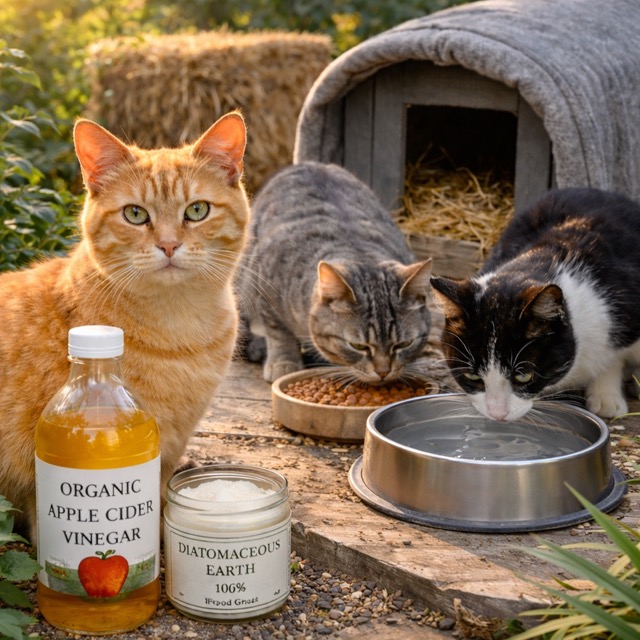
Some Earth Clinic readers add a few drops of raw apple cider vinegar to outdoor water bowls in warm weather to help keep water fresher and discourage algae growth.
- Use only a few drops per large bowl
- Refresh water daily
- Always provide a plain water option nearby
Important: Cats are sensitive to taste and smell. If they avoid the water, discontinue ACV immediately.
Colloidal Silver (Short-Term Support Only)
Some caregivers use a very small short-term amount of colloidal silver for mild eye crust, gum irritation, or low-grade upper respiratory symptoms.
- Best used short-term only
- Do not rely on it for serious infections
- Avoid routine use in shared bowls
Feeding Station Pest Control
Clean feeding routines help prevent ants, slugs, raccoons, and other scavengers.
- Feeding windows: leave food out only 30–60 minutes
- Ant moats: place bowl stand in shallow water tray
- Copper tape: around elevated feeder legs may deter slugs
- Clean spills quickly: prevents insects
Warm Shelter & Winter Safety
Dry insulated shelter saves lives during cold and storms.
- Use straw bedding (not hay or blankets in damp climates)
- Raise shelter off wet ground
- Face opening away from prevailing wind
- Use heated water bowls if needed
Winter Safety
- Never add salt, sugar, or chemicals to prevent freezing
- Avoid antifreeze nearby—it is highly toxic
- Use pet-safe ice melt near shelters
- Shovel simple dry paths to feeding areas
Important: Sidewalk salt can burn paw pads and cause poisoning when licked off fur.
Natural Flea & Parasite Support
Parasites are one of the biggest threats to outdoor cats.
Diatomaceous Earth (DE): Use Carefully
- Use only food-grade DE
- Lightly dust shelter corners / cracks only
- Never create airborne dust clouds
- Do not heavily dust cats directly
Regular bedding changes and clean feeding areas also help reduce flea eggs and larvae.
Immune & Recovery Support
- Kitten food for thin cats
- Small frequent meals for weak cats
- Quiet low-stress shelter areas
- Fresh clean water daily
Common Feral Cat Ailments: What You May Be Seeing
- Stomatitis / dental disease: drooling, dropping food, bad breath
- Upper respiratory issues: eye discharge, sneezing
- Ear mites: head shaking, dark debris in ears
- Mange: crusty ears / face, patchy fur
- Fleas: hair loss near tail, scratching
Minor Wound Support
If a semi-friendly cat allows close help:
- Warm saline compress for crusting
- Thin layer Manuka honey for superficial wounds
- Keep shelter clean and dry
Important: Swelling, pus, bad smell, limping, or facial swelling often mean an abscess requiring drainage / antibiotics.
Toxic Plants Around Outdoor Cat Areas
If creating a cat-friendly yard or shelter space, avoid toxic landscaping.
- Lilies: extremely toxic—even pollen can be deadly
- Sago palms: highly toxic
- Azaleas: can cause serious illness
- Oleander: toxic if chewed
What to Avoid
- Dog flea products on cats
- Essential oils (many are toxic)
- Heavy DE dusting
- Leaving food out overnight
- Rodent poison nearby
When to Contact Rescue or a Vet
- Labored breathing
- Severe weight loss
- Visible injury / limping
- Face swelling
- Heavy fleas / mange
- Cat stops eating
- Abandoned kittens
Partnering with a local TNR or rescue group is often the best long-term way to improve the health of feral cats in your area.
Share Your Experience: What natural tips have helped the outdoor cats in your neighborhood stay healthy and safe?