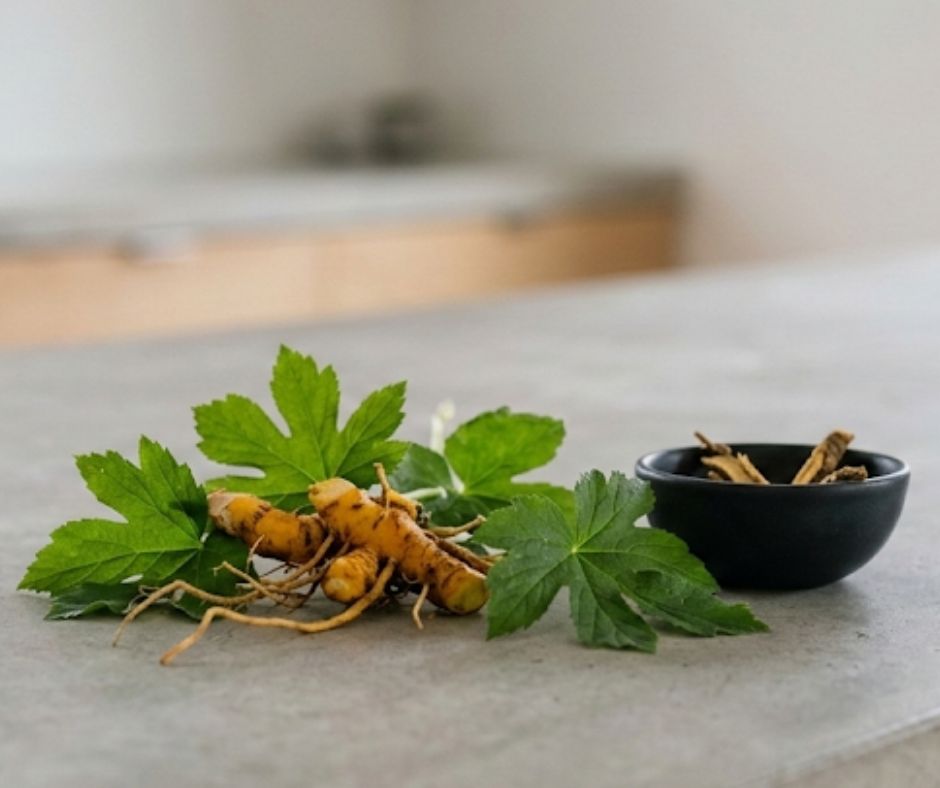
Goldenseal (Hydrastis canadensis) is one of North America’s most famous medicinal roots. Traditionally used by Native American tribes and later embraced by 19th-century Eclectic physicians, goldenseal is best known for its antimicrobial and mucous membrane–toning properties.
But goldenseal is also one of the most misunderstood herbs on the market. It is often overused, misapplied to the wrong symptoms, or taken without awareness of serious drug interactions.
This 2026 Earth Clinic guide covers what goldenseal actually does, when it works best, when it makes things worse, drug testing myths, major enzyme interactions, preparation differences, and how to substitute it sustainably.
Quick Nav:
▸ What Goldenseal Is
▸ Active Compounds & How It Works
▸ The “Boggy Tissue” Rule (When It Works Best)
▸ Immune & Infection Support
▸ Mouth Rinse & Gargle Uses
▸ Drug Testing Myth
▸ Tea vs Tincture: Potency Matters
▸ CYP3A4 & Serious Drug Interactions
▸ Sustainable Substitutes & Dosing
▸ Safety & Who Should Avoid It
▸ FAQ
Goldenseal is a woodland perennial native to eastern North America. The medicinal portion is the bright yellow root and rhizome. Its golden color comes from alkaloids responsible for its antimicrobial activity.
Berberine is the most studied compound and is also found in barberry and Oregon grape root. It has demonstrated activity against certain bacteria and influences gut microbiota balance.
Traditional herbalists follow what some call the “Golden Rule of Color”: goldenseal works best for relaxed, boggy, mucus-heavy tissues—especially when secretions are yellow or green.
It is traditionally indicated for:
When not to use it: If tissues are already dry, hot, irritated, or atrophied, goldenseal’s drying astringency may worsen symptoms. It is generally not appropriate for a dry, hacking cough.
Goldenseal is best used short-term during acute infections involving mucus and microbial overgrowth. It is not a daily immune tonic.
Because goldenseal concentrates its activity on mucous membranes, localized use is often preferred:
Localized application reduces systemic exposure while targeting the tissue directly.
One of the most persistent urban legends about goldenseal is that it can mask illicit drugs in urine tests.
Reality: There is no scientific evidence that goldenseal masks drug use. In fact, some laboratories test for goldenseal itself as a sign of attempted sample tampering.
If you are being drug tested, goldenseal will not “clean” your urine.
Berberine is not highly water-soluble. This means:
If you need strong antimicrobial action, a tincture or standardized extract is more effective than tea.
Goldenseal is one of the most potent herbal inhibitors of the liver enzyme CYP3A4.
CYP3A4 metabolizes approximately 50% of pharmaceutical drugs, including:
This is not minor: Inhibiting CYP3A4 can significantly raise blood levels of these medications, potentially to dangerous levels.
Do not combine goldenseal with prescription medications without professional guidance.
Wild goldenseal is at risk due to overharvesting. Consider these alternatives:
In practice, Oregon grape root may need about 10–20% higher dosing to approximate goldenseal’s combined berberine + hydrastine activity, depending on preparation strength.
Best practice: Choose cultivated sources whenever possible to protect wild populations.
Use goldenseal short-term (typically 5–10 days) during acute illness only.
No. It is best reserved for short-term use.
No. Alcohol extracts significantly more berberine.
Often similar, but slightly higher dosing is typically needed for equivalent strength.
Share Your Experience: Tell us the preparation used (tea, tincture, capsule), duration, and results. Keep reading to learn what Earth Clinic readers have to say!