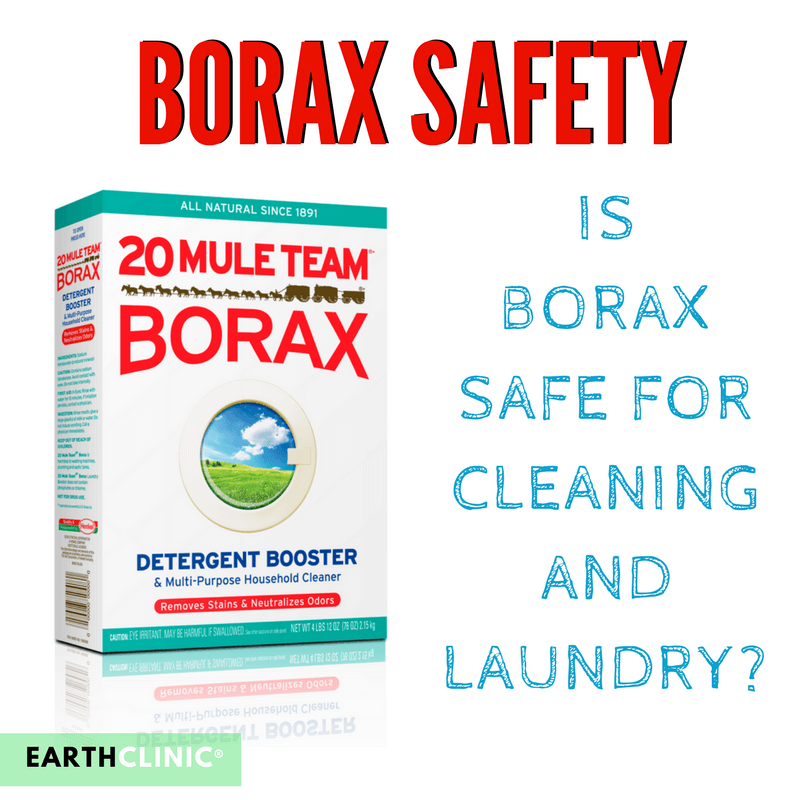
Borax, also known as sodium borate, is a naturally occurring mineral that has been used for generations as a laundry booster, household cleaner, deodorizer, water softener, and mold-cleaning aid. On Earth Clinic, borax has been discussed for many years by readers using it in real-world household routines, giving this topic a decade-plus history of community feedback and practical experience.
When used properly for laundry and cleaning, borax can be an effective and inexpensive product. However, it is still a mineral chemical and should be handled carefully: avoid inhaling the powder, keep it away from children and pets, do not get it in the eyes, and do not ingest it unless under qualified guidance.
Quick Nav:
▸ What Is Borax?
▸ Borax Safety
▸ Chemical Mixing Warnings
▸ Material Compatibility
▸ Global Regulations (EU/UK)
▸ How to Use Borax
▸ Borax for Pests (Important Distinction)
▸ Environmental Impact
▸ Side Effects & First Aid
▸ Should You Use Borax?
Important Safety Note: Borax is intended for external household use. Avoid inhalation, ingestion, and eye contact. Always store securely away from children and pets.
Borax is a white, odorless, powdery mineral composed of sodium, boron, oxygen, and hydrogen. It has been used for over a century as a cleaning agent and remains popular due to its affordability and effectiveness.
Borax has relatively low acute toxicity when used appropriately, but misuse can lead to irritation or harm. As with any substance, dose and exposure method determine risk.
Earth Clinic Experience Signal: This guide reflects both published safety data and over a decade of reader-reported experiences using borax in real-world household settings.
Do Not Mix Borax Improperly:
Borax can damage certain materials due to its alkalinity and mineral composition:
In the European Union and United Kingdom, borax is classified as a substance of concern due to potential reproductive effects at high exposure levels.
Because of this classification, borax is restricted or unavailable for general consumer sale in some regions. This explains why international readers may have difficulty purchasing it.
Borax is widely used in laundry, kitchens, and bathrooms. Always dissolve properly and avoid dust inhalation.
Use 2–8 tablespoons per load depending on machine type. Dissolve in warm water when washing in cold cycles.
Use diluted solutions for cleaning surfaces. Always rinse food-contact surfaces afterward.
Borax is sometimes used for fleas and insects, but it works differently than boric acid.
Using borax as a pesticide without proper labeling may violate regulations such as the Federal Insecticide, Fungicide, and Rodenticide Act (FIFRA) in the United States.
Boron is beneficial in trace amounts but toxic in excess.
May cause irritation. Use gloves if sensitive.
Fine particles can irritate lungs. When mixing large batches, consider wearing an N95 mask.
Flush with water thoroughly. Seek care if irritation persists.
First Aid Guidance:
Do NOT induce vomiting unless instructed by a medical professional.
Rinse mouth and drink water.
Call Poison Control immediately: 1-800-222-1222 (U.S.).
Borax can be an effective, low-cost cleaning agent when used properly. However, it is not essential, and safer alternatives may be preferable in homes with children, pets, or sensitive individuals.
The best approach is informed use—understanding both its benefits and its limitations.